No products in the cart.
Can Arduino-Based CNC (GRBL) Be Used for Large-Scale Industrial Machines?
Contents
Can Arduino-Based CNC (GRBL) Be Used for Large-Scale Industrial Machines? – Field Guide and Technical Article
Introduction and Technical Analysis
The industrial automation sector aims to maximize efficiency, precision, and reliability in manufacturing processes. Computer Numerical Control (CNC) machines play an indispensable role in achieving these goals. In recent years, with the rise of open-source hardware and software platforms, particularly Arduino-based GRBL controllers, they have gained popularity in small-scale and hobbyist CNC projects. However, the applicability of this technology in large-scale and industrial CNC router machines is a significant topic of discussion and curiosity among industry professionals. This comprehensive field guide and technical article will delve into whether Arduino-based GRBL systems can meet the demanding requirements of industrial automation, their technical limitations, potential advantages, and the challenges that may be encountered in the field. Our objective is to provide a realistic assessment of the current state and future of this technology, offering a guiding perspective for engineers and decision-makers.
Operating Principle and Technical Data
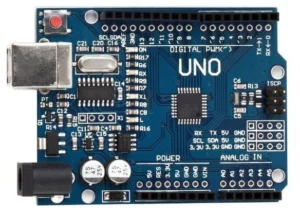
GRBL is an open-source firmware that runs on an AVR-based microcontroller, such as Arduino UNO, interpreting G-code commands to generate motion signals (step and direction) for stepper motors (or via appropriate drivers for servo motors). Essentially, it reads G-code lines received from a computer via a serial port, processes them through a motion planner, and sends corresponding pulse sequences to motor drivers. This solution is quite sufficient for small-scale 3D printers, laser cutters, and milling machines. However, large-scale industrial machines have much higher requirements for precision, speed, power, reliability, and environmental durability. Such machines are expected to perform movements with thousandths of a millimeter precision, carry tons of weight, achieve high accelerations, and operate continuously. GRBL’s fundamental architecture and Arduino’s hardware limitations may fall short of meeting these industrial expectations.
Arduino’s 8-bit architecture and limited processing power restrict its capacity to process complex G-code paths at high speeds, perform multi-axis interpolations precisely, and manage real-time feedback loops. Industrial CNC controllers typically feature 32-bit or higher processors, dedicated hardware accelerators, and much larger memory capacities. Furthermore, industrial environments are rich in electromagnetic interference (EMI/RFI), and Arduino’s consumer-grade components may not be sufficiently immune to such noise, leading to signal distortions and consequently, position losses. Powerful motors and servo drives used in large machines operate with much higher currents and voltages; this can damage the Arduino board or cause unstable operation if proper isolation and protection measures are not taken. Closed-loop control, which is critical in industrial applications (i.e., position feedback via encoders), is not directly supported by standard GRBL. While possible with some modifications and external hardware, it is far from providing an integrated and reliable solution. Safety systems (emergency stop, limit switches, door interlocks) also require solutions that comply with industrial standards, often featuring hardware redundancy and certification, which GRBL’s software-based approaches struggle to provide.
| Parameter | Value/Description |
|---|---|
| Control Architecture Type | Arduino (8-bit AVR) based microcontroller, open-loop (standard) |
| Maximum Number of Axes | 3 Axes (X, Y, Z) standard; 4 or more possible with some modifications, but performance decreases. |
| Processor Speed / Clock Frequency | 16 MHz (for Arduino UNO); Industrial controllers typically 100+ MHz. |
| Step Pulse Frequency (Max.) | Approximately 30-40 kHz (per axis); Industrial controllers 200 kHz – 5 MHz. |
| Feedback Support (Closed-Loop) | Not directly available; requires external hardware and software modifications, integration is challenging. |
| Industrial Communication Protocols | Serial (USB) only; Industrial controllers support EtherCAT, PROFINET, Modbus TCP/IP, etc. |
| EMI/RFI Immunity | Low (Consumer-grade components); Industrial controllers have high immunity. |
| Safety Integration | Basic limit switch and E-stop input; Industrial safety PLCs and certified solutions are required. |
| Maximum Processing Speed and Precision | Limited depending on application and mechanical structure; difficult to achieve sufficient precision and speed in large scale. |
| Software Development Environment | Arduino IDE, C/C++; Industrial systems use dedicated integrated development environments (IDE) and PLC languages (IEC 61131-3). |
Considerations in the Field
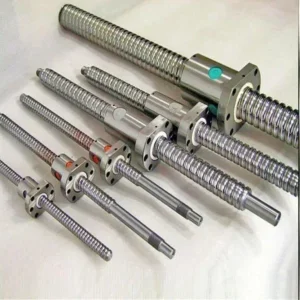
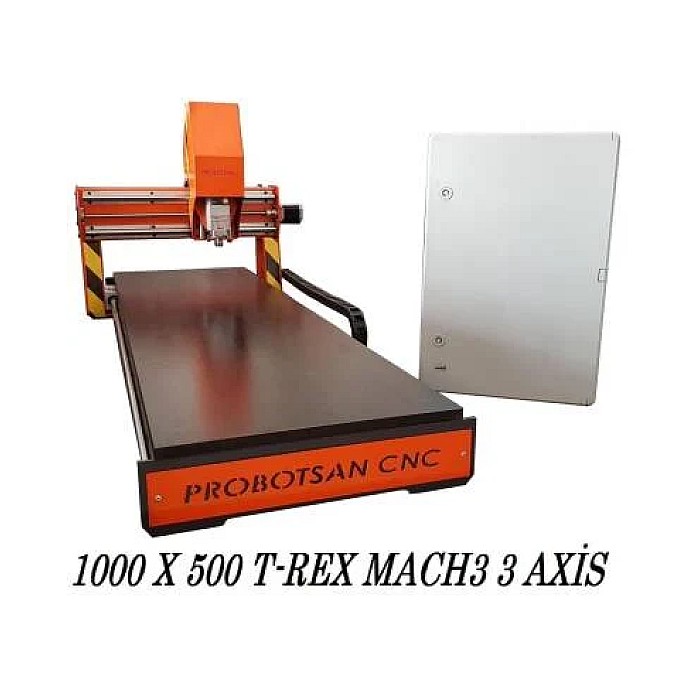
- Mechanical Structure and Rigidity: A large-scale CNC router machine must possess high rigidity and vibration damping characteristics. Regardless of the GRBL or controller choice, the machine itself (frame, linear guide rails, ball screws) must meet industrial standards. The stability of the control system cannot compensate for deviations caused by weaknesses in the mechanical structure. Especially when moving large masses, inertia forces and resonance effects should not be overlooked.
- Motor and Drive Selection: In large-scale applications, standard NEMA 17/23 stepper motors will be insufficient. Larger, high-torque stepper motors or, preferably, industrial servo motors should be used. For these motors, appropriate, high-current capacity, noise-resistant, and preferably closed-loop (encoder feedback) servo drives must be selected. Overcurrent, overvoltage, and overtemperature protections for the drives are critically important for industrial reliability.
- Cabling and EMI Protection: Industrial environments are exposed to intense electrical noise. Control signals (step, direction, enable) and limit switch cables must be shielded and routed separately from power cables. EMI/RFI effects should be minimized using proper grounding techniques, ferrite beads, and signal filtering components. Incorrect cabling can lead to erratic movements, position losses, and even hardware failures.
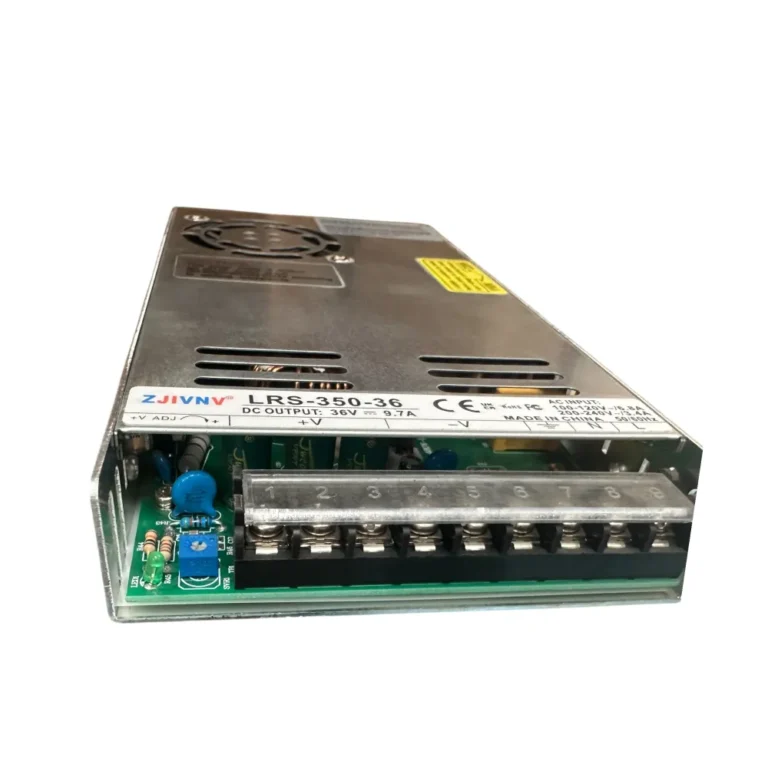
- Power Supply and Voltage Regulation: Industrial-grade power supplies that provide stable, clean, and sufficient power for the control board, motor drivers, and other sensors should be used. Instantaneous current draws from motor drivers, in particular, can cause voltage fluctuations in the power supply. These fluctuations can lead to unstable operation or resets of the Arduino. Ensure that each component is supplied with the correct voltage and current values.
- Limit Switches and Emergency Stop (E-Stop): Safety is the highest priority in industrial machines. Limit switches should prevent the machine from exceeding its mechanical limits and should preferably be arranged separately for both normal operation and emergency situations for each axis. The Emergency Stop (E-stop) button must be designed to instantly stop all machine movement and the spindle motor, operating via an independent hardware circuit. GRBL’s software-based E-stop feature is not sufficient for industrial safety standards.
- Software and Firmware Optimization: GRBL’s default settings may not be suitable for large-scale machines. Parameters such as steps/mm settings, maximum speed and acceleration limits, and jerk settings must be carefully adjusted according to the machine’s mechanical characteristics. Additionally, ensure that the G-code sender software (e.g., UGS, Candle) used is stable and reliable. If necessary, optimizations can be made at the source code level in the GRBL firmware for higher step pulse frequencies or advanced interpolation algorithms, but this requires expertise.
- Environmental Conditions: Industrial environments are often dusty, humid, and subject to temperature fluctuations. The control board and drivers should be mounted inside an electrical panel with a high IP protection rating, good ventilation, and vibration isolation. Excessive temperatures shorten the lifespan of electronic components and degrade their performance.
Common Problems and Solutions
Here are the main problems that may be encountered when trying to use Arduino-based GRBL in a large-scale CNC router machine and potential solutions:
- Step Loss and Position Deviation: This is one of the most common and critical problems. Causes include insufficient motor torque, incorrectly set driver currents, high friction, mechanical backlash, inadequate power supply, EMI-induced signal distortions, or Arduino’s processing power being unable to keep up with high step rates. Solutions include using more powerful motors and servo drives, optimizing driver currents and micro-stepping settings, checking the mechanical system (lubrication, backlash elimination), reducing EMI with shielded cabling and grounding, providing a stable power supply, and reducing GRBL’s maximum speed/acceleration settings according to the machine’s capacity. If necessary, closed-loop stepper motors or servo motors with encoder feedback should be integrated.
- Vibration and Noise: Especially in large and heavy machines, resonance vibrations can occur at certain speeds. This degrades surface quality and shortens the lifespan of mechanical components. Solutions include strengthening the machine’s mechanical structure, using vibration-damping mounting elements, changing motor driver micro-stepping settings (higher micro-step counts generally provide smoother motion), optimizing GRBL’s acceleration and jerk settings, and experimenting with different speed profiles.
- Loss of Precision and Repeatability Issues: In large-scale machines, precision is harder to achieve than in small machines. Mechanical backlash, thermal expansion, tool wear, controller signal delays, and external noise negatively affect precision. Solutions include using precision ball screws and linear guide rails, implementing backlash compensation (limited in GRBL), ensuring thermal stability, engaging tool compensation mechanisms, and switching to closed-loop control systems.
- Communication Interruptions and Loss of Control: Arduino’s serial communication via USB with a computer can cause problems in an industrial environment. Long or low-quality USB cables, EMI, problems with the computer’s USB port, or operating system-related delays can lead to communication interruptions. Solutions include using short, shielded, and high-quality USB cables, using USB isolation modules, adapting the computer to the industrial environment (industrial PC or embedded systems like Raspberry Pi), and optimizing GRBL’s serial communication speed.
- Safety Failures and Machine Damage: Insufficient safety systems in industrial applications pose a significant risk. Malfunctioning limit switches, a non-operating E-stop button, or software errors can harm the machine and the operator. Solutions include designing limit switches and the E-stop circuit with hardware redundancy and fail-safe principles, using industrial safety relays or safety PLCs, and regularly checking and maintaining sensors.
- Slow Processing Speed and Complex G-code Performance: GRBL’s 8-bit processor can become a bottleneck when processing complex G-code programs consisting of many small segments at high speeds. This leads to performance degradation and stuttering, especially in applications like 3D contouring. Solutions include optimizing G-code (fewer segments, smoother paths), carefully configuring GRBL’s motion planner settings (segmentation, look-ahead buffer), or considering upgrading to a more powerful microcontroller (e.g., ESP32-based controllers or 32-bit GRBL ports).
Expert Advice
The answer to the question of whether Arduino-based GRBL controllers “can be used” in large-scale industrial CNC router machines is not a direct “yes” or “no,” but rather a nuanced “yes under limited conditions, but generally no,” depending on the specific requirements of the application, budget constraints, and risk tolerance. From an expert perspective, it is clear that an Arduino-based GRBL solution will be insufficient for a truly industrial-standard, high-precision, high-speed, and continuously operating large-scale CNC machine. This platform is inherently designed for hobby, educational, and small-scale prototyping projects. It has significant limitations in critical factors such as processing power, real-time performance, closed-loop control integration, electromagnetic compatibility (EMC) standards, network integration, advanced safety functions, and long-term reliability required by industrial environments.
However, if the definition of “large-scale” encompasses relatively slow-moving, non-high-precision, intermittently operating, and non-critical applications (e.g., some specific niches like large woodworking router machines, plasma cutters, or gantry-style 3D printers), then with very careful engineering, significant additional hardware investments (industrial-grade motors, servo drives, power supplies, shielded cabling, isolation modules, external safety circuits), and software optimizations, it might be possible to operate such a system. Even in this case, considering the total cost of ownership (TCO) and the performance/reliability ratio to be achieved, using an industrial-grade PLC-based motion controller or a dedicated CNC controller will generally be a more logical and, in the long run, more economical solution. This is because the initial low cost of an Arduino-based system can quickly turn into rapidly increasing operational costs due to potential downtime, maintenance difficulties, safety risks, and low production efficiency.
My advice to industrial automation professionals is to thoroughly analyze project requirements and adopt the principle of “the right tool for the right job.” If the main goal of the project is cost reduction and performance and reliability are secondary priorities, then modified versions of GRBL or open-source controllers developed with more powerful microcontrollers like ESP32 can be explored. However, for a machine intended for integration into an industrial production line, where continuous high performance and error-free operation are expected, opting for proven industrial solutions such as Siemens Sinumerik, Fanuc, Heidenhain, Beckhoff TwinCAT, Mach3/Mach4 (PC-based), or various PLC-based motion control systems will be both technically more robust and a more appropriate approach in terms of occupational safety and operational efficiency. It should be remembered that there is a significant difference between merely moving a machine and operating it reliably and efficiently to industrial standards.
FAQ
Are Arduino-based GRBL controllers suitable for large-scale industrial CNC machines?
Arduino-based GRBL controllers are generally not suitable for large-scale industrial CNC router machines due to limitations in processing power, real-time performance, closed-loop control, EMI immunity, and safety features. They are best suited for hobbyist and small-scale prototyping projects.
What are the main technical limitations of Arduino GRBL for industrial use?
Key limitations include 8-bit architecture, limited processing speed (16 MHz), low step pulse frequency (30-40 kHz), lack of direct closed-loop feedback, poor EMI/RFI immunity, and basic safety integration. Industrial machines require 32-bit processors, higher frequencies, robust closed-loop control, and advanced safety systems.
What industrial-grade components are necessary when attempting to use GRBL for larger machines?
For large-scale industrial applications, you should use industrial-grade components such as high-torque servo motors, closed-loop servo drives, precision linear guide rails and ball screws, shielded cabling, industrial power supplies, and dedicated safety PLCs.
What common problems might arise when using Arduino GRBL in a large industrial CNC router?
Common issues include step loss, position deviation, vibration, noise, loss of precision, communication interruptions, and safety failures. These often stem from insufficient hardware, EMI, mechanical backlash, or GRBL's inherent limitations.
Can GRBL be modified to work for some large-scale applications, and is it cost-effective?
While possible for very specific, non-critical, slow-moving applications with significant modifications and external industrial hardware, the total cost of ownership and operational reliability often make dedicated industrial CNC controllers (e.g., Siemens, Fanuc, Mach3/4, PLC-based systems) a more practical and economical long-term solution.