No products in the cart.
Why Does a CNC Machine Vibrate? Vibration Prevention Methods
Contents
Causes and Prevention Methods of Vibration in CNC Machines: A Field Guide
Introduction and Technical Analysis
At the heart of industrial automation, CNC (Computer Numerical Control) machines are indispensable components of today’s manufacturing industry. Precision, repeatability, and high production speeds are the fundamental performance criteria expected from modern CNC machines. However, one of the most critical and destructive problems that arise during the operation of these complex systems is vibration. Vibration not only negatively affects the surface quality and dimensional accuracy of the machined part but also shortens cutting tool life, leads to premature wear of machine components, and reduces overall production efficiency. This situation can cause unacceptable losses, especially in high-precision sectors such as aerospace, medical, and automotive. Vibrations in CNC machines are the result of a complex interaction of many factors, including dynamic cutting forces, the structural rigidity of the machine, its damping capacity, the dynamic responses of moving axes, spindle performance, and even basic foundation conditions. This field guide and technical article will deeply analyze why vibration occurs in CNC machines, explain fundamental engineering principles, and provide practical and comprehensive vibration prevention methods for industrial automation specialists. Our goal is to understand this common problem encountered in production processes and enhance operational excellence with effective solutions.
Operating Principle and Technical Data
To understand the fundamental causes of vibration in CNC machines, it is important to grasp how the machine operates as a whole and what dynamic forces it is subjected to. Vibration is typically a resonance phenomenon that occurs when a system oscillates at its natural frequency or at an external excitation frequency close to these natural frequencies. In CNC machining, these excitation frequencies usually originate from cutting forces resulting from the interaction of the cutting tool with the workpiece. Cutting forces constantly change and have a dynamic structure depending on the tool geometry, workpiece material properties, material removal rate, cutting speed, and feed rate. These dynamic forces lead to stresses and deformations in the structural elements of the machine (body, axis slides, spindle, tool holder, etc.).
The main factors affecting the vibration behavior of a CNC machine are:
- Structural Rigidity and Damping: The overall structural rigidity of the machine indicates its resistance to external forces. A machine with high rigidity deforms less under cutting forces. However, rigidity alone is not sufficient; the machine must also have good damping capacity. Damping is a property that reduces the amplitude of oscillations by converting vibration energy into heat. Materials like cast iron have better damping properties than steel.
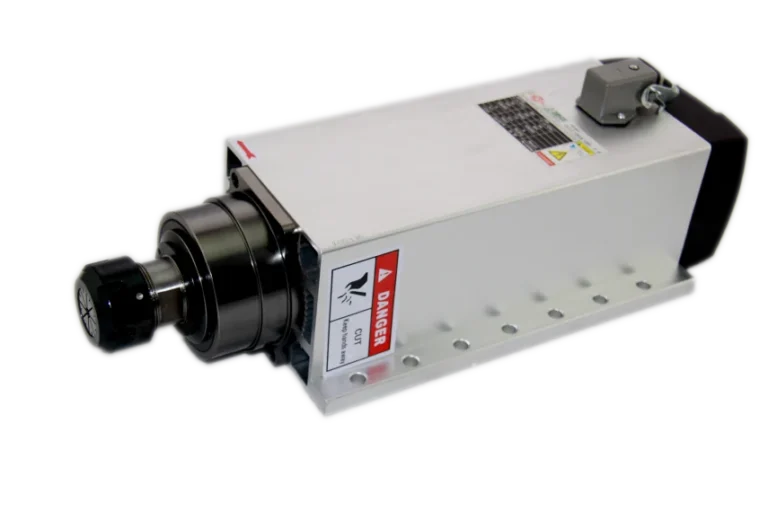
- Spindle Dynamics: The spindle motor is one of the most critical components of a CNC machine. The balance of the spindle rotating at high speeds, the condition of its bearings, and the amount of runout directly affect vibration. An unbalanced spindle leads to high-frequency vibrations due to centrifugal forces. Wear or play in the bearings are also sources of unwanted vibrations.
- Cutting Tool and Tool Holder: The rigidity, precision, and the tool itself are significant sources of vibrations generated during machining. Long and thin tools are more prone to vibration than short and thick tools. It is important for tool holders to be high-precision (e.g., hydraulic or shrink-fit) and have low runout (low TIR value). High TIR causes irregular chip removal and vibration.
- Machining Parameters: Parameters such as cutting speed, feed rate, and depth of cut directly affect the magnitude and frequency of cutting forces. Incorrectly selected parameters can coincide with the machine’s natural frequencies, leading to resonance and severe vibrations. Especially the precise adjustment of the RPM-feed ratio is critical in preventing chatter vibrations.
- Servo Systems and Control: Servo motors and drives that provide axis movements determine the dynamic response of the machine. Improper adjustment of the servo system (high gain, incorrect filtering) can cause oscillations and vibrations in the axes.
- Foundation and Installation: The foundation on which the machine is installed and the method of installation are vital for the propagation or damping of vibrations. An insufficiently rigid or unisolated foundation can transmit external vibrations to the machine’s structure or prevent the machine’s own vibrations from dissipating into the ground, causing them to accumulate internally.
| Parameter | Value/Description |
|---|---|
| Spindle Runout (TIR) | Typically < 5 µm for precision applications. |
| Machine Structural Rigidity | Between 100 N/µm – 500 N/µm under static load. Varies by application. |
| Structural Damping Ratio | Between 2% – 10%. Cast iron and polymer concrete have higher values. |
| Foundation Vibration Isolation Efficiency | Between 80% – 95%. Varies by active or passive isolation systems. |
| Tool Holder Concentricity | Typically < 3 µm for high-precision holders. |
| Cutting Force Variation Frequency | Can vary between 100 Hz – 10 kHz depending on tool RPM and number of teeth. |
| Surface Roughness Effect (Ra) | Can be higher than 0.8 µm in vibrating machining, can drop to 0.1 µm in vibration-free machining. |
Field Considerations
- Machine Foundation and Installation: The floor where the CNC machine will be installed must have sufficient rigidity and damping properties. Concrete thickness, steel reinforcement, and floor isolation are critically important. The machine’s leveling must be perfect, and all anchor bolts must be tightened according to manufacturer specifications. Incorrect leveling or loose anchors compromise the structural integrity of the machine and invite vibration. If necessary, special vibration-absorbing pads or active/passive isolation systems should be installed under the machine.
- Cutting Tool and Tool Holder Selection: The shortest and most rigid cutting tool suitable for the material to be machined, cutting conditions, and part geometry should be selected. Tool holders should be high-precision (e.g., hydraulic or shrink-fit) and have low runout (low TIR value). Worn or unbalanced tools should be replaced immediately. Dynamic balancing of the tool minimizes vibrations at high RPMs.
- Optimization of Cutting Parameters: For each machining operation, cutting parameters such as RPM, feed rate, and depth of cut should be optimized according to the dynamic characteristics of the machine and tool. By using chatter analyses or graphs called stability lobes, optimum RPM and depth of cut combinations where vibration does not occur can be determined. Generally, low depth of cut at high RPMs or high depth of cut at low RPMs can reduce vibrations. Small adjustments in RPM can be beneficial to avoid resonance frequencies.
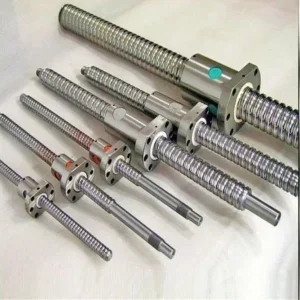
- Periodic Maintenance and Inspection: Moving parts such as spindle bearings, linear guide rails, ball screws, and couplings should be regularly inspected and maintained. Play, wear, or lack of lubrication in bearings can cause vibration. In belt-driven systems, belt tension should be checked, and worn belts should be replaced. The tightness of all fasteners (bolts, nuts) should be checked periodically.
- Environmental Conditions and Work Area: External vibrations from other machines or equipment in the vicinity of the machine can also affect the CNC machine. Such external sources should be identified, and isolation measures should be taken if possible. Factors such as temperature and humidity of the working environment can also affect the overall performance of the machine and, consequently, its vibration behavior.
- Vibration Monitoring and Analysis Systems: In advanced manufacturing facilities, vibration levels can be monitored in real-time using vibration sensors and analysis software integrated into CNC machines. These systems enable early detection of potential problems for preventive maintenance and help determine optimum machining conditions.
Common Problems and Solutions
Here are common problems related to vibration in CNC machines and their solutions:
- Chatter Marks and Poor Surface Quality: The formation of visible chatter marks or ripples on the surface of the machined part is the most common symptom of vibration. This usually results from insufficient dynamic stability of the machine or tool.
- Solution: Optimize cutting parameters (RPM, feed, depth of cut). Try to move away from resonance zones by increasing or decreasing the tool RPM. Use a more rigid tool holder and a shorter tool. Control the direction and magnitude of cutting forces by changing the machining strategy (e.g., helical interpolation, climb milling). Consider using vibration-damping tools or adapters.
- Short Tool Life and Excessive Tool Wear: Tools wearing out much faster than expected, breaking, or chipping at their edges are signs of excessive vibration. Vibration increases the impact loads applied to the cutting edge of the tool.
- Solution: Review cutting parameters, ensure the tool and holder are correctly selected. Use tools or holders with higher damping capacity. Ensure the cutting fluid is applied correctly and sufficiently. Optimize the tool path to avoid sudden load changes.
- Abnormal Noise and Sounds: High-frequency whistling sounds, low-frequency knocking, or generally increased noise levels coming from the machine during machining indicate the presence of vibration.
- Solution: Try to identify the source of the sound (spindle, axes, tool). Check spindle bearings, belts, or motors. Tighten loose fasteners. Adjust cutting parameters to reduce resonance sounds. If necessary, seek help from a specialist technician to have the machine’s dynamic balance checked.
- Dimensional Errors and Out-of-Tolerance Parts: Deviation of machined parts from expected dimensional accuracy, especially in applications requiring precise tolerances, can be caused by vibration.
- Solution: Check the machine’s leveling and foundation connections. Have the backlash of the axes and servo system settings checked. Verify the rigidity and runout of the tool and tool holder. Remember that thermal deformations during machining can also lead to dimensional errors, and ensure the machine operates at a stable temperature.
- Premature Wear and Damage to Machine Components: Critical components such as bearings, ball screws, and linear guides wear out or get damaged faster than normal due to continuous exposure to vibration loads.
- Solution: Implement regular and preventive maintenance programs. Replace worn parts immediately. Regularly monitor the machine’s overall dynamic performance and vibration levels. Ensure the lubrication system is working properly and adequate lubrication is provided to all moving parts.
Expert Advice
Vibration in CNC machines is a multifaceted problem that profoundly affects production quality, tool life, and overall machine efficiency. For every business operating in the industrial automation sector, vibration management is not just a cost item but a strategic investment that provides a competitive advantage. The causes and solutions discussed in this detailed field guide clearly demonstrate the need for a holistic approach to combating vibration. Instead of focusing on a single factor, an integrated strategy should be developed that covers every stage from machine installation to cutting tool selection, from optimization of machining parameters to regular maintenance. From an expert perspective, correctly diagnosing the root cause of vibration often requires a systematic analysis and measurement approach, rather than wasting time and resources with trial-and-error methods. Advanced vibration monitoring systems and modal analysis techniques can significantly accelerate this diagnostic process and lead to more accurate solutions. Furthermore, training operators and maintenance personnel to recognize vibration symptoms and implement basic troubleshooting steps will increase proactive intervention capacity. It should be remembered that a vibration-free machining environment not only produces higher quality parts but also offers longer machine life, lower operating costs, and a safer working environment. Therefore, investing in vibration control for CNC machines forms the basis of a sustainable and efficient production process that pays for itself many times over in the long run.
FAQ
What are the main causes of vibration in an industrial CNC router machine?
Vibration in CNC machines can be caused by several factors, including unbalanced spindle motors, worn bearings, insufficient structural rigidity of the machine, improper cutting tool selection, incorrect machining parameters (speed, feed, depth of cut), poorly adjusted servo drives, and an unstable machine foundation. Dynamic cutting forces during machining are often the primary trigger.
What are the negative effects of vibration on CNC machining quality and machine longevity?
Vibration in CNC machines leads to poor surface finish (chatter marks), reduced dimensional accuracy, significantly shortened cutting tool life, premature wear and damage to machine components (bearings, ball screws), and increased noise levels in the workshop. These issues ultimately reduce production efficiency and increase operational costs.
How can I effectively prevent vibration in my CNC machine?
To prevent vibration, ensure your CNC machine is installed on a rigid and properly isolated foundation. Use high-precision, balanced cutting tools and tool holders. Optimize cutting parameters (RPM, feed, depth of cut) to avoid resonance frequencies. Implement regular preventive maintenance for spindle bearings, linear guide rails, and servo systems. Consider using vibration-damping tools or active/passive isolation systems if needed.
What are chatter marks, and how can they be eliminated in CNC machining?
Chatter marks are visible patterns or ripples on the machined surface caused by regenerative vibration. To eliminate them, adjust cutting parameters, especially RPM, to move away from unstable zones. Use shorter, more rigid tools and tool holders. Ensure proper tool clamping and consider using specialized vibration-damping tools. Analyzing stability lobes can help identify optimal cutting conditions.
What role does regular maintenance play in preventing CNC machine vibration?
Regular maintenance is crucial. This includes inspecting and lubricating spindle bearings, checking the tension of drive belts, tightening all fasteners, and verifying the levelness of the machine. Monitoring vibration levels with sensors can help detect issues early, allowing for proactive maintenance before severe problems arise.