







































































Double-Ended Spindle Motors in Woodworking: Applications and Technical Analysis
📑 Table of contents (Click to open)
- Introduction to Double-Ended Spindle Motors in Woodworking: Applications and Technical Analysis
- Operating Principle and Technical Data of Double-Ended Spindle Motors in Woodworking
- Application Areas and Advantages:
- Technical Data and Selection Criteria:
- Field Considerations for Double-Ended Spindle Motors in Woodworking
- Common Problems and Solutions for Double-Ended Spindle Motors in Woodworking
- Conclusion and Expert Advice on Double-Ended Spindle Motors in Woodworking
- FAQ
Introduction to Double-Ended Spindle Motors in Woodworking: Applications and Technical Analysis
The rise of industrial automation in the woodworking sector has brought about significant advancements in production efficiency, precision, and flexibility. Within this context, double-ended spindle motors stand out as a revolutionary solution, particularly in CNC woodworking machines. Going beyond the capabilities offered by traditional single-ended spindle motors, their ability to perform two different operations simultaneously or sequentially on a single axis offers critical advantages in terms of operational continuity and production speed. This article comprehensively addresses the role, technical specifications, application areas, and field guidance details of double-ended spindle motors for industrial automation professionals. Our aim is to maximize the potential offered by this specialized motor type and provide practical solutions to potential challenges. In a wide range of applications such as cutting wood panels, profiling, drilling, grooving, and surface finishing, minimizing tool change times and increasing processing capacity are vital in a competitive manufacturing environment. Double-ended spindle motors directly address these needs, carrying the potential to significantly improve the overall equipment effectiveness (OEE) of the production line.
Operating Principle and Technical Data of Double-Ended Spindle Motors in Woodworking
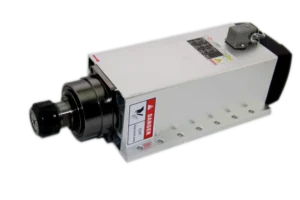
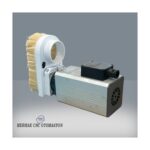
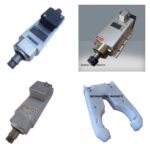
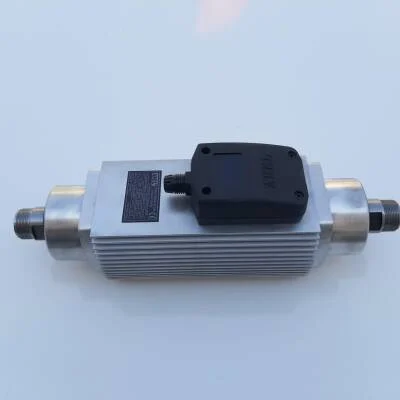
Double-ended spindle motors, as their name suggests, are specially designed motors equipped with tool holder mechanisms on both ends. This design offers operators or automation systems the flexibility to use two different tools within a single machining cycle. Typically, these two ends are connected to the same motor shaft and rotate at the same speed; however, some advanced models feature systems where each end can be controlled independently or operate at different speeds. In woodworking applications, this provides significant time savings and increased efficiency, especially in the production of complex parts or high-volume serial production. For example, while a milling tool is used to create a profile on one end, a drill tool can be used to bore holes on the other end, or different diameter milling cutters can be used sequentially. This eliminates or minimizes the process known as tool change time, which causes significant time loss in production, thereby increasing the machine’s uptime.
Application Areas and Advantages:
Double-ended spindle motors find a wide range of applications in the woodworking sector. The main areas of use include:
- Panel Processing and Furniture Manufacturing: Ideal for operations such as cutting panel materials like MDF, particleboard, and plywood, edge profiling, drilling holes (for hinges, handles), and grooving (for back panel slots). Especially in the production of kitchen, bathroom, and office furniture, it speeds up the production cycle by completing different operations in a single step.
- Door and Window Production: Indispensable for detailed operations such as profiling wooden door and window frames and sashes, opening lock and hinge recesses, and milling glass bead channels. The presence of two different profile cutters on a single spindle accelerates complex profile transitions.
- Special Wood Products and Decorative Work: Provides a great advantage when different diameter and form cutters need to be changed quickly in musical instruments, toys, decorative wood panels, or carving work. In such precision-demanding tasks, it minimizes positioning errors caused by tool changes.
- Mass Production and High-Volume Jobs: Especially in the mass production of wooden components for the automotive or construction sectors, uninterrupted operation of the production line is critically important. Double-ended spindle motors offer a competitive advantage by increasing efficiency and capacity in such applications.
- Combined Operations: It is possible to perform a cutting operation (e.g., cutting the outer line of a panel) on one end and a surface finishing or sanding operation (e.g., smoothing the cut edge) on the other end, either simultaneously or sequentially. This offers the potential to integrate secondary processing steps directly onto the CNC machine.

Technical Data and Selection Criteria:
The main technical parameters to consider when selecting a double-ended spindle motor are:
- Power: The appropriate power range (typically from 5 kW to 20 kW) should be selected based on the density of the wood, the thickness of the material to be processed, and the cutting depth. Higher power enables the processing of harder materials and higher cutting speeds.
- RPM Range: Spindles with a wide RPM range (typically 6,000 – 24,000 RPM or higher) should be preferred for different wood types and tool types. High RPMs are important for smooth surfaces and fine details.
- Tool Holder Type: Standard tool holder systems such as HSK (Hollow Shank Taper) or ER (Collet Chuck) are used. HSK offers a more rigid connection for high-speed and precision applications, while ER systems provide more common and flexible use.
- Cooling System: Two main types are available: air-cooled and liquid-cooled. Air-cooled systems are simpler and require less maintenance, while liquid-cooled systems offer more stable temperature control and longer life, especially preferred for spindles operating continuously under heavy loads.
- Bearing Type and Life: High-quality, ceramic ball bearings provide better performance, lower friction, and longer life at high speeds. The overall life and precision of the spindle depend on the bearing quality.
- Vibration and Balance: Low vibration levels are critical for better machining quality and tool life. High-precision spindles come with factory-set balance adjustments.
- Ease of Integration: Easy integration with CNC control systems is important for programming and ease of use.
| Parameter | Value/Description |
|---|---|
| Power Range | 5 kW – 20 kW (Varies by application) |
| Maximum RPM | 18,000 – 24,000 RPM (30,000+ RPM in some models) |
| Tool Holder Type | HSK-F63, HSK-E40, ER32, ER40 (Varies by application and spindle size) |
| Cooling System | Air-Cooled or Liquid-Cooled (Liquid cooling recommended for continuous heavy load) |
| Bearing Type | High-Precision Ceramic Ball Bearings (Typically double row) |
| Voltage and Frequency | 380-400V, 3 Phase, 50/60 Hz (Industrial standards) |
| Application Area | Panel Processing, Furniture, Door-Window, Decorative Work, Mass Production |

Field Considerations for Double-Ended Spindle Motors in Woodworking
- Correct Tool Selection and Management: To maximize the efficiency of a double-ended spindle, it is critical to select tools for both ends that are appropriate for the material to be processed, cutting speed, and desired surface quality. Balanced tools, proper installation, and regular sharpening or replacement directly affect both machining quality and spindle life. Tool life monitoring and integration with automatic tool change systems ensure production continuity.
- Cooling System Maintenance and Control: Overheating of spindle motors can lead to performance loss and premature failure. In air-cooled systems, regular cleaning of filters and ensuring unobstructed airflow are essential; in liquid-cooled systems, continuous monitoring of coolant level, quality, and circulation is vital. Coolant temperature and pressure must be kept within specified limits.
- Vibration Analysis and Balance Control: In high-speed spindles, vibration is a significant factor that degrades machining quality, shortens tool life, and damages bearings. Regular checking and, if necessary, correction of both the spindle’s own balance and the tool’s balance are required. In case of excessive vibration, immediate intervention is necessary, and potential bearing wear or mechanical looseness should be investigated.
- Bearing Health and Lubrication: Bearings, the heart of spindle motors, are exposed to high speeds and loads. To extend bearing life, lubrication (if not a sealed system) or bearing health monitoring should be performed at manufacturer-recommended intervals. Abnormal noises or excessive heating can be early indicators of bearing problems and should be checked immediately by a specialist team.
- CNC Integration and Programming Optimization: To fully utilize the potential of double-ended spindle motors, seamless integration with the CNC control system and intelligent programming are essential. Optimizing tool change commands and machining sequences increases efficiency. Operators and programmers being proficient in the features of these systems minimizes errors and maximizes production speed.
- Workpiece Clamping and Machine Rigidity: Preventing the transfer of vibrations and forces generated during machining to the workpiece and maintaining machine rigidity are important for high-precision work. Workpieces must be securely and firmly clamped on the table using vacuum tables, pneumatic, or mechanical clamping systems. Periodic inspection of the machine frame and axis movement systems prevents mechanical play.
- Operator Training and Safety: For the efficient and safe use of such advanced machines, detailed operator training is mandatory. Proficiency in emergency stop procedures, tool mounting/dismounting, basic troubleshooting, and routine maintenance increases both production efficiency and ensures occupational safety.

Common Problems and Solutions for Double-Ended Spindle Motors in Woodworking
In industrial automation systems, particularly in woodworking applications using high-performance double-ended spindle motors, various problems can arise. Rapid and accurate identification and resolution of these issues are critical for production continuity and cost-effectiveness.
1. Overheating: The spindle motor exceeding its normal operating temperature can lead to performance degradation and permanent damage.
- Causes: Inadequate cooling (clogged air filters, low coolant level, faulty coolant pump), overloading, bearing friction.
- Solutions: Regularly clean or replace filters in air-cooled systems. In liquid-cooled systems, check coolant level, quality, and circulation, ensuring the pump is operational. Optimize machining parameters (cutting depth, feed rate) to reduce the load on the motor. Check the condition of bearing wear.
2. High Vibration and Abnormal Noises: Reduces machining quality, shortens tool life, and damages machine components.
- Causes: Unbalanced tool, worn or damaged bearings, loose connections, imbalance in the spindle itself, motor shaft runout.
- Solutions: Check tool balance and replace if necessary. Inspect bearings; replace if there are abnormal noises or play. Tighten spindle motor mounting connections and bolts on the machine frame. Have the spindle’s own balance checked or seek support from a specialized service.
3. Decrease in Machining Quality (Rough Surface, Dimensional Errors): Causes produced parts to fail to meet specifications.
- Causes: Spindle runout, worn or dull tool, incorrect cutting parameters, insufficient machine rigidity, workpiece clamping problems.
- Solutions: Check the amount of runout at the spindle nose with a dial indicator. Replace or sharpen worn tools. Adjust parameters such as cutting depth, feed rate, and RPM according to the material to be processed and the tool. Check for mechanical play in the machine frame and axis systems. Ensure the workpiece is securely and vibration-free clamped on the table.
4. Tool Breakage or Excessive Wear: Leads to production stoppages and increased tool costs.
- Causes: Incorrect tool selection (tool not suitable for the material), excessive feed rate or cutting depth, inadequate chip evacuation, weak clamping by the tool holder, unbalanced tool.
- Solutions: Use the most suitable tool for the material to be processed and the machining type. Optimize cutting parameters according to manufacturer recommendations and material properties. Ensure the chip evacuation system (vacuum or air) is working effectively. Check that the tool holder applies sufficient clamping force and install the tool correctly. Avoid using unbalanced tools.
5. Electrical Faults (Motor Not Running, Error Codes): Can cause the spindle motor to stop completely.
- Causes: Drive (VFD) failure, overcurrent or voltage fluctuations, phase errors, cable damage, short circuit in motor windings.
- Solutions: Check the drive’s error codes and troubleshoot according to the user manual. Inspect electrical connections, cables, and fuses. Ensure input voltage and current are stable. If necessary, seek support from an electrical engineer or automation technician to check communication and connections between the motor and drive. Test motor windings.
Most of these problems can be largely prevented with regular preventive maintenance programs, proper operator training, and the selection of quality equipment. Early diagnosis and rapid intervention are vital to prevent larger breakdowns and prolonged production stoppages.
Conclusion and Expert Advice on Double-Ended Spindle Motors in Woodworking
In the industrial woodworking sector, to remain competitive and respond quickly to market demands, double-ended spindle motors stand out as a strategic investment. This technology not only minimizes tool change times, thereby increasing production speed, but also maximizes operational flexibility by integrating different and complex operations on a single machine. The advantages it offers across a wide range of applications, from furniture production to door-window manufacturing, from special wood products to mass-produced panels, are indispensable, especially for businesses engaged in high-volume and detail-oriented production. However, to fully utilize the potential of this advanced technology, merely selecting the right equipment is not enough; a meticulous approach must be adopted at every stage, from system installation to daily use and periodic maintenance.
As an expert, my advice to every business considering double-ended spindle motor integration is to first thoroughly analyze their own production needs and goals. Technical specifications such as machine power, RPM range, tool holder type, and cooling system should be carefully selected, taking into account the types of materials to be processed, cutting depths, and desired surface quality. Furthermore, seamless integration with CNC control systems, intelligent programming capabilities, and user-friendly interfaces are critically important for system efficiency. Comprehensive training for personnel on these systems will minimize operational errors and ensure safe and efficient use of the machine. It should be remembered that even the best technology cannot deliver expected performance without regular maintenance and correct use. Maximum attention to issues such as bearing health, cooling system maintenance, vibration analysis, and tool management will extend the life of the spindle motor and guarantee uninterrupted production. In the future, double-ended spindle motors, which will be further integrated with Industry 4.0 and smart manufacturing concepts, will continue to set new standards for automation and efficiency in the woodworking industry. Viewing this investment not just as a cost item, but as a long-term competitive advantage and a tool for sustainable growth, will be the key to success in the sector.
FAQ
What are double-ended spindle motors used for in woodworking?
Double-ended spindle motors are used in CNC woodworking machines to perform two distinct operations, such as routing and drilling, simultaneously or sequentially without manual tool changes. This significantly boosts production efficiency and reduces cycle times.
What are the main advantages of using double-ended spindle motors?
Key benefits include reduced tool change times, increased production speed, enhanced operational flexibility by integrating multiple processes on one machine, and improved overall equipment effectiveness (OEE).
What technical specifications should I consider when choosing a double-ended spindle motor?
When selecting, consider power (5-20 kW), RPM range (6,000-24,000+), tool holder type (HSK, ER), cooling system (air or liquid-cooled), bearing type (high-precision ceramic), and ease of integration with your CNC control system.
What are the common problems with double-ended spindle motors and how can they be solved?
Common issues include overheating (due to poor cooling or overloading), high vibration (from unbalanced tools or worn bearings), reduced machining quality (spindle runout, dull tools), tool breakage, and electrical faults (VFD issues, cable damage). Regular maintenance and proper operation are crucial for prevention.
What are the critical field considerations for operating double-ended spindle motors?
Proper tool selection and management, regular cooling system maintenance, vibration analysis and balance control, bearing health monitoring, seamless CNC integration, secure workpiece clamping, and comprehensive operator training are essential for optimal performance.