
No products in the cart.
%54 Discount
UCT 208 Take-Up Cast Iron Housing Unit
Original price was: 15.16$.6.92$Current price is: 6.92$.
UCT 208 Take-Up Cast Iron Housing Unit with 40mm bore, designed for tensioning mechanisms in industrial automation.
In stock
🔥 Special for Today Only %54 Discount Opportunity!📦 Category: 40 mm Cast Housings
Mermak assuranceFrom factory to end user · importer / main dealer · strong stock
ImporterMain dealer / distributorStrong stockGood priceCorporate invoice
In stock / available to order · 14-day return for standard unused products; conditions may vary for custom size/cut products.
UCT 208 Take-Up Cast Iron Housing Unit
INDUSTRIAL AUTOMATION PARTS | SUPERIOR PERFORMANCE SERIES
Detailed Product Review
The UCT 208 take-up bearing unit is a cast iron housed bearing designed for industrial automation systems, particularly in the medium-to-large shaft diameter segment. It is used in tensioning mechanisms for drive elements. This component is designed for integration with shafts having a nominal diameter of 40 mm. Its primary function is to maximize power transmission efficiency by maintaining the optimal tension level of belts, chains, or belts in drive systems. The bearing unit, thanks to its spherical outer ring geometry, has the capability to automatically compensate for minor axial and radial misalignment errors or angular deviations that may occur between the shaft and the housing. This self-aligning feature reduces precision requirements during installation, minimizes localized stress concentrations within the bearing by absorbing stresses arising from dynamic loads or thermal expansions during operation, thereby significantly increasing the bearing’s fatigue life and the system’s overall stability. It is particularly designed for use on slide rails and slotted chassis, allowing for precise adjustment of the tension of drive elements by moving them back and forth.
The structural rigidity of the UCT 208 is provided by its housing, manufactured from high-strength cast iron. This material selection offers superior mechanical strength and stability against the high vibration and impact operating conditions frequently encountered in heavy industrial environments. The natural damping capacity of cast iron reduces vibration amplitudes, lightening dynamic loads on the bearing elements and increasing the system’s operational reliability. Periodic lubrication, easily performed via the integrated grease nipple, extends the bearing’s operational life by delaying friction and wear between the inner ring and rolling elements. This ease of maintenance contributes to optimizing planned downtime and reducing operating costs. Proper installation procedures and diligent adherence to manufacturer-recommended regular maintenance routines ensure that the UCT 208 take-up bearing unit provides a reliable and high-performance service life for many years in industrial facilities, guaranteeing operational continuity. The product is used at critical tensioning points in various industrial automation applications such as conveyor systems, packaging lines, elevators, and long belt tensioning systems.
UCT 208 Take-Up Bearing Unit Advantages
Optimal Shaft Fit and Wide Inner Ring Geometry: The UCT 208 is manufactured to a precise tolerance range for a nominal shaft diameter of 40 mm, ensuring a tight fit (typically H7/h7 or similar interference fit tolerance) between the shaft and the bearing’s inner ring, minimizing slippage and vibration during rotation. The wide inner ring design offers a longer contact area on the shaft, allowing radial and axial loads to be distributed over a larger surface. This reduces stress concentrations on the shaft, increases the shaft’s fatigue life, and maximizes the bearing’s grip stability on the shaft, ensuring reliable performance even in applications requiring high torque transmission. The wide contact area also reduces the risk of shaft wear.
High-Strength Cast Iron Housing Structure: The bearing housing is manufactured from a special alloy cast iron that possesses high tensile and compressive strength, along with good vibration damping capabilities. This material choice ensures the structural integrity and rigidity of the bearing unit even under high dynamic loads, shock impacts, and continuous vibration commonly encountered in heavy industrial applications. The thermal stability properties of cast iron help maintain dimensional stability across a wide range of temperatures, while its corrosion resistance supports long-term service life in harsh operating environments. The housing’s rigidity helps maintain the correct geometric positions of the bearing elements, minimizing deformation under load and directly impacting the bearing’s precision and lifespan.
Automatic Eccentricity Compensation with Spherical Outer Ring: The outer ring of the UCT 208 features a spherical geometry, enabling the bearing’s self-aligning capability. This feature can automatically absorb angular misalignment errors between the shaft and the housing (typically within ±2 to ±3 degrees) that may occur during installation or operational conditions, without creating additional stresses within the bearing’s internal structure. From an engineering perspective, this ensures a more uniform load distribution on the rolling elements within the bearing, preventing edge loading and localized wear. Consequently, the bearing’s fatigue life is extended, friction losses are reduced, and the system’s overall energy efficiency is improved. This design offers a critical advantage in terms of ease of installation and operational reliability, especially in long shaft systems or on flexible chassis.
Technical Specifications and Capacity
Feature
Value/Description
Bearing Type
Take-Up Cast Iron Housing Unit
Inner Bearing Diameter (Shaft Diameter)
40 mm (Nominal)
Housing Material
High-Strength Cast Iron (Typically GG-20 or equivalent)
Outer Ring Structure
Spherical (Self-Aligning) – Angular Misalignment Tolerant (Typical ±2° – ±3°)
Lubrication Mechanism
Periodic Grease Lubrication via Integrated Grease Nipple
Sealing
Internal Contact Lip Seals (Protection against Dust, Chips, and Dirt)
Mounting Type
Adjustable Take-Up Mounting on Slide Rails and Slotted Chassis
Technical Frequently Asked Questions (FAQ)
What are the specific advantages of a UCT 208 type take-up bearing over a fixed bearing in drive systems?
Take-up bearings like the UCT 208 offer the ability to precisely adjust and maintain the tension of drive elements, particularly in belt, chain, and belt-driven systems, throughout their operational life. While fixed bearings are typically used to secure the shaft’s position, take-up bearings are moved on a slide rail chassis to compensate for elongation or slack in the drive elements. This optimizes power transmission efficiency, extends the life of the drive elements (belts, chains), and reduces vibrations. Furthermore, it ensures the system is set to the correct tension during initial installation or maintenance, preventing additional loads on the bearing and shaft from over-tensioning or slippage and power loss from insufficient tension. This adaptive positioning capability is critical for dynamic systems such as long-distance conveyors or high-speed packaging lines.
What are the engineering implications of the UCT 208’s spherical outer ring design on bearing life and system tolerances?
The spherical outer ring design of the UCT 208 allows the bearing to possess self-aligning capabilities, permitting a certain degree of angular movement between the inner and outer rings. This feature can absorb minor axial and radial misalignment errors or angular deviations between the shaft and the housing (typically within a few degrees) without inducing stress within the bearing. From an engineering standpoint, this ensures a more uniform load distribution on the bearing elements (rolling elements and rings), preventing localized high stress concentrations that can occur with edge loading in traditional fixed bearings. This condition significantly shortens the bearing’s fatigue life. The spherical outer ring distributes these stresses, allowing the bearing to perform closer to its nominal fatigue life and offering some flexibility in system tolerance requirements, providing ease of installation and cost benefits. It also minimizes the adverse effects of geometric changes on the bearing due to dynamic loads or thermal expansion.
How do the recommended lubrication procedures and grease type for the UCT 208 affect the bearing’s operational life?
Proper lubrication procedures and the selection of an appropriate grease type are critical for maximizing the operational life of the UCT 208 housed bearing. The integrated grease nipple facilitates periodic lubrication. Generally, industrial greases based on lithium soap, with EP (Extreme Pressure) additives, and of NLGI class 2 or 3 are recommended. These greases maintain the lubricating film even under high load and temperature conditions, preventing metal-to-metal contact and minimizing wear. The lubrication interval should be determined based on the bearing’s operating temperature, load conditions, rotational speed, and environmental factors; typically, manufacturer-provided tables or lubrication calculation methods from bearing manufacturers like FAG/SKF are used. Insufficient lubrication increases friction, leads to overheating and premature fatigue, while over-lubrication can damage sealing elements and create unnecessary friction torque within the bearing. Lubrication performed with the correct amount at regular intervals preserves the integrity of the bearing surfaces, prevents corrosion, and inhibits the ingress of contamination, allowing the bearing to reach its designed operational life.
How does the UCT 208’s high-strength cast iron housing improve the system’s dynamic response under vibratory and shock loads?
The high-strength cast iron housing of the UCT 208 significantly improves the system’s dynamic response, especially in industrial environments where vibratory and shock loads are common. Cast iron has a higher internal damping capacity compared to steel, meaning it effectively reduces vibration amplitudes by converting mechanical energy into heat. Vibration damping reduces the amplitude of dynamic loads on the bearing elements, decreasing the risk of fatigue damage and lowering the bearing’s noise level. Under shock loads, the high compressive strength and rigidity of cast iron minimize housing deformation, which helps maintain geometric precision within the bearing. The housing’s mass and rigidity create inertia, providing a more stable platform against sudden external forces. These features enhance the system’s overall operational reliability and allow the bearing itself to serve reliably for many years under demanding conditions, reducing maintenance costs. Mermak has 16 years of experience, operating from our Ankara Uzay Sanayi factory/warehouse. Our website stock quantities and prices are up-to-date. Stocked products are dispatched directly from our warehouse without production waiting. We ensure careful packaging, meticulous invoice/document follow-up, and work with reliable logistics partners. The Mermak team monitors the shipment process, and product videos or factory viewings can be arranged via WhatsApp or our contact channels upon request. We supply industries in the United Kingdom, United States, Canada, Australia, Ireland, New Zealand, South Africa, and similar countries/international markets.
| Dimensions |
|---|
You must be logged in to post a review.
Taksit Tablosu
Related Products
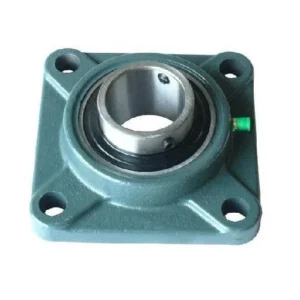 %48 DiscountUCF 208 Pillow Block Bearing UnitOriginal price was: 11.38$.5.88$Current price is: 5.88$.View
 %35 DiscountSK40 Shaft HolderOriginal price was: 11.08$.7.20$Current price is: 7.20$.View
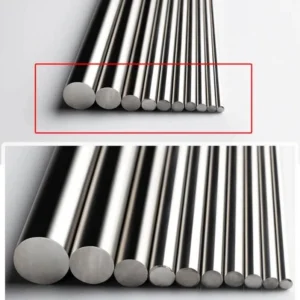 %30 Discount40 mm Hard Chrome Plated Induction Hardened Ground ShaftOriginal price was: 51.84$.36.11$Current price is: 36.11$.View
Reviews
There are no reviews yet.