


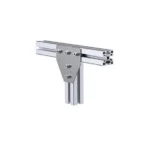
Three-Way Connector Plate 40×40 K10 Zinc
1.57$
High-strength steel connector plate for 40×40 aluminum profiles with K10 channel. Zinc-plated for superior corrosion resistance. Ideal for industrial automation and machine building.
In stock
In stock / available to order · 14-day return for standard unused products; conditions may vary for custom size/cut products.
Three-Way Connector Plate 40×40 K10 Zinc
Detailed Product Review
The Three-Way Connector Plate 40×40 K10 Zinc is a critical engineering component that ensures the structural integrity of modular aluminum profile constructions used in industrial automation systems. This specially designed connector is manufactured with precise tolerances to perfectly match the 10mm channel (K10) geometry of 40×40 series aluminum profiles. Its primary function is to create 90-degree angular connections between profiles joining on three different axes (X, Y, Z), forming a rigid and stable structural frame without the need for any welding or special machining. This significantly saves time and labor costs, especially in prototyping processes, rapid assembly of machine frames, or modification of existing systems. The optimized hole geometry of the connector plate allows for tight, vibration-resistant, and high-strength connections using standard M8 or M10 bolts and T-nuts, thus guaranteeing the system’s structural integrity even under dynamic loads.
Manufactured to Mermak CNC V2 industrial quality standards, this connector plate is made from high-strength steel. This material choice ensures the product has high tensile and torsional resistance even under static and dynamic loads. The product’s surface is protected by a zinc plating (galvanization) process applied according to DIN 50979 standards. This coating, while preserving the fundamental mechanical properties of the steel, creates a superior corrosion-resistant layer against harsh industrial environmental conditions such as moisture, dust, chemical vapors, and corrosive gases. In addition to acting as a passive barrier, the zinc coating also provides electrochemical protection by acting as a sacrificial anode in case of surface damage, as it is more electro-negative than steel. Therefore, it offers long-lasting and reliable performance in a wide range of industrial applications, including machine frames, conveyor systems, automation cells, protective barriers, and test stands. The 5 mm thickness of the connector plate minimizes local stress concentrations at connection points, increasing the system’s overall rigidity and load-bearing capacity.
Advantages of the Three-Way Connector Plate 40×40 K10 Zinc
Optimized Assembly Processes and Modular Flexibility: This connector plate is designed for perfect compatibility with 40×40 K10 aluminum profile systems and offers fast and precise assembly without the need for special tools or welding due to its pre-drilled hole geometry. This significantly reduces the time and labor costs in engineering and assembly processes. Its modular structure not only provides flexibility in the design phase but also allows for easy expansion, reconfiguration, or maintenance throughout the operational life of the systems, minimizing downtime in production lines and accelerating prototyping cycles.
High Mechanical Strength and Structural Rigidity: Manufactured from 5 mm thick high-strength steel, this connector plate exhibits superior resistance to static, dynamic, torsional, and bending loads due to its optimized geometry and material properties. By effectively distributing stresses at the connection points, it increases the overall structural rigidity of the system and contributes to its vibration damping capacity. This is a critical factor, especially in applications such as heavy-load conveyor systems, high-speed automation cells, or test stands with sensitive measuring equipment, significantly impacting the system’s stability and long-term performance.
Enhanced Corrosion Resistance and Environmental Durability: The zinc plating (galvanization) process applied to the product’s surface, performed according to DIN 50979 standards, provides superior protection against moisture, chemical vapors, dust, and corrosive gases commonly encountered in industrial environments. This coating forms a passive barrier on the steel surface, preventing oxidation, and also acts as a sacrificial anode in case of accidental scratches or damage, protecting the underlying steel. This double-layer protection mechanism ensures that the connector maintains its structural integrity and aesthetic appearance for many years even in harsh operating conditions, thereby reducing maintenance costs and extending the system’s operational life.
Technical Specifications and Capacity
FeatureValue/Description
Product Code8692024020755
MaterialHigh-Strength Steel (Industrial grade, high tensile and yield strength)
Surface TreatmentZinc Plating (Galvanization) – Compliant with DIN 50979 standards, enhanced corrosion resistance
Profile Compatibility40x40 Series Aluminum Profile (10mm Channel Width – K10 standard)
Connection TypeThree-Way Corner Connector – Designed for 90-degree angular joints
Thickness5 mm – Provides high rigidity, torsional, and bending resistance
Assembly MethodWith standard M8 or M10 bolts and T-nuts (bolt holes designed for compatibility)
Technical Frequently Asked Questions (FAQ)
How does the material selection and surface treatment of this connector plate affect its structural performance and lifespan in industrial applications?
The Three-Way Connector Plate is manufactured from high-strength steel, which, due to its high tensile and yield strength, exhibits superior resistance to deformation even under static and dynamic loads. This characteristic is vital for maintaining structural integrity in critical applications such as machine frames or support structures. The zinc plating (galvanization) applied as surface treatment significantly enhances the steel’s resistance to corrosion. As zinc is more electro-negative than steel, it acts as a sacrificial anode, protecting the underlying steel from rusting even in the event of minor scratches or damage to the coating. This double-layer protection mechanism ensures that the product functions for many years without rusting and without losing its mechanical properties, even in demanding industrial environments with moisture, chemical vapors, or corrosive particles, thereby extending the system’s overall operational life and minimizing maintenance costs.
What are the critical assembly parameters to consider when integrating the Three-Way Connector Plate with 40×40 K10 aluminum profiles?
The most critical parameter in integrating this connector plate with 40×40 K10 aluminum profiles is tightening the bolts and T-nuts to the correct torque values. Insufficient torque can lead to loosening of the connection and reduced structural rigidity, while excessive torque can cause deformation of the aluminum profile or the connector itself. Generally, torque values appropriate for M8 or M10 bolts should be used, typically ranging from 20-40 Nm, depending on the bolt class. Furthermore, ensure that the connectors are perfectly aligned with the profiles and that there are no gaps; this directly affects the homogeneity of load transfer and the system’s torsional resistance. During assembly, visual inspection and, if necessary, precision measuring tools should be used to ensure that the bolt holes align precisely with the center of the profile channels. Correct assembly optimizes the system’s vibration damping capacity and long-term stability.
What engineering principles underpin the structural integrity and load-bearing capacity of this connector under static and dynamic loads?
The structural integrity and load-bearing capacity of the Three-Way Connector Plate are based on principles of material science, mechanical design, and fastener engineering. The use of high-strength steel ensures that the material has high yield and tensile strength, allowing it to withstand significant stress before undergoing plastic deformation. The 5 mm thickness maximizes bending and torsional rigidity by increasing the moment of inertia at the connection point, which reduces local stress concentrations. Under dynamic loads, the rigidity of the connector plate and the friction coefficient of the bolt-nut connection contribute to damping vibration energy and extending fatigue life. Additionally, the geometry of the connector is optimized to ensure that loads are distributed uniformly to the profiles along all three axes. This minimizes stress concentrations at the connection point, enhancing the overall structural stability and reliability of the system.
How does the zinc plating (galvanization) process ensure the corrosion resistance of the connector plate in different industrial environments, and are additional measures necessary to extend this resistance?
The zinc plating (galvanization) process ensures the corrosion resistance of the connector plate through two main mechanisms: barrier protection and cathodic protection. Barrier protection occurs by the zinc layer physically isolating the steel surface from environmental factors (moisture, oxygen, chemicals). Cathodic protection is based on the principle that zinc, being a more active metal than steel, acts as a sacrificial anode in the presence of an electrolyte (e.g., humid air), sacrificing itself to protect the underlying steel from rusting. This mechanism ensures that the steel is protected even if the coating develops small scratches or damage. Compliance with DIN 50979 standards indicates that the coating thickness and quality meet specific industrial expectations. While zinc plating provides adequate protection for most standard industrial environments, in very aggressive chemical environments (e.g., high concentrations of acid or base vapors) or extreme conditions like continuous submersion in water, additional protective measures such as extra epoxy or polyurethane-based paint coatings may be applied to further extend the product’s lifespan and optimize its performance.
Mermak has 16 years of experience in the industry, operating from our factory and warehouse in Ankara Uzay Sanayi. Our website displays up-to-date stock quantities and prices. Stocked products are dispatched directly from our warehouse, eliminating production waiting times. We ensure careful packaging, meticulous invoice and document follow-up, and utilize reliable logistics partners. The Mermak team actively monitors the shipment process. Upon request, we can arrange product videos or factory viewings via WhatsApp or our contact channels. We proudly supply to numerous countries including the United Kingdom, United States, Canada, Australia, Ireland, New Zealand, and South Africa, as well as similar countries and international markets worldwide.
| Weight | 114 Gr |
|---|---|
| Size | |
| Direction | 3 |
You must be logged in to post a review.


Reviews
There are no reviews yet.