
No products in the cart.
%43 Discount


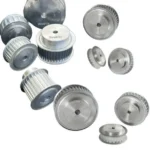
T5 25-30 F-AL Timing Belt Pulley
Original price was: 12.23$.6.92$Current price is: 6.92$.
High-performance industrial automation component for precise motion and power transmission.
In stock
🔥 Special for Today Only %43 Discount Opportunity!📦 Category: 25 mm Timing Belt Pulleys🏷️ Number of Teeth: Z30🏷️ Timing Belt Profile: T5🏷️ Belt Width: 25 mm🏷️ Flange Type: Flanged
Mermak assuranceFrom factory to end user · importer / main dealer · strong stock
ImporterMain dealer / distributorStrong stockGood priceCorporate invoice
In stock / available to order · 14-day return for standard unused products; conditions may vary for custom size/cut products.
T5 25-30 F-AL Timing Belt Pulley
INDUSTRIAL AUTOMATION PARTS | SUPERIOR PERFORMANCE SERIES
Detailed Product Review
In industrial automation systems, the accuracy, repeatability, and efficiency of motion and power transmission directly impact the overall performance and productivity of the system. The T5 25-30 F-AL Timing Belt Pulley is a mechanical component designed to meet these critical requirements, operating on the principle of positive drive. The pulley works in synchronization with T5 trapezoidal tooth profile timing belts, ensuring the belt’s teeth fully engage with the pulley’s grooves, thereby eliminating the risk of belt jumping. This positive engagement mechanism provides a constant speed ratio and precise angular positioning between the driving and driven elements, especially in high-speed and variable load applications. Its ability to operate with minimal backlash makes it an indispensable feature for applications requiring sub-millimeter accuracy, such as CNC axes, robotic arms, and other automation lines where precise positioning is essential.
The material composition of the product is a fundamental engineering decision that directly influences its performance parameters. The T5 25-30 F-AL Timing Belt Pulley is manufactured from a high-strength aluminum alloy (F-AL). This material choice allows the pulley to exhibit a low moment of inertia, improving the system’s dynamic response time and optimizing energy consumption, while simultaneously maintaining a high torque transmission capacity. The natural corrosion resistance of the aluminum alloy, coupled with the anodized (anodic oxidation) surface treatment, enhances the pulley’s wear resistance and ensures a long service life even in demanding industrial environments. The integrated flange (F) design mechanically guarantees that the timing belt remains correctly aligned on the pulley, preventing lateral slippage and increasing system stability. These structural features ensure the pulley is fully compatible with standard T5 timing belts and can be quickly and seamlessly integrated into existing or new automation systems.
T5 25-30 F-AL Timing Belt Pulley Advantages
Precise and Synchronized Power Transmission: The T5 trapezoidal tooth profile creates a wide and positive contact surface between the timing belt teeth and the pulley teeth. This geometric configuration prevents belt jumping even during high torque transmission and offers extremely precise control over the driven shaft’s angular position. The ability to operate with minimal backlash enhances repeatability and machining quality in applications where positioning accuracy is critical, such as robotic arms, CNC machining centers, and other precision automation systems, thereby maximizing the system’s overall efficiency and output.
Superior Material Engineering and Durability: Manufactured from high-strength aluminum alloy (F-AL), this pulley boasts an excellent strength-to-weight ratio. This lightweight construction reduces system inertia, allowing for faster acceleration and deceleration times, which increases energy efficiency in dynamic applications. The natural corrosion resistance of aluminum alloy helps maintain the pulley’s integrity in industrial environments exposed to moisture or chemical vapors. Furthermore, the anodized (anodic oxidation) surface treatment enhances the pulley’s surface hardness and wear resistance, ensuring its performance is maintained even under prolonged and intensive use, thereby extending maintenance intervals.
Optimized System Integration and Easy Assembly: The T5 25-30 F-AL Timing Belt Pulley offers full compatibility with a wide range of belts due to its industrial standard T5 tooth profile and 25 mm belt width. The integrated flange (F) design ensures the belt remains correctly aligned on the pulley without the need for external flange mounting, reducing assembly time and complexity. Precision CNC machining techniques used in its production ensure dimensional tolerances that facilitate easy centering and fastening to the shaft. These features allow for quick, reliable, and cost-effective integration of the pulley into existing or new automation systems, optimizing commissioning processes and minimizing operational downtime.
Technical Specifications and Capacity
FeatureValue/Description
Product CodeT5 25-30 F-AL
Tooth ProfileT5 (Trapezoidal) – Optimized positive engagement geometry for high torque transmission, precise positioning, and minimal backlash.
Number of Teeth25 – Designed for a specific gear ratio and peripheral speed, offering an optimal speed/torque balance.
Belt Width25 mm – Working width fully compatible with high-strength T5 timing belts conforming to industrial standards.
Pulley Outer Diameter47.76 mm – Outer diameter measurement that facilitates integration into compact system designs and ensures space efficiency.
MaterialHigh-Strength Aluminum Alloy (F-AL) – Offers low inertia, high strength, corrosion resistance, and thermal stability.
Flange TypeIntegrated Flange (F) – Monolithic design that prevents lateral belt movement, ensuring correct alignment and enhancing system stability.
Surface TreatmentAnodized (Anodic Oxidation) – Electrochemical process that improves surface hardness, wear resistance, corrosion resistance, and aesthetic appearance.
Operating Temperature-30°C to +80°C – Operational temperature range ensuring reliable performance across a wide spectrum of industrial applications.
Torque Transmission CapacityHigh – Ability to efficiently and reliably transmit high torque values due to the optimal tooth geometry of the T5 profile and material strength. (Refer to technical documentation for detailed torque curves and calculations.)
Technical Frequently Asked Questions (FAQ)
What are the key engineering advantages of the T5 trapezoidal tooth profile compared to other timing belt profiles (e.g., HTD or AT)?
The T5 trapezoidal tooth profile features a geometry specifically designed for applications requiring precise positioning and synchronization. HTD (High Torque Drive) profiles typically have more rounded tooth forms, optimized for high torque transmission and power density, but their backlash tolerances may be wider than T5. The sharper, straight-edged trapezoidal structure of T5 allows for a tighter fit between the belt teeth and pulley teeth, minimizing backlash and thereby increasing angular positioning accuracy. While AT (Arc Tooth) profiles also offer high torque capacity, the precision-oriented design of T5 makes it the preferred choice for applications demanding sub-millimeter accuracy, such as CNC machines, 3D printers, and robotic systems. T5 ensures a constant speed ratio and vibration-free operation, maximizing the system’s overall precision and repeatability.
What are the technical effects of aluminum alloy (F-AL) and anodized surface treatment on the pulley’s performance and lifespan?
The high-strength aluminum alloy (F-AL) used in the T5 25-30 F-AL Timing Belt Pulley offers a significant weight advantage compared to steel pulleys. This low mass reduces the system’s moment of inertia, enabling faster acceleration and deceleration times, which increases energy efficiency in dynamic applications and reduces the load on the motor. Aluminum’s good thermal conductivity helps dissipate heat generated during operation, preventing overheating of the pulley and belt. The anodized (anodic oxidation) surface treatment creates a microscopic, hard, and porous aluminum oxide layer on the aluminum surface. This layer significantly enhances the pulley’s surface hardness, thereby increasing its wear resistance, providing an extra barrier against corrosion, and improving its resistance to chemical agents. This combination ensures the pulley offers a long, reliable, and maintenance-free service life even in demanding industrial conditions.
How does the selection of 25 teeth and a 25 mm belt width impact the system’s mechanical performance?
The number of teeth, 25 in this case, is a critical parameter directly affecting the pulley’s peripheral speed and torque transmission capacity. While fewer teeth generally allow for higher torque transmission, a higher number of teeth offers smoother motion and lower vibration levels. 25 teeth provide an optimal balance for many industrial automation applications, offering both sufficient torque transmission and acceptable peripheral speed and precision. The 25 mm belt width determines the load the belt can carry and, consequently, the system’s total torque transmission capacity. A wider belt allows more teeth to engage with the pulley simultaneously, distributing the load over a larger area. This extends the life of both the belt and the pulley, reducing the risk of belt breakage or tooth jumping. This specific combination offers a balanced mechanical solution designed for applications requiring moderate to high torque and precision.
What are the technical benefits of the integrated flange (F) design for the stability and lifespan of the timing belt system?
The integrated flange (F) design is a critical structural feature in timing belt systems that ensures the belt remains correctly aligned on the pulley. These flanges mechanically limit the lateral movement of the belt, preventing it from coming off the pulley or becoming misaligned. Misalignment can lead to excessive friction on the belt edges, edge wear, and even premature belt failure. Integrated flanges eliminate these issues, significantly extending the lifespan of both the belt and the pulley. Furthermore, they eliminate the need for additional components and assembly time required for external flanges, simplifying system installation and reducing potential assembly errors. This design guarantees stable belt operation, especially in high-speed and dynamic applications, thereby enhancing the overall reliability and operational stability of the system.
| Number of Teeth | Z30 |
|---|---|
| Timing Belt Profile | T5 |
| Belt Width | 25 mm |
| Flange Type | Flanged |
You must be logged in to post a review.
Taksit Tablosu
Related Products
 %49 DiscountT10 25-48 AL Timing PulleyOriginal price was: 67.32$.34.20$Current price is: 34.20$.View
 %43 DiscountT10 25-40 F-AL Timing Belt PulleyOriginal price was: 47.41$.26.82$Current price is: 26.82$.View
 %49 DiscountT5 25-36 F-AL Timing Belt PulleyOriginal price was: 15.96$.8.11$Current price is: 8.11$.View
Reviews
There are no reviews yet.