
No products in the cart.
%70 Discount


T-Slot Nut M5 20×20 K6
Original price was: 0.10$.0.02$Current price is: 0.02$.
High-strength steel T-slot nut for 20x20mm aluminum profiles with K6 (6mm) slot. M5 thread.
Out of stock
🔥 Special for Today Only %70 Discount Opportunity!📦 Category: M5 Channel Nuts🏷️ Dimensions: 20, 20x20, 5🏷️ Slot Size: 6 Slots🏷️ Nut Type: T-Nut🏷️ Compatible Profile Size: 20x20🏷️ Tooth Size: M5
Mermak assuranceFrom factory to end user · importer / main dealer · strong stock
ImporterMain dealer / distributorStrong stockGood priceCorporate invoice
Contact us for stock information · 14-day return for standard unused products; conditions may vary for custom size/cut products.
T-Slot Nut M5 20×20 K6
INDUSTRIAL AUTOMATION PARTS | SUPERIOR PERFORMANCE SERIES
Detailed Product Review
The T-Slot Nut M5 20×20 K6, engineered by Mermak CNC, is a fastening element optimized for creating reliable and rigid connections with aluminum profiles used in industrial automation systems and machine manufacturing. This nut is manufactured with precise geometric tolerances to fit perfectly and snugly into the 6 mm wide slot (K6 standard) of aluminum profiles with 20×20 mm cross-sections. Its Metric 5 (M5) thread structure ensures a high-strength threaded connection with standard bolts, effectively converting applied torque during assembly into clamping force. This design minimizes the tendency for the connection to loosen even under dynamic loads, vibrations, and shock impacts, thereby safeguarding the system’s operational integrity and long-term performance. The nut’s ability to be inserted into the profile slot from the end allows for assembly flexibility, enabling connections to be made at any point along the profile and permitting modifications to existing structures without disassembly.
The product is constructed from high-strength steel, selected for its mechanical durability and fatigue resistance even in demanding industrial conditions. The zinc-plated surface finish provides protection against oxidation and environmental corrosive effects, extending the nut’s lifespan and ensuring the continuity of its connection performance. The wide gripping surface design allows the nut to create a larger contact area within the profile slot, helping to distribute applied loads over a wider area and thus reducing stress concentrations at the connection point. This feature is critical, especially when assembling structural elements subjected to high static or dynamic loads. The T-Slot Nut M5 20×20 K6 is ideal for creating rigid and secure connections in applications such as carrier chassis in automation and robotics systems, linear motion modules, and machine frames. It is also a fundamental component supporting structural integrity in the manufacturing of precision devices like 3D printers, CNC machines, and custom-built machinery.
Advantages of T-Slot Nut M5 20×20 K6
Optimal Geometric Fit and High Structural Rigidity: This T-Slot Nut is manufactured with precise tolerances to perfectly match the 6 mm slot geometry of 20×20 mm aluminum profiles. The wide gripping surface ensures maximum contact area with the profile slot walls, allowing forces acting on the connection point to be distributed over a larger area. This minimizes stress concentrations at the connection point, especially under eccentric or dynamic loads, and reduces the risk of deformation in the profile’s channel walls. Consequently, vibration damping capacity is increased, and the overall rigidity of the assembled structure is significantly enhanced, maximizing system precision and operational stability.
High Torque Resistance and Connection Security: The M5 metric thread standard and the robust body structure of the nut, made from high-strength steel, allow for high tightening torques to be applied to the connecting bolts. This increases the preload between the bolt and nut, significantly enhancing the connection’s resistance to loosening even under operational loads. High preload increases the friction force between the fastening elements, providing superior resistance against loosening mechanisms caused by factors such as vibration, shock, and thermal expansion/contraction. This technical feature is a critical parameter directly impacting system safety and component lifespan, particularly in industrial applications subjected to continuous movement or high-frequency vibrations.
Flexible Assembly and Ease of System Modification: The ability to insert the T-Slot Nut M5 20×20 K6 into the profile slot from the end offers a significant operational advantage compared to T-nuts that require insertion through a central opening. This method eliminates the need for complete disassembly of an existing profile frame to add or remove connections; the nut can be slid into the desired position from the open end of the profile. This flexibility saves time and labor during prototyping, system modification, maintenance, and repair processes. Furthermore, the nut’s ability to move freely within the slot allows for precise positioning and alignment during assembly, enabling the creation of complex modular structures more accurately and efficiently.
Technical Specifications and Capacity
Feature|Value/Description
Product Name|T-Slot Nut M5 20×20 K6
Thread Size|M5 (Metric 5, compliant with ISO standards)
Profile Compatibility|20×20 mm cross-section aluminum profiles
Slot Type|Slot 6 (Optimized for 6mm slot width)
Mounting Method|Insertion into the slot from the profile end
Material|High-Strength Steel (Minimum tensile strength 500 N/mm²)
Surface Treatment|Corrosion-Resistant Zinc Plating (Compliant with ISO 4042 standard)
Gripping Surface|Enlarged design providing high stability and load distribution
Barcode No|8692024019599
Technical Frequently Asked Questions (FAQ)
What is the maximum recommended tightening torque for this T-Slot Nut, and how is this value determined?
The maximum recommended tightening torque for the T-Slot Nut M5 20×20 K6 varies depending on the strength class of the bolt used, the material properties of the nut (high-strength steel), and the strength of the aluminum profile’s channel walls. Generally, for M5 threaded connections used with an 8.8 class bolt according to ISO 898-1 standard, a safe torque range between 4 Nm and 6 Nm is considered acceptable, provided it does not lead to deformation of the nut or thread stripping. However, the yield strength of the aluminum profile must also be considered to prevent local stress concentrations and permanent deformation in the profile slot. Excessive torque application can increase the radial force exerted by the nut onto the profile slot, potentially causing crushing or cracking of the channel walls. Therefore, using a torque wrench and periodically checking the connection is recommended for critical applications.
How does the wide gripping surface design contribute to the structural rigidity of an assembled profile frame, particularly under dynamic or eccentric loading conditions?
The wide gripping surface design maximizes the contact area between the T-Slot Nut and the inner walls of the aluminum profile’s slot. This allows normal and shear stresses acting on the connection point to be distributed over a larger area. Under dynamic loads (e.g., vibration, impact) or eccentric loads (forces offset from the connection’s center), this larger contact area reduces stress concentrations and minimizes local deformation of the profile. Compared to nuts with traditionally smaller contact surfaces, the wide surface reduces the tendency of the nut to rotate or slip within the slot, more effectively preserving the connection’s preload. This, in turn, lowers the deflection at the connection point and enhances the overall rigidity and stability of the entire profile frame, positively impacting system precision and repeatability.
What specific mechanical and operational advantages does the “insertion from the profile end” method of this T-nut offer compared to drop-in T-nuts?
The “insertion from the profile end” method offers several significant advantages over drop-in T-nuts. Mechanically, as these nuts fit precisely into the profile slot, the risk of pressure and potential deformation applied by drop-in nuts to the slot edges is eliminated. Drop-in nuts often require some clearance to seat in the slot and can inwardly bend the slot edges when tightened, potentially weakening the profile’s structural integrity. Operationally, end insertion provides the flexibility to add or remove connections at any point on an existing profile structure without disassembling or loosening the entire assembly. Drop-in nuts are typically inserted through an opening in the middle of the profile and can sometimes present alignment challenges or leave a permanent gap in the slot. These nuts, however, can be precisely positioned by sliding them in from the profile’s end, speeding up assembly processes and increasing modification flexibility.
Does this T-Slot Nut require special attention regarding galvanic corrosion or surface abrasion when used with anodized aluminum profiles?
The T-Slot Nut M5 20×20 K6 is made of zinc-plated high-strength steel. When used with anodized aluminum profiles, the risk of galvanic corrosion is theoretically present because zinc, aluminum, and steel have different electrochemical potentials. However, the zinc plating acts as a protective layer for the steel and also serves as a sacrificial anode. The anodized layer also insulates the aluminum from environmental effects. Therefore, in dry and clean environments, the risk of galvanic corrosion is generally low and acceptable for most industrial applications. In humid or chemically exposed environments, the corrosion potential may increase. Regarding surface abrasion, the insertion of the nut from the profile end causes minimal abrasion to the anodized layer. However, the high contact pressure generated during nut tightening can lead to localized micro-deformations in the anodized layer. While this does not affect the connection’s rigidity, it should be considered in applications requiring aesthetic perfection or very sensitive surface integrity.
Mermak has 16 years of experience in the industrial automation sector. Our products are stocked and prepared from our Ankara Uzay Sanayi factory/warehouse. You can check real-time stock quantities and prices on our website. Stocked products are dispatched directly from our warehouse, eliminating production waiting times. We ensure careful packaging and meticulous follow-up of invoices and documents. We partner with reliable logistics providers, and the Mermak team closely monitors the shipment process. Upon request, we can arrange video viewings of our products or factory via WhatsApp or other contact channels. We proudly supply our products to customers in the United Kingdom, United States, Canada, Australia, Ireland, New Zealand, and South Africa, as well as similar countries and international markets.
| Dimensions | 20, 20x20, 5 |
|---|---|
| Slot Size | 6 Slots |
| Nut Type | T-Nut |
| Compatible Profile Size | 20x20 |
| Tooth Size | M5 |
You must be logged in to post a review.
Taksit Tablosu
Related Products
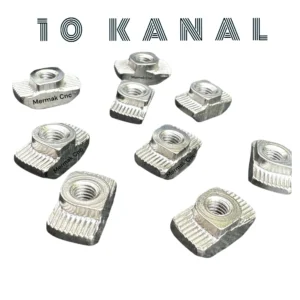 %56 Discount10mm Channel T-Nut for Profile m5Original price was: 0.18$.0.08$Current price is: 0.08$.View
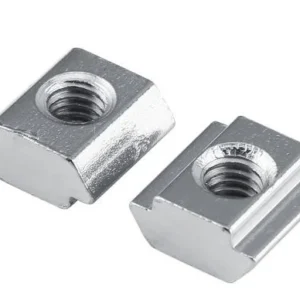 %69 DiscountT-Slot Nut M4 20x20 K6Original price was: 0.10$.0.04$Current price is: 0.04$.View
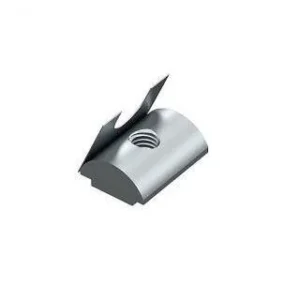 Spring Nut 45x45 M5 K100.24$View
Reviews
There are no reviews yet.