


















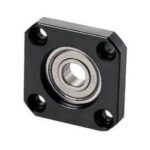
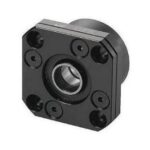


















































Step Motor Mounting Plate Nema 34
Detailed Product Review
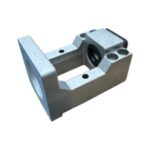
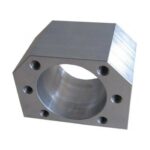
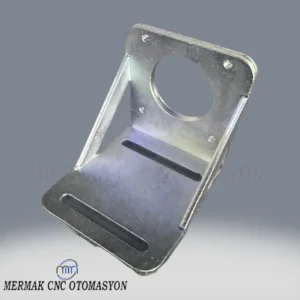
In industrial automation systems, particularly in motion control applications, the interface between the stepper motor and the mechanical transmission elements it drives has a direct impact on the entire system’s dynamic response, positioning accuracy, and operational lifespan. The Nema 34 Stepper Motor Mounting Plate, developed by Mermak CNC based on engineering principles, is an intermediate connection component designed for this critical junction. It ensures secure, rigid, and vibration-free integration of high-torque Nema 34 series stepper motors with linear guides, ball screws, gearboxes, or other kinematic chain elements. The product’s primary function is to transmit the torque and angular motion generated by the motor to the mechanical transmission system with minimal energy loss and maximum precision, while also absorbing axial and radial deviations that may occur under dynamic loads, thereby maintaining the motor’s positioning accuracy. Especially in applications requiring precise machining and positioning, characterized by intensive high acceleration and deceleration cycles, this mounting plate ensures stable motor operation even under axial loads and radial forces, directly contributing to the continuity of processing quality and overall system efficiency.
This mounting plate is manufactured using high-strength industrial steel alloy conforming to S235JR or equivalent DIN standards. This material selection, due to its high tensile strength and yield strength, offers minimal plastic deformation and maximum elastic recovery capacity even under the dynamic torque loads of the motor. Precision CNC machining techniques shape the material to achieve mounting holes and surface planes with millimeter tolerances that are fully compliant with the NEMA 34 standard (86×86 mm flange size). This precision prevents the formation of gaps at the contact surface between the motor and the mounting plate, increasing torque transmission efficiency and minimizing vibration resonances. The industrial-standard electrostatic powder coating (RAL 7016 Anthracite Grey) applied to the surface not only provides an aesthetic appearance but also creates an excellent protective layer against corrosion, scratches, and wear in demanding industrial environments (humidity, dust, oil, mild chemical vapors). This coating ensures the product maintains its mechanical and aesthetic integrity for many years, reducing maintenance costs and offering a long-term performance guarantee as a reliable component in automation projects. The product is optimized for integration in various industrial applications where high performance and reliability are critical, such as CNC routers and milling machines, automation lines, and conveyor systems.
Nema 34 Step Motor Mounting Plate Advantages
High Rigidity and Vibration Damping Performance: With its 8 mm thick high-strength steel structure and optimized design geometry, this mounting plate exhibits minimal flex and deformation even under the high torque values and dynamic loads generated by NEMA 34 stepper motors. The material’s high Young’s modulus and optimized cross-sectional area enhance the overall rigidity of the system, significantly reducing the transmission of vibrations originating from the motor’s rotation or external sources to the mechanical transmission elements. This vibration damping feature extends tool life, improves surface quality and dimensional accuracy of machined parts, especially in precision machining centers (CNC routers, milling machines). Furthermore, by minimizing axial deflection and positioning errors, it ensures the continuity of system performance in applications requiring repeatability and accuracy.
Optimal Thermal Management Contribution: Stepper motors generate heat during operation due to resistive losses in their coils. Ineffective heat dissipation can lead to performance degradation, reduced lifespan, and even failures. The Mermak CNC Nema 34 Mounting Plate is precisely machined to ensure full and uniform contact with the motor’s mounting flange. The relatively good thermal conductivity of the high-strength steel material and the plate’s large surface area facilitate the transfer of heat generated by the motor to the mounting plate, indirectly aiding its more effective dissipation into the environment. This passive thermal management contribution helps maintain the motor’s operating temperature at optimal levels, preventing overheating, preserving its magnetic properties, and supporting sustained high-performance operation. This is a critical advantage, especially in environments with limited airflow.
Precise and Secure Mounting Integration: The mounting holes (M6), machined with millimeter precision and fully compliant with the NEMA 34 standard (86×86 mm flange size), allow for quick, easy, and error-free assembly of the motor and other mechanical components (e.g., chassis, gearbox, linear guide block). This precision minimizes axial or angular misalignments during assembly, which can lead to additional stress on couplings, premature wear on bearings, and overall system vibration, reducing performance. The precise hole positioning and surface flatness of the mounting plate guarantee accurate alignment between the motor shaft and the transmission element shaft, increasing the system’s mechanical efficiency and extending component life. Additionally, the various hole options provided for chassis mounting offer flexibility for different mounting configurations and optimize installation time.
Technical Specifications and Capacity
Feature
Value/Description
Motor Compatibility
NEMA 34 Series Stepper Motors (86x86mm flange standard)
Material
High-Strength Industrial Steel (S235JR or equivalent DIN standards)
Plate Thickness
8 mm (for optimal balance of rigidity, vibration damping, and durability)
Surface Treatment
Electrostatic Powder Coating (RAL 7016 Anthracite Grey), high resistance to corrosion, scratches, and chemicals
Mounting Hole Diameters
Precisely machined M6 holes for NEMA 34 motor mounting, various hole options for chassis connection
Flange Dimensions
Motor mounting surface fully compliant with 86mm x 86mm (NEMA 34 standard)
Manufacturing Tolerance
DIN ISO 2768-mK (General Tolerances), suitable for precision engineering applications
Technical Frequently Asked Questions (FAQ)
What are the critical advantages offered by the S235JR equivalent industrial steel used in the production of this mounting plate in terms of mechanical strength and fatigue life for high-torque stepper motor applications?
S235JR or equivalent industrial steel offers critical mechanical advantages in high-torque NEMA 34 stepper motor applications. This steel type is characterized by its high yield strength (minimum 235 N/mm²) and tensile strength (360-510 N/mm²). These properties ensure that the mounting plate remains within elastic limits without permanent deformation under the dynamic torque loads of the motor. Its high rigidity ensures minimal loss in transmitting the motor’s torque to the mechanical transmission elements, while also providing high resistance against axial and radial forces generated during the system’s dynamic response. In terms of fatigue life, the homogeneous microstructure and good machinability of S235JR help maintain material integrity during CNC machining. This makes the mounting plate resistant to crack formation in industrial automation applications subjected to continuous repetitive loading-unloading cycles (e.g., high acceleration and deceleration). The material’s toughness reduces brittleness even under sudden shock loads, enhancing overall system reliability and meeting long operational life expectations.
How does the 8 mm plate thickness play a role in maintaining positioning accuracy under axial and radial loads during the dynamic operating conditions (high acceleration/deceleration) of NEMA 34 stepper motors?
The 8 mm plate thickness is a critical engineering parameter for the NEMA 34 stepper motor mounting plate and directly affects the maintenance of positioning accuracy under dynamic operating conditions. This thickness significantly increases the plate’s moment of inertia, thereby enhancing its bending and torsional rigidity. During high acceleration and deceleration cycles, the dynamic torques and reaction forces acting on the motor shaft can cause micro-deformations in the mounting plate. The 8 mm thickness minimizes these deformations, preventing the motor’s mounting flange, and consequently the motor shaft, from deviating axially or radially relative to the connected mechanical transmission element. This situation eliminates positioning errors caused by “backlash” or “compliance,” especially in applications requiring precision positioning down to a thousandth of a millimeter. Furthermore, the increased mass and rigidity alter the system’s natural frequency, reducing the likelihood of resonance with the motor’s operating frequencies and thus lowering vibration amplitude. Effective vibration damping allows the motor to operate more stably, contributing to the maintenance of positioning accuracy even during prolonged operations.
How can the engineering effect of the electrostatic powder coating on corrosion and wear resistance in industrial automation environments, and its contribution to the product’s lifespan, be explained?
Electrostatic powder coating plays a significant engineering role in enhancing the corrosion and wear resistance of the Stepper Motor Mounting Plate against the harsh conditions encountered in industrial automation environments. This coating technique is based on the principle of electrostatically charging polymer powder particles, attracting them to the metal surface, and then curing at high temperatures. This process creates a homogeneous, non-porous, and highly adhesive film layer on the surface. This chemically inert polymer layer physically isolates the steel base material from corrosive agents such as moisture, oxygen, and acidic or basic chemical vapors. Thus, rusting and other corrosion mechanisms are prevented. In terms of wear resistance, the cured powder coating offers high mechanical strength against impacts, scratches, and abrasion. It acts as a barrier against surface wear caused by dust, chips, or other particles commonly found in industrial settings. Thanks to this coating, the product’s surface integrity and aesthetic appearance are preserved for many years, reducing maintenance costs and extending the mounting plate’s operational life by increasing overall system reliability. The RAL 7016 Anthracite Grey color of the coating is consistent with industrial aesthetics and Mermak CNC’s corporate identity.
How does the millimeter-precision machining of mounting holes compliant with the NEMA 34 standard minimize geometric tolerance stack-ups and their adverse effects on system performance during the motor’s integration with mechanical transmission elements?
Mounting holes machined with millimeter precision and fully compliant with the NEMA 34 standard play a critical role in the motor’s integration with mechanical transmission elements. Industrial systems have inherent manufacturing tolerances for each component. These tolerances can accumulate during assembly, leading to cumulative errors known as “tolerance stack-up.” The machining of the mounting plate’s holes in accordance with precise tolerance standards such as DIN ISO 2768-mK minimizes geometric incompatibilities between the motor’s flange surface and the mounting plate, and between the mounting plate and the chassis/transmission element. This precision ensures accurate axial and angular alignment of the motor shaft and the shaft of the connected coupling or gearbox input. Misalignment can cause excessive stress on couplings, premature bearing wear, increased friction losses, vibrations, and noise. These adverse effects reduce system energy efficiency, increase maintenance costs, and most importantly, negatively impact positioning accuracy and repeatability, thereby degrading machining quality. A precisely machined mounting plate controls these tolerance stack-ups, allowing the system to maintain its nominal performance over a long operational life and minimizing the risk of failure.

Reviews
There are no reviews yet.