
No products in the cart.
%31 Discount


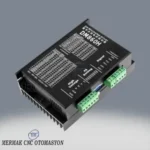
Step Motor Driver DM860H
Original price was: 48.46$.33.48$Current price is: 33.48$.
High-performance driver for precise control of stepper motors in industrial automation.
In stock
🔥 Special for Today Only %31 Discount Opportunity!📦 Category: 2.00-7.20A Stepper Motor Drivers🏷️ Supply Voltage: 18 - 80V AC / 24 - 110V DC🏷️ Output Current: 2.4 - 7.2A
Mermak assuranceFrom factory to end user · importer / main dealer · strong stock
ImporterMain dealer / distributorStrong stockGood priceCorporate invoice
In stock / available to order · 14-day return for standard unused products; conditions may vary for custom size/cut products.
Step Motor Driver DM860H
INDUSTRIAL AUTOMATION PARTS | SUPERIOR PERFORMANCE SERIES
Detailed Product Review
Stepper motor drivers are essential electronic components in industrial automation systems, providing precise angular positioning, speed, and torque control for stepper motors. The DM860H Stepper Motor Driver manages the phase sequence and amplitude of the current applied to the motor windings with high accuracy, enabling the motor to rotate at desired step angles and follow specified speed profiles. Thanks to its advanced micro-stepping technology integration, it allows each full step to be divided into up to 256 subdivisions. This ensures smoother, vibration-free motor movement, minimizes mechanical resonance effects, and enhances positioning resolution to millimeter-level precision.
With a wide voltage range (AC 18-80V or DC 24-110V), the driver can adapt to different power sources, ensuring stable and reliable operation in various industrial environments. It delivers superior performance in applications requiring high torque and where millimeter precision is critical. The physical construction of the DM860H features a robust metal and ABS composite housing designed to withstand harsh industrial conditions, increasing its resistance to mechanical impacts and environmental factors while protecting internal electronic components. For system integration, it offers compatibility with standard industrial control signals (PUL/DIR), allowing for easy interfacing with PLCs, microcontrollers, or dedicated motion controllers. Integrated overcurrent, overvoltage, and overtemperature protection mechanisms ensure the safety of both the driver and the connected stepper motor against electrical faults, guaranteeing long-term and safe operation. This driver is optimized for a wide range of applications, including CNC machines, industrial robotic systems, automated assembly lines, packaging machinery, engraving devices, and 3D printers, where precise motion control and high reliability are paramount.
DM860H Stepper Motor Driver Advantages
Wide Voltage Compatibility and High Current Capacity: The DM860H supports a broad universal input voltage range, including AC 18-80V and DC 24-110V. This feature allows the driver to operate compatibly with different industrial power supplies and grid voltages, offering flexibility in system design and facilitating adaptation for global applications. Furthermore, its peak output current capacity of 7.2A enables it to effectively drive larger and more powerful stepper motors, such as NEMA 23 and NEMA 34, which require high torque. This high current capacity allows the motor to utilize its full torque potential, contributing to stable and dynamic motion performance even under heavy loads.
Precise Micro-Step Control and Low Vibration/Noise: The DM860H offers 16 different micro-step resolution options, dividing each full step of the motor into smaller subdivisions. This significantly smoothens the motor’s rotational movement, minimizing the risk of step loss and mechanical resonance, especially at low speeds. Micro-step control enhances positioning accuracy, providing a critical advantage in applications requiring millimeter or micron-level precision. Near-zero vibration and minimal noise levels at low speeds improve processing quality, reduce surface roughness, and increase operator comfort, while also extending the lifespan of mechanical components.
Advanced Protection Mechanisms and Strong Anti-Interference Capability: The driver is equipped with integrated overcurrent, overvoltage, and overtemperature protection circuits. Overcurrent protection detects abnormal current surges in motor windings or the driver output, protecting the system. Overvoltage protection activates when the input voltage exceeds specified limits, while overtemperature protection prevents the driver’s internal temperature from reaching critical levels. These protection mechanisms ensure the highest level of safety for the driver and the connected motor against potential electrical faults, reducing downtime and maintenance costs. Additionally, the DM860H exhibits strong anti-interference capability, demonstrating high resistance to electromagnetic interference (EMI) common in industrial environments. This feature ensures stable and error-free operation, unaffected by power grid fluctuations or noise from other electronic devices.
Technical Specifications and Capacity
Feature
Value/Description
Model Number
DM860H
Input Voltage Range
AC 18V – 80V (50/60Hz) or DC 24V – 110V
Maximum Output Current
7.2A (Peak) – Adjustable (2.4A – 7.2A)
Compatible Motor Type
2-Phase Bipolar Stepper Motors (Ideal for NEMA 23, NEMA 34, etc.)
Micro-Step Resolution
16 options (1/2, 1/4, 1/8, 1/16, 1/32, 1/64, 1/128, 1/256, etc.)
Protection Features
Overcurrent Protection, Overvoltage Protection, Overtemperature Protection
Technical Frequently Asked Questions (FAQ)
How does the DM860H’s micro-step resolution affect the stepper motor’s dynamic performance and application precision?
The 16 micro-step resolutions offered by the DM860H allow the stepper motor’s rotor position to be controlled with finer granularity by dividing each full step into smaller, equal subdivisions. This ensures smoother, vibration-free rotation at low speeds, preventing the triggering of mechanical resonance frequencies and unwanted system oscillations. In applications requiring precise positioning, such as tool path tracking on CNC machines or optical alignment systems, high micro-step resolution (up to 1/256) enables positioning accuracy at the millimeter or sub-micron level. This directly contributes to smoother transitions and higher surface quality on machined parts, while allowing the motor to operate stably over a wider speed range and reducing torque fluctuations.
What advantages does the DM860H’s wide input voltage range (AC 18-80V / DC 24-110V) offer for system integration and power supply selection?
The DM860H’s wide input voltage range, covering AC 18V to 80V and DC 24V to 110V, provides engineers with significant flexibility in system design and power supply selection. This universal compatibility allows the driver to easily adapt to existing power infrastructures in different geographical regions or industrial facilities. The AC input option can be powered directly by transformers, reducing the need for DC power supplies, while the DC input option facilitates integration with lower-voltage battery or regulated industrial DC bus systems. This wide range enables the same driver model to be used in various projects or with motors requiring different power specifications, offering advantages in inventory management and standardization. Furthermore, the ability to operate at higher voltages helps compensate for inductive voltage drops in motor windings, aiding in maintaining motor torque at high speeds.
How do the integrated protection features (overcurrent, overvoltage, overtemperature) in the DM860H enhance system reliability and component lifespan?
The overcurrent, overvoltage, and overtemperature protection mechanisms in the DM860H critically enhance the operational reliability and lifespan of the driver and the connected stepper motor. Overcurrent protection detects high current values caused by short circuits or abnormal load conditions in motor windings or the driver output, automatically shutting down or limiting current to prevent damage to the driver’s power transistors and motor windings. Overvoltage protection safeguards the driver’s internal circuits during input supply voltage surges or grid fluctuations. Overtemperature protection continuously monitors the chip temperature via internal thermal sensors and prevents thermal damage by reducing output current or shutting down the driver when a critical threshold is reached. These integrated protection features provide a proactive defense line against unexpected electrical or thermal stress factors, minimizing system downtime, reducing maintenance costs, and ensuring continuous and safe operation of automation equipment.
How does the DM860H’s strong anti-interference capability provide resistance against electromagnetic interference in industrial environments, and how does this affect operational stability?
Industrial environments are characterized by significant electromagnetic interference (EMI) and radio frequency interference (RFI) originating from high-power motors, switching power supplies, frequency converters, and other electronic devices. The DM860H’s strong anti-interference capability is achieved through specialized filtering circuits, optimized PCB layouts, and a robust grounding architecture designed to prevent such electrical noise sources from corrupting the driver’s control signals or power supply. This resistance ensures that the driver’s input signals (PUL/DIR) remain clean, preventing false steps or unintended motor movements. Additionally, it minimizes the driver’s own emitted electromagnetic noise, preventing interference with other sensitive electronic equipment in the vicinity. Consequently, the DM860H maintains stable, repeatable, and error-free operation even under harsh power grid conditions or in noisy industrial environments, thereby enhancing the overall reliability and performance of automation systems. Mermak has 16 years of experience, operating from our factory/warehouse in Ankara Uzay Sanayi. Our website stock quantities and prices are up-to-date. Stocked products are dispatched directly from our warehouse without production delays. We ensure careful packaging, meticulous invoice and document follow-up, and partner with reliable logistics providers. The Mermak team closely monitors the shipment process. Upon request, we can arrange product videos or factory viewings via WhatsApp or other contact channels. We proudly supply to the United Kingdom, United States, Canada, Australia, Ireland, New Zealand, South Africa, and similar countries and international markets.
| Supply Voltage | 18 - 80V AC / 24 - 110V DC |
|---|---|
| Output Current | 2.4 - 7.2A |
You must be logged in to post a review.
Taksit Tablosu
Related Products
 %57 DiscountStep Motor Driver JSS556Original price was: 36.47$.15.84$Current price is: 15.84$.View
 %40 DiscountStep Motor Driver JSS860AOriginal price was: 81.31$.48.47$Current price is: 48.47$.View
 %40 DiscountStep Motor Driver JSS 2DM2280Original price was: 288.54$.172.00$Current price is: 172.00$.View
Reviews
There are no reviews yet.