
No products in the cart.

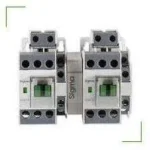
Sigma SCG009230 4kW 9A 230VAC 1NO-1NC Contactor
12.64$
Industrial automation part, Superior Performance Series.
In stock
📦 Category: Uncategorized
Mermak assuranceFrom factory to end user · importer / main dealer · strong stock
ImporterMain dealer / distributorStrong stockGood priceCorporate invoice
In stock / available to order · 14-day return for standard unused products; conditions may vary for custom size/cut products.
The Sigma SCG009230 contactor is an electromechanical switching device designed for load switching in industrial power control circuits. It operates by using the magnetic field generated by current flowing through a coil to move an armature, which opens or closes the main power contacts. This model is energized by a 230 VAC coil voltage and can safely control three-phase industrial loads with a nominal power of 4 kW and a nominal operating current of 9 Amperes. It is optimized for the AC-3 duty category, which covers applications like frequent switching of cage induction motors, managing high starting currents and continuous operating currents. The precise engineering of the contactor aims to minimize contact wear even at high switching frequencies, while integrated arc suppression chambers quickly and effectively extinguish the electric arc formed on the main contacts, reducing contact erosion and enhancing system safety.
The material composition of this contactor includes high-conductivity silver alloy contacts, a housing reinforced with thermally stable and arc-resistant insulating materials, and a durable electromagnetic coil assembly. These components ensure reliable performance in demanding industrial environments across a wide temperature range (-25°C to +55°C). For system integration, the integrated 1 Normally Open (1NO) and 1 Normally Closed (1NC) auxiliary contacts offer flexibility in control circuits. These contacts can be used for complex automation scenarios such as electrical interlocking in motor starters, status feedback, or sequence control. DIN rail and/or screw mounting options allow for quick and standard installation in industrial control panels. The IP20 protection class indicates that the terminals are protected against finger contact, making it suitable for panel-mounted applications. This contactor provides reliable and precise power switching solutions for a wide range of applications, from motor control systems (pumps, fans, conveyors) to industrial heating and lighting systems.
Advantages of the Sigma SCG009230 4kW 9A 230VAC 1NO-1NC Contactor
High Switching Capacity and Optimized Thermal Management: The Sigma SCG009230 contactor is designed for safe switching of industrial motor loads and other high-power industrial equipment, with a nominal power of 4 kW and an operating current capacity of 9 Amperes. This capacity ensures durability, especially in the AC-3 duty category, for cage induction motors experiencing high starting (inrush) currents and continuous operating conditions. The contactor’s contacts are made from high-conductivity silver alloys, ensuring low contact resistance and minimal power loss. Integrated arc suppression chambers rapidly extinguish the electric arc generated during switching, minimizing contact erosion and reducing thermal load. This engineering approach allows the contactor to maintain thermal stability even during prolonged and continuous operations, reducing the risk of overheating and thereby increasing the overall efficiency of the system. We supply to markets including the United Kingdom, United States, Canada, Australia, Ireland, and New Zealand, among others.
Integrated Auxiliary Contact Module and Control Circuit Flexibility: This contactor comes standard with 1 Normally Open (NO) and 1 Normally Closed (NC) auxiliary contact configuration. These integrated contacts are crucial for providing status feedback of the main power contacts to the control circuit or for implementing logic interlocking functions in complex automation scenarios. For example, they can be used to signal to a PLC whether a motor is running, prevent another contactor from engaging, or operate equipment in a specific sequence. This integration reduces the need for external auxiliary contact blocks, thereby decreasing control panel wiring complexity and installation time, while simultaneously adding functionality and reliability to the control system. The precise and repeatable switching characteristics of the auxiliary contacts guarantee accurate and timely transmission of control signals.
High Reliability with Optimized Mechanical and Electrical Life: The Sigma SCG009230 contactor is engineered to meet the high mechanical and electrical life expectations required in industrial applications. Mechanical life refers to the number of physical open/close cycles of the contacts when the coil is energized and de-energized, and this model boasts a high value, often expressed in millions of cycles. This is achieved through the use of wear-resistant materials for moving parts (armature, springs, actuators) and precise assembly tolerances. Electrical life, on the other hand, denotes the number of switching cycles the contacts can endure under nominal load (e.g., 9 Amperes AC-3) while exposed to electrical arcing before losing functionality, typically expressed in hundreds of thousands of cycles. Silver alloy contacts, optimized contact pressure, and effective arc suppression mechanisms maximize electrical life. The high values for both these life parameters significantly reduce maintenance requirements, increase system uptime, and lower the total cost of ownership, maximizing operational reliability in industrial facilities. We are a trusted supplier to international markets including South Africa and similar countries, ensuring robust solutions worldwide.
Technical Specifications and Capacity
Feature
Value/Description
Nominal Power (AC-3)
4 kW (For switching cage induction motors)
Nominal Operating Current (AC-3)
9 Amperes (Continuous operation current for motor loads)
Coil Voltage
230 VAC (Alternating current to energize the coil)
Auxiliary Contact Configuration
1 Normally Open (NO) + 1 Normally Closed (NC)
Number of Main Contacts
3 Poles (Power contacts for three-phase systems)
Duty Category
AC-3 (Switching motor loads under starting current conditions)
Mechanical Life
High (Millions of switching cycles)
Electrical Life
High (Hundreds of thousands of switching cycles, under nominal load)
Mounting Type
DIN Rail and/or Screw Mounting
Protection Class
IP20 (Finger-touch protection for indoor panel use)
Operating Temperature
-25°C to +55°C
Standards
IEC/EN 60947-4-1 (Low-voltage switchgear standard)
Terminal Type
Screw Terminals (Secure electrical connection)
Product Barcode No
8692024019278
Technical Frequently Asked Questions (FAQ)
What is the significance of the AC-3 duty category in motor control applications, and how does the Sigma SCG009230 comply with this category?
The AC-3 duty category, as defined by IEC 60947-4-1, is specified for switching cage induction motors under normal operating conditions (i.e., opening contacts while the motor is running and closing them while the motor is starting). This category requires resistance to high inrush currents, which can reach 5 to 7 times the nominal motor current during startup. The Sigma SCG009230 contactor is specifically designed to meet these requirements with its 4 kW nominal power and 9 Amperes operating current capacity. It utilizes high-conductivity silver alloy contacts to ensure low contact resistance and high current-carrying capability. Furthermore, its integrated arc suppression chambers rapidly and effectively extinguish the high-energy electric arcs generated during switching, minimizing contact wear and extending electrical life. These engineering features ensure that the contactor delivers reliable and long-lasting performance in motor control applications.
What are the primary engineering advantages offered by the integrated 1NO-1NC auxiliary contacts in control circuit design?
The integrated 1 Normally Open (NO) and 1 Normally Closed (NC) auxiliary contacts provide a critical layer of flexibility and reliability in industrial control circuits. These contacts are used to transmit the status of the main power contacts (open or closed) as feedback to the control system. Key engineering advantages include the ability to form electrical interlocking mechanisms; for instance, establishing cross-locking between two contactors to prevent a motor from running in reverse. They are also used to send signals to PLCs or other control devices about the motor’s operating status, confirm the completion of a step in sequence control applications, or for monitoring and emergency stop functions in safety circuits. This integration eliminates the need for external auxiliary contact blocks, reducing control panel wiring complexity, shortening installation time, and enhancing the overall system reliability, as fewer connection points mean less potential for failure.
What are the differences between a contactor’s mechanical and electrical life, and how do these values affect system reliability?
A contactor’s mechanical life refers to the number of physical open/close cycles of the contacts when the coil is energized and de-energized, potentially without any current being switched. This value indicates the wear and fatigue resistance of the contactor’s moving parts (armature, springs, hinges) and is typically expressed in millions of cycles. Electrical life, conversely, denotes the number of switching cycles a contactor can perform under nominal load (e.g., 9 Amperes AC-3) before the contacts degrade due to arcing and erosion, losing their functionality. Electrical life is generally lower than mechanical life and is expressed in hundreds of thousands of cycles. Both life values are critical for the overall reliability and maintenance planning of an automation system. High mechanical life guarantees physical durability in applications requiring frequent switching, while high electrical life ensures long-term, trouble-free operation under load. Knowing these values allows for accurate determination of contactor replacement intervals and the establishment of planned maintenance strategies, thereby minimizing unexpected failures and production downtime.
What integration strategies are recommended for thermal management and overcurrent protection of the Sigma SCG009230 contactor?
Proper thermal management and overcurrent protection integration are essential for the long-term, reliable operation of the Sigma SCG009230 contactor. For thermal management, it is recommended to optimize airflow within the control panel and use forced ventilation (fans) if necessary to ensure the contactor operates within its specified temperature range of -25°C to +55°C. The contactor itself is engineered for minimal heat generation through low contact resistance and an optimized coil design, but ambient temperatures and heat from other components within the panel must be considered. For overcurrent protection, integrating thermal overcurrent relays (bimetallic or electronic) into the main power circuit is crucial. These relays will trip and open the circuit, protecting both the motor and the contactor, if the motor’s current exceeds its nominal value (e.g., due to mechanical jamming or phase loss). For short-circuit protection, appropriately rated fuses or circuit breakers should be installed upstream of the contactor. The coordination of these protective devices (Type 1 or Type 2 coordination) must be performed in accordance with IEC 60947-4-1 to ensure the contactor remains undamaged or sustains minimal damage during a short-circuit event. These integration strategies maximize both the operational safety and the equipment lifespan of the system.
You must be logged in to post a review.


Reviews
There are no reviews yet.