
No products in the cart.


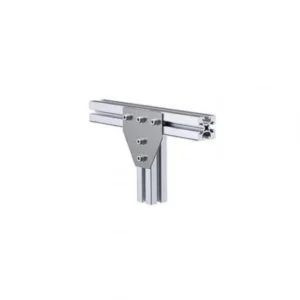
Radius Corner Connector 20×20 K6
0.72$
High-precision engineering component for 90-degree corner joints in industrial modular aluminum profile systems.
Out of stock
📦 Category: 6 Channel Corner Connectors
Mermak assuranceFrom factory to end user · importer / main dealer · strong stock
ImporterMain dealer / distributorStrong stockGood priceCorporate invoice
Contact us for stock information · 14-day return for standard unused products; conditions may vary for custom size/cut products.
Radius Corner Connector 20X20 K6
INDUSTRIAL AUTOMATION PARTS | SUPERIOR PERFORMANCE SERIES
Detailed Product Review
The Radius Corner Connector 20X20 K6 is a high-precision engineering component designed to ensure the structural integrity of 90-degree corner joints in industrial modular aluminum profile systems. This connector is optimized for perfect compatibility with sigma profiles of 20×20 mm cross-section and a 6 mm groove width (K6 series). Its primary function is to rigidly and stably connect two perpendicular profiles, minimizing the deformation of the resulting frame or structure under mechanical loads. The radius (rounded) corner design not only offers an aesthetic appearance but also enhances operator safety by eliminating sharp edges, contributing to a safer working environment compliant with industrial health and safety standards. This design feature reduces the risk of injury from impacts or contact while also decreasing the likelihood of cables or hoses snagging.
This connector is manufactured from a high-strength aluminum alloy, typically using precision casting technologies such as Zamak or aluminum injection. This production method ensures complex geometries are achieved with high dimensional accuracy and a homogeneous material structure, directly impacting the product’s mechanical strength and fatigue life. The Radius Corner Connector 20X20 K6 can be used in a wide range of applications, from assembly lines in the automotive industry to packaging machines, robotic cells, general machine manufacturing, and test stands. Its modular design and ease of assembly/disassembly with an in-groove nut (M5 T-Nut) and bolt (M5x10 Hex) accelerate prototyping processes, enabling rapid adaptation or revision of systems. This flexibility allows businesses to respond quickly to changing production needs, increasing operational efficiency. The selection of a high-strength alloy ensures excellent stability and longevity even in systems subjected to vibration and dynamic loads, helping to reduce maintenance costs.
Advantages of the Radius Corner Connector 20X20 K6
Precise Fit and Ease of Assembly: This connector is designed to fit sigma profiles of 20×20 K6 with millimeter-level tolerances. Thanks to precision casting techniques and quality control procedures during manufacturing, the gaps between the profile groove (6mm) and the connector are minimized, achieving maximum contact area and friction force at the joint. This facilitates correct alignment of profiles during assembly and reduces the need for additional adjustments. The in-groove nut and bolt mechanism allows for quick and error-free installation, significantly reducing assembly times and labor costs. It offers a critical advantage for rapid prototyping and revision processes in modular systems.
High Mechanical Strength and Rigidity: The Radius Corner Connector 20X20 K6, due to its optimized geometry and production from a high-strength aluminum alloy, exhibits exceptional torsional and bending strength at the connection points. The alloy’s high tensile and yield strength ensure the connection maintains its structural integrity under both dynamic and static loads. Particularly in applications with vibration and high loads, this connector increases the overall rigidity of the system, minimizing unwanted oscillations and deformations. The load distribution at the corner joint is optimized according to engineering principles to reduce stress concentrations, contributing to the connection’s longevity and reliability.
Ergonomic and Safe Radius Design: The product’s rounded corner design is a critical engineering feature aimed at enhancing operator safety in industrial environments. The elimination of sharp edges significantly reduces the risk of injury from bumps, scrapes, or snags for personnel or equipment moving in the workspace. This design supports compliance with ISO 12100 and relevant machine safety standards, especially in applications like assembly lines, workstations, and safety cages where human interaction is frequent. Furthermore, the radiused surfaces reduce dust and dirt accumulation, improving cleanability and offering a more professional and modern aesthetic, thereby enhancing the overall quality of the work environment.
Technical Specifications and Capacity
Feature
Value/Description
Product Code
Radius Corner Connector 20X20 K6
Material
High-Strength Aluminum Alloy (Zamak or Aluminum Injection)
Profile Compatibility
20×20 K6 Sigma Profiles (6mm groove width)
Connection Angle
90 Degree Corner Joint
Design Feature
Ergonomic and Safe Use with Radius (Rounded) Corner Design
Mounting Method
With In-Groove Nut (e.g., M5 T-Nut) and Bolt (e.g., M5x10 Hex) (Mounting hardware sold separately)
Application Area
Modular Frames, Panels, Cabinets, Machine Structures, Test Stands
Surface Treatment
Natural (unprocessed) or Coating to Enhance Corrosion Resistance
Operating Temperature
Suitable for General Industrial Environment Conditions (-20°C to +80°C typical)
Barcode No
8692024018677
Technical Frequently Asked Questions (FAQ)
What are the specific mechanical properties of the aluminum alloy used in the production of the Radius Corner Connector 20X20 K6 and their impact on product performance?
The Radius Corner Connector 20X20 K6 is typically produced from high-strength aluminum casting alloys, particularly Zamak (Zinc-Aluminum alloy) or specific aluminum injection alloys. Zamak alloys offer high yield and tensile strength (typically 250-350 MPa tensile strength), good impact resistance, and excellent castability. These properties allow for the production of complex geometries with precise tolerances while ensuring the connector performs well under static and dynamic loads. The low density of the aluminum alloy ensures the connector is lightweight, while its high strength optimizes the strength-to-weight ratio. This material choice enhances the connector’s vibration damping capacity, contributing to system stability, especially in automation and robotics applications. Furthermore, the alloy’s corrosion resistance supports the product’s longevity in humid or mildly chemical environments.
What critical tolerances and selection criteria for the connector should be considered when mounting this connector with 20×20 K6 sigma profiles?
When mounting the Radius Corner Connector 20X20 K6 with 20×20 K6 sigma profiles, critical tolerances must be observed for the overall rigidity and accuracy of the system. The gap between the profile groove width (nominal 6mm) and the part of the connector that fits into the groove directly affects any resulting play and thus flexibility in the system. Ideally, this gap should be controlled at the micron level and comply with general tolerance standards such as ISO 2768-mK. The precise fit of the connector into the internal geometry of the profile optimizes load transfer and reduces stress concentrations. Connector selection criteria include the maximum static and dynamic loads to be applied, environmental conditions (temperature, humidity, chemical exposure), ease of assembly, and requirements for disassembly. Additionally, the quality of the bolts and nuts used (e.g., M5 T-Nut and M5x10 Hex bolt) and their tightening torque values are crucial factors determining the long-term performance and reliability of the connection. Insufficient tightening torque can lead to connection looseness, while overtightening can cause material deformation.
Beyond being an aesthetic feature, what are the engineering advantages of the radius corner design in terms of structural integrity and operational safety?
From an engineering perspective, the radius corner design offers numerous functional advantages beyond mere visual improvement. In terms of structural integrity, it increases the material’s fatigue life and improves impact resistance by reducing stress concentrations at sharp corners. Stresses generated under load at a sharp corner can reach much higher values than at a rounded corner, potentially leading to crack initiation or premature deformation. The radius design distributes these stresses over a larger area, allowing the material to work more efficiently. For operational safety, it minimizes the risk of injury to personnel working in industrial environments from bumping into or snagging on sharp edges. This is a critical safety feature, especially in areas with frequent human interaction, such as machine guards, workstations, and walkways. It also prevents cables and hoses from rubbing against sharp edges and becoming worn or damaged, thereby improving the overall reliability of the system and reducing maintenance costs. Radius corner surfaces also facilitate compliance with industrial cleaning standards by reducing dirt and dust accumulation.
What are the technical limits of the Radius Corner Connector 20X20 K6 in terms of maximum dynamic load and environmental conditions (temperature, humidity, chemical exposure)?
The maximum dynamic load capacity of the Radius Corner Connector 20X20 K6 varies depending on the direction, frequency, amplitude of the applied load, and the overall quality of the connection’s assembly. Generally, this connector, made from high-strength aluminum alloy, exhibits good resistance to medium to high-frequency vibrations and repetitive dynamic loads. However, continuous high-amplitude shock loads or vibrations close to resonance frequencies can shorten the material’s fatigue life. A specific dynamic load limit requires detailed engineering analysis and testing of the final application. Regarding environmental conditions, the product is typically designed to operate without issues in industrial ambient temperatures ranging from -20°C to +80°C. Temperatures outside this range can alter the material’s mechanical properties (e.g., reduced yield strength at high temperatures, increased brittleness at low temperatures). Corrosion resistance in humid environments depends on the inherent properties of the aluminum alloy used and any surface coating; standard alloys are resistant to general industrial humidity conditions. Direct and continuous exposure to aggressive chemical environments (acids, bases, strong solvents) can lead to surface corrosion or degradation, requiring special surface treatments or protective measures for such applications.
| Slot Size | 6 Slots |
|---|
You must be logged in to post a review.


Reviews
There are no reviews yet.