
No products in the cart.


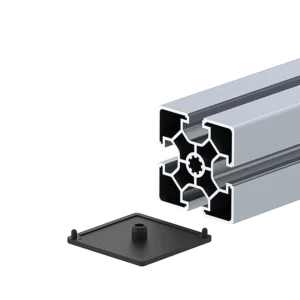
Profile End Cap 80×80 K10
0.35$
Protective and aesthetic end cap for 80×80 K10 series aluminum sigma profiles.
Out of stock
📦 Category: Sigma Profile End Caps
Mermak assuranceFrom factory to end user · importer / main dealer · strong stock
ImporterMain dealer / distributorStrong stockGood priceCorporate invoice
Contact us for stock information · 14-day return for standard unused products; conditions may vary for custom size/cut products.
Profile End Cap 80×80 K10
INDUSTRIAL AUTOMATION PARTS | SUPERIOR PERFORMANCE SERIES
Detailed Product Review
Aluminum sigma profiles, widely used in industrial automation systems, serve as fundamental structural elements in a broad range of applications, from machine frames and robotic workstations to conveyor systems, safety barriers, and ergonomic workbenches, owing to their high strength-to-weight ratio and modular structural flexibility. The open end cuts of these profiles not only negatively impact the overall aesthetic integrity of the system but also create a vulnerable interface against the harsh conditions of the working environment, particularly against the ingress of dust, moisture, oil vapor, and foreign particles. The Profile End Cap 80×80 K10 is a component precisely engineered to close the ends of K10 series 80×80 mm sigma aluminum profiles. By forming a physical barrier, this cap prevents environmental factors from penetrating the internal cavities of the profile, thereby minimizing the risk of corrosion, wear, and contamination to the profile and any wiring or pneumatic lines running through it. This extends the operational life of the system and reduces periodic maintenance requirements. Furthermore, it enhances the safety of operators and maintenance personnel by eliminating risks associated with the sharp edges of the profile, while also providing a visually complete and finished appearance to the machine or structure.
Developed in accordance with Mermak CNC’s stringent engineering standards, the Profile End Cap 80×80 K10 is manufactured from a high-impact resistant engineering polymer, optimized for high resistance against dynamic loads, continuous vibration, wide temperature fluctuations, and mild chemical exposure commonly encountered in industrial environments. This material selection guarantees the product’s long-term performance and dimensional stability. The cap’s mounting system is based on a simple snap-fit mechanism that requires no special tools or additional fasteners, allowing for extremely fast and secure installation and removal. This feature significantly reduces system setup times while directly addressing the need for flexibility and reconfigurability inherent in modular automation systems. In addition to the standard black color, different color options can contribute to machine aesthetics or be used to visually highlight specific functional areas, safety zones, or emergency exits within a facility. Beyond its primary function as a closure, the product’s core purpose is to enhance the overall operational reliability, sustainability, and safety standards of profile-based industrial systems, thereby preserving the value of the investment and contributing to the uninterrupted continuity of production processes through engineering-based solutions.
Advantages of Profile End Cap 80×80 K10
High Mechanical and Environmental Protection: The Profile End Cap 80×80 K10 physically prevents dust, moisture, oil vapor, and other foreign particles from entering the open cross-sections of aluminum sigma profiles. This protects the internal structure of the profile and critical wiring, pneumatic, or hydraulic lines within from adverse environmental effects such as corrosion, oxidation, and wear. This protection extends the overall operational life of the system, reduces failure rates, and minimizes maintenance costs and unexpected downtime by enhancing the performance stability of sensitive electronic components.
Ergonomic and Aesthetic Integration: This cap completely covers the sharp and potentially hazardous edges of the profile, significantly reducing the risk of accidental injury to operators, maintenance personnel, and other facility workers. This directly contributes to raising safety standards in industrial environments. Simultaneously, by concealing the rough and exposed profile ends, it provides a finished, professional, and aesthetically pleasing appearance to your machine or structure. This visual integrity positively influences the overall organization and corporate image of the facility, offering a critical advantage, especially for customer presentations or in sensitive production environments requiring high hygiene standards.
Fast and Tool-Free Assembly Optimization: The Profile End Cap 80×80 K10 features a snap-fit design that requires no special tools or additional mounting hardware. This engineering approach greatly simplifies and speeds up assembly and disassembly processes. It offers significant savings in installation time and reduces labor costs. The ease with which the cap can be attached and detached during modifications, expansions, or maintenance in modular systems provides a high degree of flexibility and efficiency in system integration. This feature enhances system adaptability in dynamic production environments and supports operational fluidity.
Technical Specifications and Capacity
Feature/Description
Product CodePK8080K10
Compatible Profile Series80x80 mm K10 Series Aluminum Sigma Profiles
MaterialHigh-Impact Resistant Engineering Polymer (e.g., ABS / Polypropylene)
Mounting TypeSnap-Fit / Push-Fit (Tool-Free Quick Installation)
Functional ProtectionDust and Moisture Ingress Prevention (Provides basic IP protection level)
Operating Temperature-20°C to +80°C (May vary based on material composition)
Technical Frequently Asked Questions (FAQ)
What kind of durability profile does the material selection of this profile end cap offer against industrial environmental conditions?
The Profile End Cap 80×80 K10 is manufactured from high-impact resistant engineering polymers, typically materials like ABS (Acrylonitrile Butadiene Styrene) or Polypropylene (PP). These polymers possess a range of mechanical and chemical properties critical for industrial applications. High impact strength ensures the product’s integrity against sudden shocks or drops. The material’s rigidity provides resistance to deformation, while its flexibility allows the snap-fit mechanism to be used repeatedly. In terms of chemical resistance, these polymers generally exhibit good durability against industrial oils, greases, weak acids, and bases. The thermal performance range is between -20°C and +80°C, adapting to most indoor industrial environmental temperature fluctuations. These properties guarantee the cap’s long-term and reliable functionality, its resistance to environmental factors, and consequently, the protection of the associated sigma profile system.
How reliable is the snap-fit mechanism of the Profile End Cap 80×80 K10 in vibrating environments or applications requiring frequent disassembly and reassembly?
The snap-fit mechanism of the Profile End Cap 80×80 K10 is designed with a negative tolerance principle to fit precisely into the profile’s internal channel. This design creates continuous friction between the cap and the profile, preventing the cap from dislodging even in vibrating environments. The material’s inherent flexibility ensures that the locking tabs securely engage with the profile’s internal geometry, acting as an additional locking mechanism. In industrial machines and conveyor systems, the geometric design and material damping capacity of the cap delay connection loosening against continuous low-frequency vibrations. For applications requiring frequent disassembly and reassembly, the fatigue resistance and elastic recovery properties of the engineering polymer ensure that the tabs can deform and return to their original position numerous times. However, as with any snap-fit connection, excessive and continuous disassembly cycles can eventually lead to material fatigue in the tabs. For optimal reliability, ensuring the mounting surface is clean and smooth allows for uniform distribution of connection force.
What IP protection level does this cap approximate in preventing dust and moisture ingress into the sigma profile’s internal cavity, and what does this mean for sensitive electronic components?
The Profile End Cap 80×80 K10 minimizes dust and moisture ingress by closing the open cross-section of the sigma profile, forming a physical barrier. While the product is not specifically rated for an IP (Ingress Protection) classification, the level of protection it provides practically approximates IP5X (dust protection) and IPX4 (protection against splashing water) levels. IP5X means that dust ingress is not entirely prevented, but the amount of dust entering does not hinder the safe operation of the equipment. IPX4 provides protection against water splashing from any direction. This protection reduces the risk of short circuits, corrosion, or malfunctions caused by dust accumulation and moisture for sensitive components such as wiring, pneumatic hoses, or small electronic sensors located within the profile’s internal cavity. Protecting sensitive electronic components and sensors from environmental factors is critical for the overall reliability and lifespan of industrial automation systems. This cap should be supplemented with additional sealing elements for applications requiring complete hermetic sealing, but it provides a sufficient basic layer of protection for general industrial environments.
How do the thermal expansion and contraction coefficients of the Profile End Cap 80×80 K10 accommodate long-term integration with aluminum sigma profiles through engineering approaches?
The thermal expansion coefficients of the engineering polymers (e.g., ABS/PP) used to manufacture the Profile End Cap 80×80 K10 are generally higher than those of aluminum sigma profiles. This can lead to different materials expanding and contracting at different rates under wide temperature variations (e.g., -20°C to +80°C). However, these differences are addressed through engineering approaches in the cap’s design. The snap-fit tabs and overall geometry of the cap are optimized to have a certain degree of flexibility and tolerance. This flexibility helps absorb stress between the profile and the cap during polymer expansion or contraction, preventing material cracking or loosening of the connection. Furthermore, the sufficient surface area of the cap fitting into the profile ensures a secure grip is maintained even during thermal movements. The material’s resistance to thermal fatigue is also considered, ensuring it maintains its form stability and mechanical integrity over long-term temperature cycles. Thus, the integration between the cap and the profile maintains its reliability across a wide operating temperature range.
You must be logged in to post a review.
Reviews
There are no reviews yet.