
No products in the cart.
%40 Discount


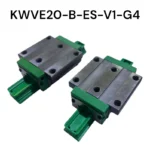
KWVE20-B-ES-V1-G4 INA 20 mm Linear Carriage
Original price was: 113.71$.68.23$Current price is: 68.23$.
High-precision, four-row ball bearing linear guide system with integrated sealing for demanding industrial automation applications.
In stock
🔥 Special for Today Only %40 Discount Opportunity!📦 Category: 20 mm Bearing Types
Mermak assuranceFrom factory to end user · importer / main dealer · strong stock
ImporterMain dealer / distributorStrong stockGood priceCorporate invoice
In stock / available to order · 14-day return for standard unused products; conditions may vary for custom size/cut products.
KWVE20-B-ES-V1-G4 INA 20 mm Linear Carriage
INDUSTRIAL AUTOMATION PARTS | SUPERIOR PERFORMANCE SERIES
Detailed Product Review
The KWVE20-B-ES-V1-G4 INA 20 mm Linear Carriage is a component designed to provide high-precision linear motion in industrial automation systems, featuring a four-row ball bearing guide system. This structural design optimizes the distribution of loads in four principal directions (radial, reverse radial, and lateral), maximizing dynamic and static load capacities while simultaneously increasing system rigidity. The precise rolling of the balls on finely machined raceways offers a smooth and vibration-free motion characteristic with a minimal coefficient of friction. The integrated sealing system (ES) creates an effective barrier against dust, chips, and liquid contamination from the operating environment, protecting the internal mechanism and retaining lubrication. These features support a long-lasting and maintenance-free operational cycle for the linear carriage, while offering a critical performance parameter for applications requiring micron-level positioning and repeatability accuracy.
The material structure of this linear carriage is made from high-strength alloy steel, with surfaces hardened through special heat treatments and processed using precision grinding techniques. This engineering approach enhances wear resistance while minimizing deformation even under high contact stresses. The KWVE20-B-ES-V1-G4 is manufactured under the INA brand of the Schaeffler Group, signifying compliance with international standards and a guarantee of high production quality. Its compact dimensions and standardized mounting hole pattern allow for easy integration into existing or new systems, increasing design flexibility and ease of installation. Application areas range widely, from tool and workpiece positioning systems in CNC machining centers, to high-speed and repetitive movements on robotic assembly lines, probe movements in precision measuring machines, and the sterile, vibration-free motion requirements in medical devices. This linear carriage is an engineering-focused solution designed to enhance system performance and operational reliability.
Advantages of the KWVE20-B-ES-V1-G4 INA 20 mm Linear Carriage
High Dynamic and Static Load Capacity: The KWVE20-B-ES-V1-G4, thanks to its four-row ball bearing guide system, offers a dynamic load capacity (C) of 26.5 kN and a static load capacity (C0) of 42.5 kN, according to DIN EN ISO 14728-1 and DIN EN ISO 14728-2, respectively. These high capacities are achieved by the balls distributing the load over a wide contact area in four principal directions. The dynamic load capacity determines resistance to wear during repetitive movements under high speeds and accelerations, while the static load capacity indicates resistance to permanent deformation under extreme loads or impacts when stationary. This engineering feature guarantees system stability and long-term performance in demanding industrial applications such as heavy machining loads, fast cycle times, and high-vibration environments, thus maintaining its precision throughout the machine’s lifespan.
Superior Positioning and Repeatability Accuracy: Characterized by the G4 precision class, this linear carriage offers very tight limits on parallelism, height, and width tolerances between the rail and carriage. This ensures micron-level positioning accuracy and repeatability. The V1 preload class (medium preload) maintains continuous contact between the balls and raceways, eliminating backlash and increasing system rigidity. This combination is critical in applications requiring precise movement of the cutting tool or workpiece in CNC machines, positioning of the probe in measuring machines, and high-accuracy execution of repetitive tasks in robotic systems. High precision directly impacts final product quality and minimizes processing errors.
Advanced Sealing and Environmental Resistance: The ‘ES’ designation in the KWVE20-B-ES-V1-G4 model refers to the standard integrated sealing system. This system, through double-lip wiper seals and side seals at both ends of the carriage, prevents particles such as dust, chips, and cooling fluids from the external environment from penetrating the internal mechanism. The seals also prevent internal lubricant from escaping, extending lubrication intervals and reducing maintenance needs. The high-quality alloy steel material and special surface treatments enhance corrosion resistance even within the wide operating temperature range of -20°C to +100°C (short-term down to -30°C). These features ensure reliable and uninterrupted operation of the linear carriage for many years in harsh industrial environments, such as metalworking workshops or humid production facilities, thereby reducing operational costs and extending the overall lifespan of the system.
Technical Specifications and Capacity
Feature
Value/Description
Product Code
KWVE20-B-ES-V1-G4
Brand
INA (Schaeffler Group)
Nominal Size
20 mm
Dynamic Load Capacity (C)
26.5 kN (according to DIN EN ISO 14728-1)
Static Load Capacity (C0)
42.5 kN (according to DIN EN ISO 14728-2)
Precision Class
G4 (High Precision)
Preload Class
V1 (Medium Preload)
Sealing Type
ES (Standard Sealing)
Operating Temperature Range
-20°C to +100°C (short-term down to -30°C)
Weight
Approx. 0.45 kg
Technical Frequently Asked Questions (FAQ)
What do ‘ES’ and ‘V1’ mean in the model code KWVE20-B-ES-V1-G4, and what are their effects on system performance?
The ‘ES’ designation in the model code indicates that the linear carriage is equipped with an integrated standard sealing system. This sealing system operates via double-lip wiper seals and side seals located at both ends of the carriage. Its primary function is to prevent particles such as dust, chips, moisture, and other contaminants from the operating environment from entering the ball bearing mechanism, and also to prevent internal lubricant from escaping. This minimizes bearing contamination and wear, extending product life and reducing maintenance intervals. ‘V1’ refers to the preload class of the linear carriage, meaning “medium preload” in this case. Preload is the application of a specific compressive force between the balls and the raceways of the guide rail. V1 preload eliminates system backlash, significantly increasing rigidity. This increased rigidity reduces vibration and deformation, especially under dynamic loads or during direction changes, providing a critical performance advantage in applications requiring high-precision positioning and repeatability. Medium preload offers a balanced performance between high rigidity and low friction/heat generation.
What is the fundamental difference between the dynamic and static load capacities (C and C0) of this linear carriage, and how does it affect the selection for an application?
The dynamic load capacity (C) is the maximum equivalent dynamic load that a linear guide system can reliably carry over a specified life (typically 100 km of travel). It characterizes resistance to fatigue and wear, especially at high speeds and repetitive movements. For the KWVE20-B-ES-V1-G4, this value of 26.5 kN, determined according to DIN EN ISO 14728-1, is a fundamental parameter for analyzing the expected service life and load cycles of an application. The static load capacity (C0) is the maximum load that the linear guide system can withstand in a stationary state without causing permanent deformation of the balls or raceways. This value, 42.5 kN for the KWVE20-B-ES-V1-G4, is determined according to DIN EN ISO 14728-2. C0 indicates the system’s ability to maintain its integrity under impact loads, sudden stops, or prolonged static loads. When selecting the appropriate linear carriage for an application, both dynamic and static load capacities must be considered. If the system is in constant motion and subjected to high speed/acceleration cycles, the C value is critical. If the system experiences sudden impact loads or prolonged static loads, the C0 value may be more decisive. Ensuring that both capacities meet application requirements is essential for system reliability and longevity.
What engineering tolerances and application areas does the G4 precision class enable for the KWVE20-B-ES-V1-G4?
The G4 precision class indicates that the manufacturing tolerances for the KWVE20-B-ES-V1-G4 linear carriage and its matching guide rail are extremely tight. This classification typically allows for sub-micron deviations in critical geometric parameters such as rail flatness, parallelism, and the height and width of the carriage on the rail. The G4 class can typically represent parallelism and flatness tolerances of 0.010 mm/m (10 microns/meter) or better, although exact values may vary by manufacturer specifications. These tight tolerances directly impact the overall motion accuracy and repeatability of the system. The G4 precision class is typically preferred in application areas requiring high engineering tolerances, such as: CNC machining centers and machine tools (milling, turning, grinding), where the surface quality and geometric accuracy of machined parts are critical at the micron level; precision measuring machines (CMM), profile projectors, and optical measurement systems, where the positioning accuracy of the measuring probe or sensor directly determines the reliability of measurement results; semiconductor manufacturing equipment, where ultra-high precision is required for wafer handling and positioning operations; and medical devices, where the motion precision of dosage or imaging systems is essential for patient safety and diagnostic accuracy. The G4 class is designed to provide minimal deviation and maximum performance in such applications.
What critical technical points should be considered regarding rail selection and mounting procedures during the integration of the KWVE20-B-ES-V1-G4?
During the system integration of the KWVE20-B-ES-V1-G4 linear carriage, meticulous attention must be paid to rail selection and mounting procedures to ensure optimal performance and longevity. Firstly, the rail selection must be fully compatible with the carriage’s nominal size (20 mm) and should be chosen from the manufacturer’s (INA) recommended rail series. The precision class of the rail should match or exceed the carriage’s G4 precision class; otherwise, the carriage’s high precision potential cannot be fully utilized. Preparation of the mounting surfaces is critical: Mounting surfaces must be flat and clean to a micron level, within the flatness and parallelism tolerances defined by ISO 1101. Surface roughness (Ra value) should be minimized, and any burrs, dirt, or foreign matter must be absent. During rail mounting, initially, all fastening bolts should be lightly tightened, then tightened using a torque wrench to the manufacturer-specified torque values (typically in stages and a specific sequence). Overtightening or undertightening can lead to rail deformation or loosening. In multi-rail systems, the parallelism and co-planarity of the rails must be carefully adjusted using precision measuring instruments (e.g., laser alignment systems or precision levels). Correct alignment of the side reference edge is vital for the overall motion accuracy of the system. Finally, after mounting, a manual check should be performed to ensure the carriage moves freely and smoothly on the rail, and the lubrication system should be checked if necessary. Adherence to these technical steps is mandatory to ensure the system achieves its expected precision, rigidity, and lifespan performance.
| Dimensions | 20 mm |
|---|
You must be logged in to post a review.
Taksit Tablosu
Related Products
 %64 DiscountHRC 20 FN SZ 20 mm Cpc Linear CarriageOriginal price was: 36.00$.13.02$Current price is: 13.02$.View
 %43 DiscountHGW 30 CC Wide Linear BlockOriginal price was: 33.90$.19.18$Current price is: 19.18$.View
 %40 DiscountKWVE25-BS-ES-V1-G4 INA 25 mm Linear CarriageOriginal price was: 113.71$.68.23$Current price is: 68.23$.View
Reviews
There are no reviews yet.