
No products in the cart.
%43 Discount


HGH 35 CA Narrow Linear Block
Original price was: 49.70$.28.13$Current price is: 28.13$.
In stock
🔥 Special for Today Only %43 Discount Opportunity!📦 Category: 35 mm Linear Guides and Bearings🏷️ Dimensions: 35🏷️ Rail Series Type: HGH
Mermak assuranceFrom factory to end user · importer / main dealer · strong stock
ImporterMain dealer / distributorStrong stockGood priceCorporate invoice
In stock / available to order · 14-day return for standard unused products; conditions may vary for custom size/cut products.
HGH 35 CA Narrow Linear Block
INDUSTRIAL AUTOMATION PARTS | SUPERIOR PERFORMANCE SERIES
Detailed Product Review
The HGH 35 CA Narrow Linear Block is an optimized ball-type linear guide block designed to provide high precision and rigidity for linear motion in industrial automation systems. This component operates on the principle of continuous circulation of precisely machined steel balls within four specially designed and hardened raceways. The geometric arrangement, which optimizes the contact points of the balls under load, ensures uniform distribution of both high static and dynamic loads while minimizing the coefficient of friction for smooth, vibration-free movement. This structure allows the block to achieve micron-level positioning accuracy and excellent repeatability on the linear rail. The preload mechanism eliminates system backlash, offering a critical advantage in applications requiring high rigidity and precise motion control.
The body of the HGH 35 CA linear block is manufactured from high-strength alloy steel, exhibiting superior durability against harsh industrial environmental conditions and continuous operational loads. Its compact dimensions, such as a height of 55 mm and a width of 70 mm, offer integration flexibility, especially in machine designs and robotic systems with limited installation space. The standard 50 mm x 50 mm mounting hole center distances comply with industrial standards, simplifying installation and offering a wide range of rail compatibility. Mounting with M10 bolts ensures the block is secured to the main structure with high torque values, providing maximum stability and rigidity against operational vibrations and shock loads. These features make the HGH 35 CA an ideal component for various high-performance industrial automation applications, including compact CNC machines, laser cutting machines, precision assembly robots, and automated measuring systems.
Advantages of the HGH 35 CA Narrow Linear Block
Optimized Load Distribution and Rigidity: The HGH 35 CA, through its four-row ball arrangement and optimized contact angles of each ball on the precision-machined raceways, distributes static and dynamic loads uniformly in all directions (radial, reverse radial, and lateral). This engineering approach minimizes localized stresses on individual balls or raceways, increasing the block’s resistance to deformation even under high moment loads and in vibratory operational conditions. Consequently, the overall rigidity of the system is significantly enhanced, reducing deflection—a critical factor for machining accuracy and repeatability.
Micron-Level Positioning Accuracy and Repeatability: This linear block offers superior positioning accuracy due to its tight manufacturing tolerances and the precise engineering of its ball circulation system. The preloading of the balls eliminates system backlash, preventing loss of accuracy even during changes in motion direction. This is a crucial factor in applications where absolute positioning accuracy and the ability to return to the same point in successive operations (repeatability) are critical, directly impacting final product quality and production efficiency, such as in CNC machining centers, optical alignment systems, and semiconductor manufacturing equipment.
High Integration Flexibility with Minimal Footprint: The narrow and optimized physical dimensions of the HGH 35 CA, such as its 55 mm height and 70 mm width, provide a significant advantage in space-constrained industrial machine designs and compact robotic cells. This compact structure allows design engineers to create smaller machine footprints, utilize existing space more efficiently, and reduce the overall weight of the system. The reduced mass also improves the system’s dynamic response time, allowing for higher acceleration/deceleration rates, which contributes to shorter cycle times and increased overall efficiency in automation processes.
Technical Specifications and Capacity
Feature
Value/Description
Model Name
HGH 35 CA
Type
Narrow Linear Block
Height
55 mm
Width
70 mm
Mounting Hole Center Distance
50 mm x 50 mm
Weight
1490 grams
Mounting Bolt Size
M10
Load Capacity
High Static and Dynamic Load Capacity
Accuracy
High Positioning Accuracy
Repeatability
Excellent Level
Friction
Minimum
Technical Frequently Asked Questions (FAQ)
What engineering parameters determine the dynamic load capacity of the HGH 35 CA linear block, and how is this capacity optimized?
The dynamic load capacity (C) of the HGH 35 CA linear block is primarily dependent on geometric and material properties such as ball diameter, number of balls, the contact angle between the balls and their raceways, and the hardness and surface roughness of the raceways. This capacity refers to the maximum equivalent dynamic load the block can withstand without fatigue failure over a specified service life (typically 50 km or 100 km). Optimization is achieved through the design of the ball circulation system, precise machining of the raceway geometry, and the use of high-quality, heat-treated steel materials. Specifically, expanding the elliptical contact area of the balls on the raceways and homogenizing the load distribution increases the dynamic load capacity, allowing the system to operate reliably at higher speeds and accelerations for longer periods.
What are the critical geometric tolerances to consider during the installation of this linear block, and what are the recommended torque values for M10 bolts?
For optimal performance of the HGH 35 CA linear block, the flatness and parallelism of the mounting surfaces are critical. The flatness of the surface on which the rail is mounted should generally not exceed 0.02 mm/m, and the parallelism of the surface to which the block is mounted should be within 0.01 mm/m relative to the rail. Failure to adhere to these tolerances can lead to imbalances in ball load distribution, increased friction, and premature wear. The recommended torque value for M10 mounting bolts varies depending on the bolt class and the material of the mounting surface, but it is typically in the range of 50-70 Nm. Tightening the bolts in a crosswise and gradual manner ensures the block seats evenly on the mounting surface and that stresses are distributed uniformly, which directly affects system rigidity and longevity.
What are the recommended lubrication procedures and frequencies for the long-term operation of the HGH 35 CA linear block?
Regular and correct lubrication is essential for the long-term and efficient operation of the HGH 35 CA linear block. High-quality greases based on lithium soap, NLGI class 2, or industrial oils with ISO VG 32-68 viscosity class are generally recommended. The lubrication interval varies depending on the operating conditions (load, speed, cycle time, ambient temperature, and contamination level). Typically, lubrication is recommended every 100-500 km of travel or every 3-6 months of operational time. Fresh grease should be applied using a grease gun through the lubrication nipple on the block until old grease is observed to be expelled. Automatic lubrication systems are particularly beneficial in high-speed and continuous operation applications, as they ensure optimal lubrication quantity and intervals, reducing maintenance costs and increasing system reliability.
How do the thermal expansion and vibration damping characteristics of the HGH 35 CA linear block affect its performance in precision applications?
The thermal expansion characteristics of the HGH 35 CA are directly related to the linear thermal expansion coefficient of the steel material used (approximately 11-13 x 10^-6 mm/mm/°C). Changes in operating temperature can affect the dimensional stability of the block and rail, leading to deviations in positioning accuracy. In precision applications, controlling ambient temperature or matching the thermal expansion coefficients of the rail and block materials is important to minimize this effect. In terms of vibration damping, the rigid structure of the HGH 35 CA and the internal friction of its ball circulation system provide a capacity to absorb high-frequency vibrations. This helps in damping resonant vibrations that may occur during high-speed movements or cutting operations, positively impacting surface finish and system lifespan. However, external damping elements may be considered as an additional solution, especially in applications where very high vibration levels are expected.
| Dimensions | |
|---|---|
| Dimensions | 35 |
| Rail / Carriage Size | |
| Rail Series Type | HGH |
| Rail Carriage Type |
You must be logged in to post a review.
Taksit Tablosu
Related Products
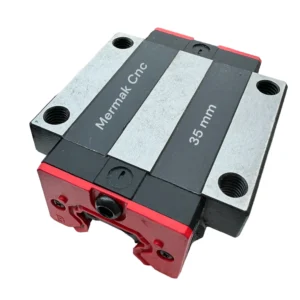 %43 DiscountHGW 35 CC Wide Linear CarriageOriginal price was: 53.63$.30.34$Current price is: 30.34$.View
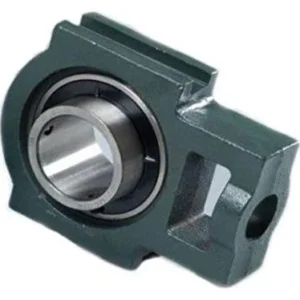 %48 DiscountUCT 207 Pillow Block BearingOriginal price was: 11.45$.5.92$Current price is: 5.92$.View
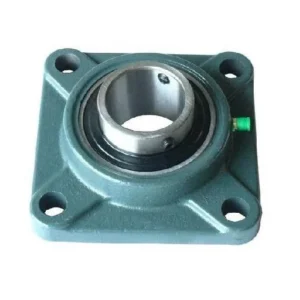 %48 DiscountUCF 207 Pillow Block Bearing UnitOriginal price was: 8.39$.4.33$Current price is: 4.33$.View
Reviews
There are no reviews yet.