
No products in the cart.
%35 Discount


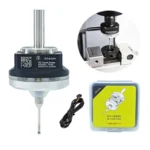
CNC Measuring Probe XYZ Axis 3D PGFUN Touch Probe
Original price was: 203.94$.132.00$Current price is: 132.00$.
High-precision, modular touch probe system for CNC machining centers, compatible with TP20 standard and MH20/MH20i kinematic mounts. Features 433 MHz wireless communication and exceptional repeatability.
In stock
🔥 Special for Today Only %35 Discount Opportunity!📦 Category: CNC Control Panels
Mermak assuranceFrom factory to end user · importer / main dealer · strong stock
ImporterMain dealer / distributorStrong stockGood priceCorporate invoice
In stock / available to order · 14-day return for standard unused products; conditions may vary for custom size/cut products.
PGFUN Touch CNC Measuring Probe XYZ Axis 3D
INDUSTRIAL AUTOMATION PARTS | SUPERIOR PERFORMANCE SERIES
Detailed Product Review
The PGFUN Touch CNC Measuring Probe is a modular touch probe system, compliant with the TP20 standard, developed to determine workpiece geometries, machine coordinate systems, and tool offsets with high precision, on the order of a thousandth of a millimeter, in CNC machining centers, milling machines, and other precision manufacturing systems. This system transmits measurement data to the main control unit using stable and reliable wireless communication protocols in the 433 MHz ISM (Industrial, Scientific, and Medical) band. The probe’s two-part design allows for rapid replacement of measurement stylus modules, either manually or via automatic tool changers. This modularity eliminates the need for recalibration after each stylus change, minimizing operational downtime and maximizing production efficiency, thus offering flexibility for sequential measurements of workpieces with different geometric features.
The kinematic coupling mechanism, the core structural component of the product, exhibits exceptional repeatability performance in the spatial positioning of the stylus tip. This coupling allows for seamless integration of the probe modules with industrial standard kinematic mounting systems such as MH20 and MH20i. This integration capability ensures that the probe can be easily transferred between different machining centers or measurement platforms, guaranteeing consistent and reliable measurement results with every use. Especially in sectors like mold making, aerospace, automotive, and medical device manufacturing, where complex and high-tolerance parts are produced and quality control processes are critical, the probe’s micro-metric accuracy plays a vital role in tightly managing production tolerances, minimizing scrap rates, and enhancing overall product quality. While the probe accelerates the production process through automated measurement cycles, it eliminates potential human errors associated with manual adjustments and measurements.
Advantages of the PGFUN Touch CNC Measuring Probe XYZ Axis 3D
Modular Design and Operational Flexibility: The PGFUN Touch Probe offers rapid and practical adaptation to different measurement requirements and workpiece geometries through its interchangeable stylus modules, designed in accordance with TP20 standards. This modular structure allows users to easily switch between measurement scenarios requiring different stylus lengths, diameters, and contact forces, all with a single probe body. One of its most critical advantages is the elimination of the need for recalibration after module changes; this feature, enabled by the high repeatability of the kinematic coupling, significantly reduces operational downtime and boosts production efficiency. This flexibility provides time and cost savings, especially in variable production environments or prototyping processes.
Micro-Metric Precision and Superior Repeatability: This probe system offers an outstanding repeatability value of 0.35 µm (0.000014 inches) in single-direction measurements. This level of precision ensures absolute reliability in the production of critical parts that must meet the most demanding tolerance requirements. Furthermore, it exhibits a repeatability performance of ±1 µm (0.000039 inches) even after stylus module changes; this indicates that the impact of module changes on measurement accuracy is negligible and eliminates the need for recalibration after each change. This micro-metric precision is a fundamental requirement for maximizing production quality and process control in the measurement of complex geometries and tight tolerances in sectors such as aerospace, medical, and optics.
Application Versatility with a Wide Range of Stylus Modules: The PGFUN Touch Probe is compatible with a wide array of stylus modules, including Standard Force (SF), Medium Force (MF), Low Force (LF), Extended Force (EF), and Extension Modules (EM1, EM2). This variety ensures optimal performance when measuring workpieces with different material hardness, surface roughness, and measurement geometries. For instance, LF modules are preferred for sensitive or easily deformable materials requiring low trigger force, while EM1/EM2 extension modules can be used for more robust applications and hard-to-reach points. Each module type offers a specific combination of trigger force and stylus length, allowing the user to select the most suitable measurement configuration based on their specific application requirements. This wide range enables the probe to be effectively used in a diverse array of industrial applications.
Technical Specifications and Capacity
Feature
Value/Description
Product Code / Model
PGFUN Touch 5-24V TP 50 C
Communication Channel
433 MHz ISM Band (High Stability)
Single Direction Repeatability
0.35 µm (0.000014 inches)
Module Change Repeatability
±1 µm (0.000039 inches)
Trigger Force (XY Direction)
0.08 N (Newton)
Operating Voltage
5-24V DC
Maximum Operating Temperature
50°C
Compatible Stylus Modules
SF, MF, LF, EF, EM1/EM2
Technical Frequently Asked Questions (FAQ)
What tangible benefits does the PGFUN Touch Probe’s 0.35 µm single-direction repeatability offer in CNC machining processes?
The 0.35 micrometer (µm) single-direction repeatability is a critical metric indicating how closely the measurement values are to each other when the probe measures the same point multiple times. This extremely low deviation value minimizes measurement uncertainty in precise operations such as setting workpiece zero points, and measuring tool length and diameter on CNC machining centers. Consequently, the geometric tolerances of machined parts can be controlled much more tightly, ensuring the highest degree of conformity to design for critical components, especially in high-precision sectors like aerospace, medical, or optics. This high repeatability directly translates into tangible economic and technical advantages by reducing scrap rates, lowering rework costs, and enhancing overall production quality, thereby impacting businesses’ competitiveness.
What are the technical advantages and potential limitations of wireless communication in the 433 MHz ISM band for data transmission in industrial automation environments?
The 433 MHz ISM band is an unlicensed frequency spectrum allocated for industrial, scientific, and medical applications, enabling the PGFUN Touch Probe’s wireless communication. Key technical advantages of this band include better penetration in metallic environments and behind obstacles due to lower frequencies, thus offering more reliable signal transmission within the metallic structure of CNC machines. Additionally, the 433 MHz band can offer longer ranges with lower power consumption compared to higher frequency bands like 2.4 GHz, which is advantageous for the probe’s battery life. However, potential limitations exist; due to the widespread use of this band, there is a possibility of interference from other wireless devices (e.g., remote controls, garage door openers). Electromagnetic noise levels in industrial environments can affect signal integrity. The probe’s use of high-stability communication protocols includes design measures to minimize such interference effects, but a detailed site survey is recommended in environments with high RF noise.
How does the PGFUN Touch Probe’s kinematic coupling structure technically ensure measurement accuracy and module change repeatability?
The kinematic coupling structure of the PGFUN Touch Probe typically operates with a mechanism consisting of three balls and three V-grooves. This structure ensures that each time the probe module is attached to the probe body, the stylus tip seats in the exact same, precise position in space. The seating of the balls in the grooves constrains five of the six degrees of freedom (three translations, three rotations), allowing the module to rotate only about the probe’s axis, which does not affect measurement accuracy. This design principle makes it possible to achieve a very low repeatability value, such as ±1 µm, without the need for recalibration after module changes. This precise engineering of the kinematic coupling critically enhances measurement accuracy and the overall reliability of the system by providing consistent sub-micrometer positioning every time the module is attached. This is an indispensable technical feature, especially for applications involving frequent switching between different stylus modules.
How does the selection of stylus modules with different trigger forces (SF, MF, LF, EF) affect the measurement results on specific workpiece materials and surface conditions?
The trigger force of the stylus modules is the minimum force required to activate the sensor when the probe tip contacts the workpiece surface, and this value directly affects measurement results. Low Force (LF) modules are preferred for measuring soft, delicate, or easily deformable materials (e.g., aluminum alloys, plastics, thin-walled parts). The low trigger force ensures more accurate and reliable measurements by preventing surface deformation or scratching. Standard Force (SF) and Medium Force (MF) modules offer balanced performance for general-purpose applications and more common industrial materials. Extended Force (EF) modules are used for measuring materials with rougher surfaces or harder materials (e.g., steel, cast iron), allowing the stylus to achieve stable contact by overcoming surface irregularities. A higher trigger force can help prevent the stylus from catching on minor surface defects, leading to more repeatable results. Selecting the correct module is critical for maximizing measurement accuracy and avoiding damage to the workpiece.
Mermak has 16 years of experience in the industrial automation sector, operating from our factory and warehouse in Ankara Uzay Sanayi. Our website features up-to-date stock quantities and prices. Stocked products are dispatched directly from our warehouse, eliminating production waiting times. We ensure careful packaging, meticulous invoice and document follow-up, and collaborate with reliable logistics partners. The Mermak team closely monitors the shipment process. Upon request, we can arrange product videos or factory viewings via WhatsApp or other contact channels. We proudly supply our products to numerous international markets, including the United Kingdom, United States, Canada, Australia, Ireland, and New Zealand, as well as South Africa and similar countries worldwide.
You must be logged in to post a review.
Taksit Tablosu
Related Products
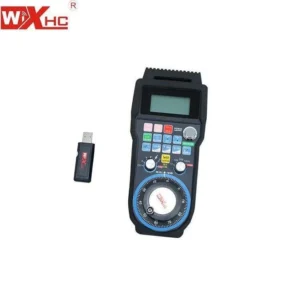 %49 DiscountMach3 Wireless Handwheel CNC Router Remote ControlOriginal price was: 256.97$.132.30$Current price is: 132.30$.View
 %28 DiscountDDCS V4.1 CNC Control Unit 3 Axis + HandwheelOriginal price was: 874.10$.630.60$Current price is: 630.60$.View
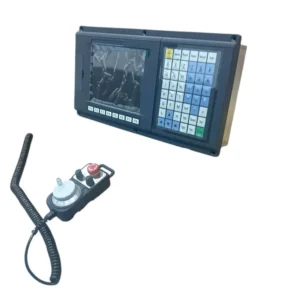 %43 Discount3 Axis CNC Milling Control Unit Panel + Handwheel SetOriginal price was: 1,965.60$.1,119.18$Current price is: 1,119.18$.View
Reviews
There are no reviews yet.