
No products in the cart.
%64 Discount


Ball Screw SCR 4010
Original price was: 77.56$.27.84$Current price is: 27.84$.
High-precision ball screw for industrial automation, 40mm diameter, 10mm lead.
In stock
🔥 Special for Today Only %64 Discount Opportunity!📦 Category: 40 mm Lead Screws and Nuts🏷️ Shaft Diameter: 40 mm🏷️ Pitch: 10 mm Pitch
Mermak assuranceFrom factory to end user · importer / main dealer · strong stock
ImporterMain dealer / distributorStrong stockGood priceCorporate invoice
In stock / available to order · 14-day return for standard unused products; conditions may vary for custom size/cut products.
Ball Screw SCR 4010
INDUSTRIAL AUTOMATION PARTS | SUPERIOR PERFORMANCE SERIES
Detailed Product Review
Ball Screw SCR 4010 is a critical mechanical transmission component that enables the highly efficient conversion of rotary motion into linear motion in industrial automation systems. This ball screw features a nominal diameter of 40 mm and a lead of 10 mm, meaning the nut travels 10 mm axially for one full revolution of the screw. It incorporates an optimized ball circulation system internally, which ensures the continuous rolling of balls within dedicated channels inside the nut, transforming sliding friction into rolling friction. This engineering principle boosts mechanical efficiency to over 90%, minimizing energy losses and heat generation within the system. The precision-ground or rolled thread profile maintains minimal clearance between the nut and the screw, offering positioning accuracy and repeatability up to a thousandth of a millimeter. These characteristics are fundamental factors that directly impact the overall performance of systems and the quality of the final product, especially in demanding applications such as high-speed CNC machining centers, robotic manipulators, and precision assembly lines.
The material structure of the SCR 4010 ball screw is designed for long-lasting and reliable performance. Both the screw and the nut are manufactured from high-carbon alloy steel, with surface hardness enhanced through special heat treatments (minimum HRC 58). This hardening process maximizes wear resistance and resistance to deformation, ensuring the component’s integrity even under heavy and continuous operating conditions. The dynamic load capacity (Ca) is rated at 20 kN, and the static load capacity (Coa) is 45 kN, indicating that the screw can safely withstand the axial forces it may encounter both during movement and when stationary. Integration into systems is facilitated by the standard flanged nut type. Additionally, options for precision end machining are available for bearing supports, couplings, and custom mounting elements, according to customer requirements. More than just a motion component, this ball screw represents a strategic investment for applications requiring high precision, rigidity, and durability in the X, Y, Z axes of CNC machining centers, linear motion modules of industrial robot arms, and automated assembly lines. Offered with the assurance of Mermak CNC, the SCR 4010 guarantees uninterrupted and high-performance operation in your production processes.
Advantages of Ball Screw SCR 4010
High Positioning Accuracy and Repeatability: The Ball Screw SCR 4010 is supplied with a standard C7 accuracy class, with options for higher accuracy classes such as C5 or C3 available upon request. These accuracy classes provide positioning accuracy and repeatability up to a thousandth of a millimeter. While the C7 class has an allowable lead error of 0.05 mm/300 mm, C5 and C3 classes offer tighter tolerances of 0.018 mm/300 mm and 0.008 mm/300 mm, respectively. This guarantees that the desired position is reached and maintained with the same precision every time, particularly in applications like precision machining, measurement, optical alignment, and micro-assembly operations. Minimal backlash and low periodic error enhance the system’s overall accuracy, playing a critical role in machining complex geometries and maintaining tight tolerances.
Superior Axial Load Capacity and Rigidity: With a nominal diameter of 40 mm, the SCR 4010 ball screw can safely handle significant loads in the axial direction thanks to its optimized ball circulation system and high-quality material selection. The dynamic load capacity (Ca) is specified as 20 kN, representing the maximum axial load the screw can safely bear during continuous motion, a fundamental parameter for long service life. The static load capacity (Coa) is 45 kN, indicating the maximum axial load the screw can withstand when stationary or during sudden stops. These high load capacities ensure stable and reliable performance even in heavy-duty machine tools, presses, or high-mass robotic systems. The screw’s high rigidity minimizes axial and radial deflections, reducing vibration during machining and improving surface quality.
High Mechanical Efficiency and Energy Savings: The fundamental operating principle of a ball screw is the conversion of sliding friction into rolling friction. This conversion significantly reduces the coefficient of friction, increasing mechanical efficiency to over 90%. Compared to conventional lead screws, this means much less driving power is required to move the same load, or higher speeds can be achieved with the same motor power. Lower friction also reduces the amount of heat generated within the system, which lowers the risk of thermal deformation of components and extends lubricant life. Consequently, the high efficiency of the SCR 4010 ball screw translates into significant energy cost savings for businesses, while reduced heat generation and less wear enhance the overall lifespan and reliability of the system.
Technical Specifications and Capacity
FeatureValue/Description
Nominal Diameter40 mm (Optimized outer diameter of the screw for high rigidity and load-carrying capacity.)
Lead10 mm (Axial distance the nut travels per revolution of the screw, for rapid movement and precise positioning.)
Accuracy ClassC7 (High accuracy for standard industrial automation applications; optional C5 or C3 available.)
Screw MaterialHigh-Carbon Alloy Steel (Specially heat-treated, hardened, and ground surface.)
Dynamic Load Capacity (Ca)20 kN (Maximum axial load the screw can safely carry during kinetic motion.)
Static Load Capacity (Coa)45 kN (Maximum axial load the screw can withstand when stationary or during stops.)
Surface HardnessMin. HRC 58 (Surface hardness that enhances wear resistance and durability.)
Technical Frequently Asked Questions (FAQ)
How should the appropriate accuracy class be selected for the Ball Screw SCR 4010?
The selection of the accuracy class for the Ball Screw SCR 4010 depends on the positioning accuracy and repeatability tolerances required by the application. The C7 class offers high accuracy for general industrial automation applications and is sufficient for most CNC machines or robotic systems. This class has a lead error tolerance of approximately 50 microns over a 300 mm measurement length. However, for applications requiring tolerances smaller than a thousandth of a millimeter, such as optical alignment, semiconductor manufacturing, or ultra-precision mold machining, higher accuracy classes like C5 or C3 should be preferred. The C5 class offers a lead error tolerance of approximately 18 microns per 300 mm, while the C3 class offers approximately 8 microns per 300 mm. When making a selection, not only static positioning accuracy but also dynamic repeatability, axial rigidity, and the overall cost-performance balance of the system should be considered. Higher accuracy classes require tighter manufacturing tolerances and more costly production processes, so they should only be chosen when truly necessary.
What is the fundamental difference between the dynamic and static load capacities of the SCR 4010 ball screw, and how should it be evaluated during selection?
Dynamic load capacity (Ca) and static load capacity (Coa) are two critical parameters defining the performance of a ball screw. Dynamic load capacity (20 kN) refers to the maximum axial load the ball screw can safely carry over a specified service life (typically 1 million revolutions or 500 km of travel). This value is particularly crucial for applications involving continuous motion where fatigue strength is important. The expected life of the ball screw is calculated by comparing the application’s average axial load with the Ca value. Static load capacity (45 kN) indicates the maximum axial load the ball screw can withstand without permanent deformation when it is stationary or operating at very low speeds. This value is important for conditions involving sudden impact loads, frequent start-stop operations, or maximum loading when the system is at rest. When selecting, both the average and peak dynamic loads experienced during operation, as well as the maximum static loads the system might encounter during stops or emergencies, should be analyzed separately. The selection should be made considering both capacity values with an appropriate safety factor. Generally, dynamic load capacity is used for life calculations, while static load capacity is decisive for sudden load conditions and rigidity requirements.
What maintenance procedures are recommended for the Ball Screw SCR 4010 to ensure long life and optimal performance?
Regular and correct maintenance procedures are critical for maintaining the long life and optimal performance of the Ball Screw SCR 4010. The most fundamental maintenance requirement is regular lubrication with an appropriate lubricant. Lithium soap greases or synthetic oils are generally preferred for ball screws. The lubrication interval and amount should be determined based on factors such as operating speed, load, operating temperature, and environmental conditions. Generally, more frequent lubrication may be required for high-speed and continuous operation systems. Lubrication reduces wear on the balls and thread profiles, lowers friction, and provides protection against corrosion. Additionally, it is important to regularly clean foreign matter such as dirt, dust, or chips that may accumulate on the surfaces of the screw and nut, as these particles can damage the ball circulation system and accelerate wear. Periodically, the axial clearance (backlash) of the ball screw should be checked and minimized, if necessary, by using adjustable nut types. The condition of the end supports, the tightness of coupling connections, and motor alignment are other critical points that should be regularly checked for the overall health of the system. Diligent implementation of these procedures ensures the ball screw reaches its design life and minimizes the risk of failure.
How do the end machining options for the SCR 4010 ball screw affect system integration, and in which situations should custom end machining be preferred?
The end machining options for the SCR 4010 ball screw are a significant factor directly impacting the system’s mechanical integration and performance. Standard end machining typically involves preparing both ends of the screw to interface with bearing supports, couplings, or other drive elements. This machining includes precision turning, milling, threading, and keyway cutting on the screw end. Custom end machining refers to machining performed to non-standard dimensions or geometries designed according to the specific requirements of the application. For example, different machining details may be required to accommodate a specific type of bearing support, directly connect to a particular coupling model, create a special area for sensor mounting, or for special support configurations where one end of the screw is fixed and the other is free. Custom end machining provides greater flexibility in system design, reduces assembly time, and minimizes the risk of component incompatibility. However, such operations may require additional engineering effort and production costs. Our engineering team can provide technical support in determining the most suitable end machining solution based on a detailed analysis of your application, considering the loads, speeds, rigidity requirements, and environmental conditions the screw will be subjected to. Correct end machining extends the life of the ball screw and optimizes the overall system performance.
| Dimensions | |
|---|---|
| Shaft Diameter | 40 mm |
| Pitch | 10 mm Pitch |
You must be logged in to post a review.
Taksit Tablosu
Related Products
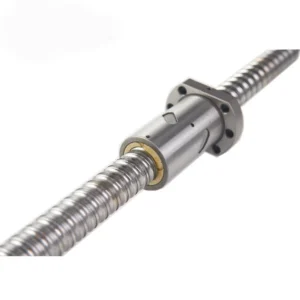 %47 DiscountBall Screw SCR 3205Original price was: 52.84$.27.84$Current price is: 27.84$.View
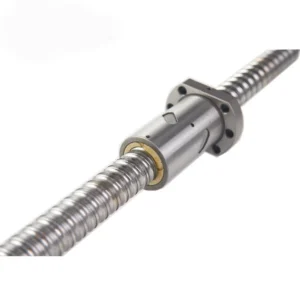 Ball Screw SCR 250528.01$View
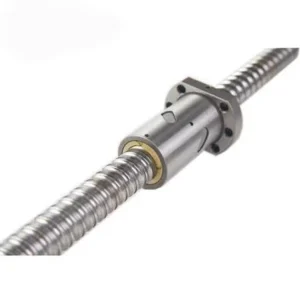 %16 DiscountBall Screw SCR 1605Original price was: 38.40$.32.40$Current price is: 32.40$.View
Reviews
There are no reviews yet.