
No products in the cart.
%53 Discount


5 Axis CNC USB Control Board Mach3 Card Green
Original price was: 90.00$.42.00$Current price is: 42.00$.
High-performance 5-axis CNC control board compatible with Mach3 software, featuring 100 KHz pulse output per axis for precise motion control.
Out of stock
🔥 Special for Today Only %53 Discount Opportunity!📦 Category: Mach3 Control Boards
Mermak assuranceFrom factory to end user · importer / main dealer · strong stock
ImporterMain dealer / distributorStrong stockGood priceCorporate invoice
Contact us for stock information · 14-day return for standard unused products; conditions may vary for custom size/cut products.
5 Axis CNC USB Control Board Mach3 Card Green
INDUSTRIAL AUTOMATION PARTS | SUPERIOR PERFORMANCE SERIES
Detailed Product Review
Mermak CNC’s 5 Axis Mach3 Control Board is a hardware interface designed to manage motion control in computer numerical control (CNC) systems. This product integrates with Mach3 CNC control software, processing G-code commands in real-time and converting them into electrical pulse and direction signals understandable by step or servo motor drivers. The board’s primary function is to precisely coordinate the simultaneous movement of five independent axes (X, Y, Z, A, B). With a maximum pulse output frequency of 100 KHz for each axis, it ensures smooth and vibration-free motor operation even at high speeds, optimizing surface quality and geometric accuracy in machining processes. This high frequency, especially when used with micro-stepping drivers, allows for finer resolution and smoother motion profiles, offering a critical advantage in machining complex contours and intricate details.
The control board’s design is robust, built to withstand the demanding conditions of industrial environments. Its wide supply voltage range of 12V to 24V DC ensures compatibility with various power sources and provides increased tolerance against electrical fluctuations. While the computer connection is established via a DB35 parallel port interface, commonly used in industrial automation systems, the board’s own power is supplied through the USB port. This dual power mechanism enhances setup flexibility and system stability. The board includes inputs for X, Y, Z axis limit switches, an E-stop (emergency stop) pin, a probe input, and general-purpose input/output (I/O) pins, allowing for comprehensive configuration of safety protocols and automation scenarios. All input and output pins are electrically isolated using opto-isolators. This isolation significantly enhances the system’s overall stability and reliability by preventing electrical noise from motor drivers from interfering with sensitive control signals.
Advantages of the 5 Axis CNC USB Control Board Mach3 Card Green
High-Frequency, Multi-Axis Motion Control: This control board delivers a pulse output frequency of up to 100 KHz per axis, enabling step motors to move smoothly and precisely even at high speeds. The ability to control five axes simultaneously allows for the execution of complex 3D geometries, curved surfaces, and multi-angle machining operations with millimeter accuracy. When combined with micro-stepping drivers, this high-frequency capacity allows the motor’s step angle to be divided into smaller increments, directly contributing to reduced vibration and higher surface quality on machined parts. It also enables precise management of acceleration and deceleration profiles, optimizing machining times and ensuring more accurate toolpath following.
Broad System Integration and Flexible Power Management: Full compatibility with Mach3 CNC control software guarantees easy integration into existing or new systems, leveraging a widely-used software with a large user base in industrial automation. The use of a DB35 parallel port interface for data and control signals offers low-latency, direct hardware access, which is crucial for Mach3’s real-time control architecture. Supplying the board’s own power via the USB port eliminates the need for an external adapter, reducing cabling complexity and simplifying the installation process. This dual power approach enhances overall system flexibility while maintaining reliable transmission of main control signals through the parallel port.
Industrial-Grade Durability and Advanced Signal Isolation: Designed for a wide supply voltage range of 12V to 24V DC, the control board offers high tolerance to voltage fluctuations common in industrial power supplies, ensuring uninterrupted performance in demanding factory environments. The opto-isolator technology used on all input and output pins protects the board’s sensitive electronic circuits from electrical noise, voltage spikes, and ground loops originating from motor drivers and other industrial equipment. This electrical isolation preserves signal integrity, preventing false triggers or data corruption, thereby increasing the system’s overall stability and reliability. The rich set of I/O ports, dedicated for functions like X, Y, Z limit switches, emergency stop, spindle control, and coolant pumps, allows for comprehensive automation system configuration and full implementation of safety protocols.
Technical Specifications and Capacity
Feature
Value/Description
Number of Controllable Axes
5 Axes (X, Y, Z, A, B)
Maximum Pulse Frequency
100 KHz (per axis, enabling high-speed and precise motion control)
Control Software Compatibility
Mach3 CNC Control Software
PC Connection Interface
DB35 Parallel Port (Data and Control Signals)
Board Supply Voltage
12V – 24V DC (powered via USB port)
Signal Isolation
Opto-isolated inputs and outputs (High protection against industrial noise)
Technical Frequently Asked Questions (FAQ)
How does the maximum 100 KHz pulse frequency directly affect the operational parameters of the control board, and what is the significance of this value?
The 100 KHz pulse frequency is a critical parameter determining the control board’s capability to drive step or servo motors. This value directly influences the maximum angular velocity of the motor, and consequently, its linear travel speed. A high pulse frequency allows the motor to rotate faster, and when used with micro-stepping drivers, it enables higher resolution and smoother motion profiles. For instance, a 100 KHz frequency, with a 200 steps/revolution step motor and a 1/16 micro-step setting, theoretically allows the motor to rotate at 100,000 pulses/second / (200 steps/revolution * 16 micro-steps/step) = 31.25 revolutions/second. This is crucial for high-speed machining operations, applications requiring fine detail work, and situations demanding smooth tracking of complex 3D contours. Lower frequency boards can limit the motor’s maximum speed potential, potentially increasing machining times and negatively impacting surface quality.
What technical advantages or limitations does the communication between this control board and Mach3 via the DB35 parallel port offer compared to modern USB or Ethernet-based CNC controllers?
Communication between Mach3 and the DB35 parallel port offers specific technical advantages in older, yet still widely used, CNC systems. The parallel port provides direct hardware access, enabling deterministic, real-time control that is relatively less affected by operating system latencies. This is critical for Mach3’s software-based pulse generation, ensuring more consistent timing in motor movements. However, it also has limitations compared to modern USB or Ethernet controllers. The limited number of pins on a parallel port may necessitate additional expansion boards for complex systems requiring numerous inputs/outputs or high-speed data transfer. Furthermore, the decreasing prevalence of parallel ports on modern computers can lead to compatibility issues, often requiring PCI/PCIe parallel port adapters. USB or Ethernet controllers offer higher bandwidth, greater I/O flexibility, and easier integration with modern computers, typically incorporating dedicated motion control processors to overcome potential latency issues of software-based pulse generation.
How is the protection mechanism of the opto-isolated inputs and outputs against electrical noise in industrial environments explained, and how does it contribute to system stability?
Opto-isolators create an electrical barrier between the control board’s low-voltage, sensitive control circuits and the high-voltage, noisy industrial environment of motor drivers, limit switches, or other actuators. These components function by converting an electrical signal into a light signal (via an LED) and then back into an electrical signal (via a phototransistor), thereby breaking the physical electrical connection between the two circuits. This isolation prevents electrical noise, commonly generated in industrial settings by motor switching, inductive loads, power supply fluctuations, or ground loops, from reaching the control board’s microcontroller or other sensitive components. Consequently, false signal detections, control errors, or even hardware damage are avoided. Opto-isolation enhances the system’s overall stability, increases reliability, and supports long-term operational life, minimizing downtime and failures in production processes.
What technical benefits does the control board’s wide supply voltage range of 12V-24V DC offer in terms of system integration and reliability in industrial applications?
The wide supply voltage range of 12V to 24V DC offers significant technical advantages for industrial applications. This broad range provides flexibility for system integrators regarding power source options, allowing easy compatibility with 12V or 24V DC industrial power supplies. More importantly, voltage fluctuations or drops on power lines are common in industrial environments. Having a wide supply voltage range makes the board more tolerant to such variations, preventing unstable operation or shutdowns due to momentary changes in supply voltage. This increases the system’s overall reliability and uptime. Additionally, a higher supply voltage, such as 24V DC, can help maintain signal integrity over longer cable runs by minimizing voltage drop and may simplify the overall system architecture by providing direct power for certain industrial sensors or actuators.
Mermak CNC has 16 years of experience in industrial automation. Our products are stocked and ready for shipment from our Ankara Uzay Sanayi factory/warehouse. You can check real-time stock quantities and prices on our website. Stocked items are dispatched directly from our warehouse, eliminating production waiting times. We ensure careful packaging and meticulous invoice/document handling. We partner with reliable logistics providers, and the Mermak team monitors the entire shipment process. Upon request, we can arrange video tours of our factory or product demonstrations via WhatsApp or other contact channels. We proudly supply our products to customers in the United Kingdom, United States, Canada, Australia, Ireland, New Zealand, South Africa, and similar countries and international markets.
You must be logged in to post a review.
Taksit Tablosu
Related Products
 Relay Module 5V x 4 Relays w/ Opto-Isolation12.73$View
 Relay Module 5V x 2 Relays w/ Opto-Isolation6.36$View
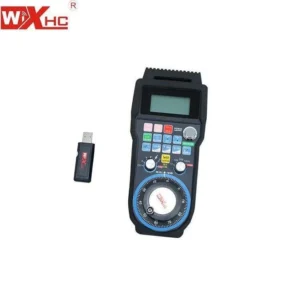 %49 DiscountMach3 Wireless Handwheel CNC Router Remote ControlOriginal price was: 256.97$.132.30$Current price is: 132.30$.View
Reviews
There are no reviews yet.