
No products in the cart.
%68 Discount


5.5 kW Variable Speed Drive – Siemens 380V
Original price was: 1,342.30$.433.44$Current price is: 433.44$.
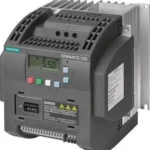
Siemens SINAMICS V20 Basic Performance converter for precise speed and torque control of three-phase asynchronous motors.
In stock
🔥 Special for Today Only %68 Discount Opportunity!📦 Category: Electronics
Mermak assuranceFrom factory to end user · importer / main dealer · strong stock
ImporterMain dealer / distributorStrong stockGood priceCorporate invoice
In stock / available to order · 14-day return for standard unused products; conditions may vary for custom size/cut products.
Teknik Dedaylar
5.5 kW Variable Speed Drive - Siemens 380V nedir?
5.5 kW Variable Speed Drive - Siemens 380V, üç fazlı asenkron motorların hız ve tork kontrolünü sağlamak amacıyla tasarlanmış bir güç elektroniği cihazıdır. Sabit şebeke voltajını ve frekansını değişken değerlere dönüştürerek motorun devir sayısını hassas bir şekilde ayarlar. PWM tekniği ile motorun manyetik akısını ve torkunu bağımsız olarak yönetir. 5.5 kW nominal güce sahip motorlarda mekanik zorlanmaları azaltarak çalışmayı düzenler. Mermak CNC Otomasyon, otomasyon projelerinizde ihtiyaç duyduğunuz teknik desteği sağlamaktadır.
5.5 kW Variable Speed Drive Siemens 380V
INDUSTRIAL AUTOMATION PARTS | SUPERIOR PERFORMANCE SERIES
Detailed Product Review
The Siemens SINAMICS V20 Basic Performance converter (6SL3210-5BE25-5UV0V20) is a power electronics device designed to provide speed and torque control for three-phase asynchronous motors in industrial applications. This device precisely adjusts the motor’s rotational speed by converting a fixed mains voltage and frequency (380-480V AC, 50/60 Hz) into a variable voltage and frequency. Its fundamental operating principle involves converting the input AC voltage to DC voltage via a rectifier, storing this DC voltage on a DC link, and finally synthesizing the desired AC voltage waveform with Pulse Width Modulation (PWM) technique using an inverter stage (typically employing IGBTs). This allows for independent control of the motor’s magnetic flux and torque, enabling efficient operation both below and above the motor’s nominal speed. Optimized for a nominal motor power of 5.5 kW, this model limits the motor’s starting current, reducing mechanical shocks, optimizing energy consumption, and extending the overall lifespan of the system. You can find related mechanical components in our mechanical category and general automation parts in our general category.
The device’s construction is engineered to withstand the demanding conditions of industrial environments. It houses critical components such as high-power semiconductor switching elements (IGBTs), electrolytic capacitors, and inductors. Thermal management is handled by an integrated heatsink and fan system, which effectively dissipates heat generated by power loss, ensuring the device operates within nominal temperature ranges for long-term reliability. For system integration, it features a compact design suitable for wall mounting in standard industrial control panels or machine enclosures. Electrical connections are made via separate terminal blocks for the three-phase AC input, three-phase motor output, and control signals. I/O interfaces, including digital inputs, analog inputs, and relay outputs, allow for easy integration into automation architectures by directly connecting external sensors, switches, and control systems. These features enable the product to be used reliably and efficiently across a wide range of industrial applications, such as CNC machines, conveyor systems, pump and fan applications, and general production and process lines.
Advantages of the 5.5 kW Variable Speed Drive Siemens 380V
Advanced Energy Optimization: Through its integrated ECO mode and sleep function, this variable speed drive dynamically optimizes energy consumption based on the motor’s load status. The ECO mode minimizes iron and copper losses by reducing the motor’s magnetic flux and consequently the magnetizing current when operating under partial load. This provides significant energy savings, especially in variable torque applications like pumps and fans. The sleep function further enhances efficiency by putting the drive into a low-power mode if the motor receives a minimum load or zero speed command for a specified period, halting unnecessary energy consumption and automatically reactivating upon receiving a demand signal. These algorithmic approaches lead to substantial reductions in operating costs and decrease the system’s environmental footprint.
Fast and Efficient Commissioning Process: The Siemens SINAMICS V20 simplifies installation and parameter setup with its pre-configured application macros and intuitive user interface. Application macros (e.g., for pumps, fans, conveyors, compressors) automatically load the essential parameter sets required for specific industrial scenarios, reducing the need for manual configuration. This saves engineering time and minimizes the risk of incorrect parameter entry. User-friendly menus, accessible via the basic operator panel (BOP) on the device or the optional Smart Access Module, offer quick diagnostics and monitoring capabilities. These features significantly shorten commissioning times and enhance system operational efficiency by minimizing production downtime.
High Reliability and Mechanical Durability for Industrial Environments: This variable speed drive is designed to meet industrial standards with its IP20 protection class. The IP20 rating indicates that the device is protected against solid objects larger than 12.5 mm (e.g., fingers) and offers a degree of resistance to dust ingress, but it does not provide protection against water. This implies that the device is typically intended for installation within an electrical cabinet or enclosure. Furthermore, compatibility with 75°C copper wiring ensures safe and continuous current-carrying capacity even at high temperatures, reducing the risk of cable insulation degradation and preventing electrical faults. The internal components are selected and tested to ensure long-lasting performance under harsh industrial conditions, including vibration, temperature fluctuations, and electrical noise. Its robust mechanical structure and advanced thermal design ensure stable and reliable operation even under continuous working conditions.
Technical Specifications and Capacity
Feature
Value/Description
Product Model Code
6SL3210-5BE25-5UV0V20
Nominal Motor Power
5.5 kW (7.5 HP)
Input Voltage
3-Phase AC 380-480V (-15% / +10%) 50/60 Hz
Input Current
15.2 A (for 380-480V)
Output Current
12.5 A
Short Circuit Current Rating (SCCR)
65 kA
Technical Frequently Asked Questions (FAQ)
What are the fundamental technical differences between the V/f control mode and the vector control mode of the Siemens SINAMICS V20 variable speed drive, and for which applications should each be preferred?
The V/f (Voltage/Frequency) control mode is a scalar control method that indirectly controls the motor’s stator flux and torque. In this mode, a constant ratio (V/f ratio) is maintained between the motor’s supply voltage and frequency, aiming to keep the motor’s magnetic flux at its nominal value. This method offers adequate performance for applications such as pumps, fans, or simple conveyors where dynamic response is not critical and high torque is not required at low speeds. Vector control mode, on the other hand, is a more advanced method that separates the motor’s stator current into two orthogonal components (flux-producing and torque-producing) and controls each independently. This allows for direct control of the motor’s flux and torque, providing higher dynamic response, better speed regulation, and higher, more stable torque production, especially at low speeds. Vector control mode should be preferred for applications requiring high performance, precise speed, and torque control, such as CNC machines, machine tools, cranes, or applications requiring precise positioning. The SINAMICS V20 offers basic V/f control as well as sensorless vector control capabilities, catering to a wide range of applications.
How do the energy-saving ECO mode and sleep function of this variable speed drive technically operate, and under what conditions are they activated?
The ECO mode in the Siemens SINAMICS V20 is a function designed to optimize energy consumption when the motor operates under partial load. When this mode is active, the variable speed drive continuously monitors the motor’s current load and reduces the motor’s magnetic flux (and thus stator voltage) to the minimum required level, thereby decreasing magnetizing current and associated iron losses (core losses). This adaptive voltage control optimizes the motor’s efficiency curve, leading to significant energy savings, particularly in variable torque applications (e.g., fans, pumps). The sleep function is a feature that brings the variable speed drive and motor to a near-complete stop by entering a low-power state if the motor remains at minimum speed or under load for a specified period. For instance, in a pump application, if the system pressure exceeds a certain threshold and there is no demand for pump flow, the variable speed drive can put the motor into sleep mode. The drive automatically wakes up and restarts the motor when the system pressure drops or a new speed command is received. These functions prevent energy waste during prolonged periods of low load or standby, thereby reducing operating costs.
What does the IP20 protection class of the SINAMICS V20 mean in terms of electrical safety and device lifespan in industrial environments?
The IP20 protection class (Ingress Protection), according to the IEC 60529 standard, indicates a device’s level of protection against solid objects and water. The first digit, “2”, signifies that the device is protected against solid objects larger than 12.5 mm (e.g., fingers), preventing accidental contact with hazardous live parts inside the device and enhancing electrical safety. The second digit, “0”, indicates that the device offers no protection against water. This technical definition implies that the SINAMICS V20 should not be directly exposed to water splashes or humid environments. In industrial settings, a variable speed drive with an IP20 protection class should typically be installed inside an additional enclosure (e.g., an electrical cabinet with IP54 or higher protection class) to protect it from dust and moisture. This safeguards the sensitive electronic components within the device from dust, dirt, and moisture, reducing the risk of short circuits, preventing corrosion, and significantly extending the device’s operational lifespan. Proper installation and environmental protection are critical for the device to maintain its nominal performance and minimize failure rates.
When selecting this variable speed drive for a 5.5 kW motor, what is the importance of parameters such as input and output current ratings and the Short Circuit Current Rating (SCCR) for system integration and protection?
When selecting a variable speed drive for a 5.5 kW motor, the specified input and output current ratings, along with the Short Circuit Current Rating (SCCR), are critically important for the electrical integration and safety of the system. The device’s nominal input current is rated at 15.2 A. This value serves as a fundamental reference for correctly determining the cross-sectional area of the main supply line, as well as the nominal current rating of the fuse or circuit breaker that will supply the variable speed drive. Proper sizing of the input current is necessary to prevent overheating of the supply cables and nuisance tripping of protective devices. The output current is rated at 12.5 A and should be suitable for the nominal current of the 5.5 kW motor being connected. If the output current rating is lower than the motor’s nominal current, the motor may not be able to operate at full power, or the variable speed drive may trip due to overload. The Short Circuit Current Rating (SCCR) is given as 65 kA. This parameter indicates the maximum short-circuit current the variable speed drive can withstand for a specified duration and level in the event of a fault in the connected circuit. The SCCR value plays a vital role in the overall short-circuit protection coordination of the system. When selecting upstream overcurrent protection devices (fuses, circuit breakers), it must be ensured that the system’s potential short-circuit current does not exceed the variable speed drive’s SCCR value. This is a mandatory engineering requirement to ensure the safety of both the variable speed drive and surrounding equipment in the event of a short circuit, minimizing the risks of fire and explosion.
| Power | 5.5 kW |
|---|
You must be logged in to post a review.
Taksit Tablosu
5.5 kW Variable Speed Drive - Siemens 380V nedir?
5.5 kW Variable Speed Drive - Siemens 380V, üç fazlı asenkron motorların hız ve tork kontrolünü sağlamak amacıyla tasarlanmış bir güç elektroniği cihazıdır. Sabit şebeke voltajını ve frekansını değişken değerlere dönüştürerek motorun devir sayısını hassas bir şekilde ayarlar. PWM tekniği ile motorun manyetik akısını ve torkunu bağımsız olarak yönetir. 5.5 kW nominal güce sahip motorlarda mekanik zorlanmaları azaltarak çalışmayı düzenler. Mermak CNC Otomasyon, otomasyon projelerinizde ihtiyaç duyduğunuz teknik desteği sağlamaktadır.
Related Products
 %42 Discount3.8 kW Brake Servo Motor Set 130ST-M15025Z1 T3A-L50F-RABFOriginal price was: 1,953.82$.1,131.16$Current price is: 1,131.16$.View
 %42 Discount1 kW Braked Servo Motor Kit 80ST-M04025Z1 T3L-L20F-RABNOriginal price was: 860.33$.498.08$Current price is: 498.08$.View
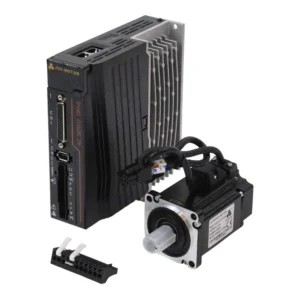 %42 Discount750W Servo Motor Set 80AST-A1C02430 with T3D-L20A-RABF DriverOriginal price was: 382.81$.221.63$Current price is: 221.63$.View
Reviews
There are no reviews yet.