
No products in the cart.
%47 Discount


45×90 Sigma Profile 10 Channel Heavy Duty Wholesale
Original price was: 60.70$.32.38$Current price is: 32.38$.
High-strength 45×90 mm aluminum profile with 10mm T-channels, designed for robust industrial automation and machine building applications requiring superior structural rigidity and load-bearing capacity.
In stock
🔥 Special for Today Only %47 Discount Opportunity!📦 Category: Sensors and Switches🏷️ Dimensions: 45 mm🏷️ Slot Size: 10 Slots🏷️ Profile Size: 45x90
Mermak assuranceFrom factory to end user · importer / main dealer · strong stock
ImporterMain dealer / distributorStrong stockGood priceCorporate invoice
In stock / available to order · 14-day return for standard unused products; conditions may vary for custom size/cut products.
45×90 Sigma Profile 10 Channel Heavy Duty Wholesale
INDUSTRIAL AUTOMATION PARTS | SUPERIOR PERFORMANCE SERIES
Detailed Product Review
The 45×90 Sigma Profile 10 Channel Heavy Duty is a structural element designed for applications in industrial automation and machine manufacturing sectors that demand high structural rigidity, strength, and precision. This profile, with its 45 mm x 90 mm rectangular cross-section geometry and integrated 10 mm wide T-channels, is optimized to provide minimal deformation and maximum stability under dynamic and static loads. Its heavy-duty construction, featuring thicker wall sections and an optimized internal rib structure compared to standard profiles, offers superior resistance to bending (deflection) and torsional (twisting) moments. This characteristic is critical for ensuring structural integrity and operational stability, especially in high-speed motion systems, heavy-load conveyor systems, and precise robotic workstations. The modular nature of the profile allows for quick assembly, disassembly, and reconfiguration, offering flexibility and adaptability in engineering projects.
The product is manufactured using the extrusion method from high-quality EN AW-6063 T6 aluminum alloy. This alloy combines high tensile and yield strength with good workability and weldability. The T6 heat treatment enhances the material’s hardness and strength, reinforcing its durability in demanding industrial conditions. The anodized surface treatment significantly increases the profile’s resistance to corrosion, chemical effects, UV radiation, and mechanical wear. This protective layer extends the profile’s lifespan, minimizes maintenance requirements, and makes it suitable for use even in specialized environments like clean rooms or food processing facilities. The 10 mm T-channels offer full compatibility with industrial standard fasteners (T-nuts, corner brackets, hinges, end caps), simplifying system integration and allowing for easy mounting of various automation components (sensors, actuators, cable conduits). This profile is preferred for a wide range of applications, including heavy-duty conveyor systems, large-scale CNC machine frames, robotic cells, test and calibration benches, and safety barriers.
Advantages of 45×90 Sigma Profile 10 Channel Heavy Duty Wholesale
High Structural Rigidity and Load-Bearing Capacity: This heavy-duty 45×90 mm sigma profile offers significantly higher moments of inertia (Ix and Iy) compared to standard profiles, thanks to its optimized cross-sectional area and internal rib structure. These high moments of inertia increase the profile’s resistance to bending and torsional deformations, ensuring minimal deflection and angular deviation even over large spans. This engineering feature is crucial for conveyor systems carrying heavy loads, automation lines requiring high-speed linear motion, and robotic platforms subjected to dynamic loads. High rigidity directly impacts the system’s overall precision, repeatability, and operational lifespan, contributing to vibration damping and structural stability.
Modular and Adaptive System Integration: The profile’s 10 mm T-channel design, an industrial standard, ensures full compatibility with a wide range of fasteners and accessories. This modular structure allows engineers and designers to quickly and efficiently assemble, disassemble, and reconfigure complex structures. The T-channels facilitate the easy integration of components such as T-nuts, hammer nuts, corner brackets, hinges, casters, panel mounts, and various sensor mounting brackets. This adaptability provides flexibility in production processes, shortens prototyping times, allows for rapid response to design changes, and creates a scalable foundation for future expansion or modification needs. It also supports organized and safe systems by offering integrated channels for cable management.
Superior Material and Surface Treatment Performance: The use of EN AW-6063 T6 aluminum alloy provides the profile with high mechanical strength (e.g., typically 205 MPa tensile strength and 170 MPa yield strength) and good fatigue resistance. This alloy offers a high strength-to-weight ratio along with its light weight, reducing the overall weight of systems while maintaining load-bearing capacity. The anodizing surface treatment creates a hard, dense, and non-porous aluminum oxide layer on the profile’s outer surface. This layer significantly enhances the profile’s resistance to corrosion (especially in humid, salty, or mildly chemical environments), scratching, and abrasion. Furthermore, the anodized coating provides electrical insulation properties and improves thermal stability, ensuring the profile performs reliably for extended periods under harsh industrial conditions, reducing maintenance costs and extending operational life.
Technical Specifications and Capacity
Specification|Value/Description
Profile Size|45 mm x 90 mm (Nominal Outer Cross-section)
Channel Type|10 mm T-Channel (Industrial Heavy Duty Standard)
Material|EN AW-6063 T6 Aluminum Alloy (High-Strength Extrusion)
Surface Treatment|Anodized Coating (For Corrosion and Wear Resistance)
Cross-sectional Area (A)|Approx. 1200 mm² (Optimized Material Distribution)
Unit Weight|Approx. 3.2 kg/meter (Balanced Structural Lightness and Strength)
Moment of Inertia (Ix)|Approx. 100,000 mm⁴ (Bending Resistance around X-axis)
Moment of Inertia (Iy)|Approx. 30,000 mm⁴ (Bending Resistance around Y-axis)
Standard Length|6000 mm (6 meters) (Standard Production Length for Wholesale Purchase)
Technical Frequently Asked Questions (FAQ)
How does the “Heavy Duty” designation differentiate this 45×90 sigma profile from standard profiles in terms of structural performance and application suitability?
The term “Heavy Duty” indicates that the material thickness and internal rib structure used in the profile’s cross-section are greater than those of standard profiles with the same external dimensions. This significantly increases the profile’s cross-sectional area and, consequently, its moments of inertia (Ix and Iy). Higher moments of inertia enhance the profile’s resistance to bending (deflection) and torsional (twisting) deformations under static and dynamic loads. For instance, while this profile’s Ix is approximately 100,000 mm⁴, the value for a standard 45×90 profile would be lower. This increased rigidity is crucial for conveyor systems carrying heavy loads, high-speed linear motion units, and precise machine frames where vibration must be minimized. Heavy-duty profiles offer higher tensile strength and better fatigue life, ensuring long-term reliability in demanding industrial environments and reducing the risk of structural resonance.
What are the specific contributions of the EN AW-6063 T6 aluminum alloy and anodized surface treatment to the long-term operational integrity of this profile in industrial environments?
The EN AW-6063 T6 aluminum alloy is known for its high strength-to-weight ratio, good corrosion resistance, and excellent extrudability. The T6 heat treatment increases the alloy’s final tensile strength to approximately 205 MPa and yield strength to about 170 MPa, enhancing the profile’s resistance to deformation under demanding mechanical loads. The anodizing surface treatment creates a hard, porous aluminum oxide layer, typically 10-25 microns thick, on the profile’s surface. This layer significantly improves the profile’s natural corrosion resistance, providing a superior barrier against oxidation and rust, even in humid, chemically laden, or salty environments. Additionally, the anodized coating increases surface hardness, improving scratch and abrasion resistance, providing electrical insulation, and offering ease of cleaning. This combination ensures the profile maintains its structural integrity, aesthetic appearance, and operational performance for many years in harsh industrial conditions, thereby minimizing maintenance costs and replacement frequency.
How does the 10 mm T-channel design facilitate modularity and system reconfigurability, and what are the implications for design engineers?
The 10 mm T-channel design is a global standard for industrial profiles, ensuring compatibility with a vast ecosystem of fasteners and accessories. These channels allow special fasteners like T-nuts, hammer nuts, and spring nuts to be easily inserted and rotated into place for secure fixing. This mechanism enables quick and flexible connection, disconnection, and repositioning of profiles to each other or to other components. For design engineers, this accelerates prototyping processes, simplifies design revisions, and allows production lines or machine configurations to be rapidly adapted to changing requirements. It also simplifies the integration of various functional components such as cable conduits, sensor mounts, pneumatic lines, and panel holders. This modular approach eliminates the need for specialized tooling and welding, reducing assembly costs and providing a scalable platform for future expansions or modifications, thus optimizing the total cost of ownership.
What are the critical design considerations for using this 45×90 sigma profile in applications involving significant dynamic loads or requiring high precision, such as robotic platforms or CNC machine bases?
When using the 45×90 sigma profile in applications with high precision and dynamic loads, several critical design considerations apply. Firstly, structural rigidity and deflection control: utilizing the profile’s high moments of inertia (Ix and Iy), detailed finite element analysis (FEA) or analytical calculations should be performed to ensure that maximum allowable deflection values (typically in the micron range) are not exceeded under expected static and dynamic loads. Secondly, rigidity of connection points: the type of fasteners used (e.g., robust corner brackets, linear connectors) and their tightening torques directly influence the overall rigidity of the structure, as loose connections can lead to loss of precision. Thirdly, vibration damping: structural vibration analysis should be conducted to prevent resonance frequencies that may occur under dynamic loads, and additional damping elements or mass distribution optimization should be considered if necessary. Fourthly, thermal expansion: aluminum’s high coefficient of thermal expansion (approx. 23×10^-6 m/m°C) can affect dimensional accuracy with temperature changes, so thermal expansion compensation mechanisms should be integrated for long structures or systems requiring precise alignment. Finally, the flatness and parallelism of the profile’s mounting surfaces are vital for the repeatability and positioning accuracy of linear motion systems and robotic arms.
| Dimensions | 45 mm |
|---|---|
| Slot Size | 10 Slots |
| Profile Size | 45x90 |
You must be logged in to post a review.
Taksit Tablosu
Related Products
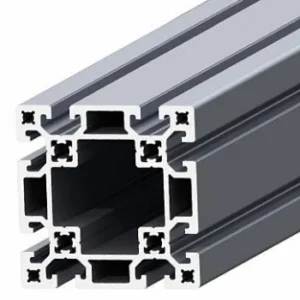 %47 Discount80x80 Sigma Profile 8 Channel Heavy Duty WholesaleOriginal price was: 88.50$.47.20$Current price is: 47.20$.View
 %47 Discount45x90 Sigma Profile 10 Channel Light Duty WholesaleOriginal price was: 44.40$.23.68$Current price is: 23.68$.View
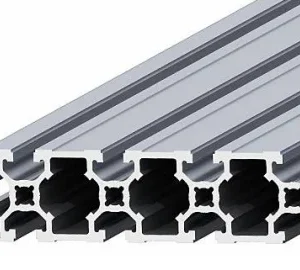 %47 Discount45x180 Sigma Profile 10 Channel BulkOriginal price was: 113.51$.60.54$Current price is: 60.54$.View

Reviews
There are no reviews yet.