
No products in the cart.
%47 Discount

40×40 Sigma Profile | 10 Channel | Heavy Duty Wholesale
Original price was: 30.30$.16.15$Current price is: 16.15$.
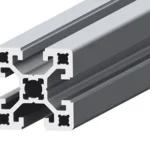
High-strength 40x40mm aluminum extrusion profile with 10 T-slots, designed for robust industrial automation and machine building applications. Heavy-duty construction ensures superior rigidity and stability.
In stock
🔥 Special for Today Only %47 Discount Opportunity!📦 Category: Sensors and Switches🏷️ Dimensions: 40 mm🏷️ Slot Size: 10 Slots🏷️ Profile Size: 40x40
Mermak assuranceFrom factory to end user · importer / main dealer · strong stock
ImporterMain dealer / distributorStrong stockGood priceCorporate invoice
In stock / available to order · 14-day return for standard unused products; conditions may vary for custom size/cut products.
40×40 Sigma Profile | 10 Channel | Heavy Duty Wholesale
INDUSTRIAL AUTOMATION PARTS | SUPERIOR PERFORMANCE SERIES
Detailed Product Review
The 40×40 Sigma Profile, 10 Channel, Heavy Duty is an aluminum extrusion profile designed for structural applications in industrial automation and machine manufacturing sectors that require high strength and modularity. This profile has a square cross-section of 40 millimeters by 40 millimeters and features a total of ten channels on each surface, allowing for the integration of standard T-slot fasteners. The “Heavy Duty” classification offers increased wall thickness and optimized internal geometry compared to standard sigma profiles, resulting in higher section moments of inertia (Ix, Iy) and section moduli (Zx, Zy). These structural features significantly enhance the profile’s resistance to bending, torsion, and shear stresses, providing superior rigidity and stability under dynamic and static loads. The T-slot design allows for flexible positioning and rearrangement of fasteners and accessories without the need for permanent machining such as drilling or welding, which is a critical advantage for rapid prototyping and modification of systems.
This profile is typically manufactured from high-strength aluminum alloy EN AW-6063 T6 through an extrusion process. EN AW-6063 T6 offers good extrudability, a high strength-to-weight ratio, and corrosion resistance due to its magnesium and silicon alloy elements. The T6 temper treatment indicates that the material has been solution heat-treated and artificially aged, which increases its yield and tensile strength, thereby reinforcing the profile’s structural integrity. Anodization, applied as a surface treatment, creates a hard, dense, and non-porous aluminum oxide layer on the aluminum surface through an electrochemical process. This layer enhances wear resistance, corrosion resistance, and electrical insulation properties. In terms of system integration, the 10-channel configuration provides versatile connection points, enabling the easy construction of complex framing systems, protective barriers, linear motion systems, robotic cell skeletons, and precision machine frames. It is particularly preferred in industrial applications with high performance and long-life expectations, such as automation lines, CNC machines, test fixtures, and heavy-duty workstations.
Advantages of 40×40 Sigma Profile | 10 Channel | Heavy Duty Wholesale
High Mechanical Strength and Rigidity: This heavy-duty profile exhibits an average increase of 15-25% in its moments of inertia (Ix, Iy) compared to standard sigma profiles, owing to its thicker wall sections and optimized internal rib structure. This increase directly enhances the profile’s bending and torsional rigidity, thereby maximizing its minimum deflection under high static loads and vibration damping capacity under dynamic loads. This feature critically improves system stability and accuracy, especially in linear motion systems requiring precise positioning, heavy-load conveyor belts, or high-speed robotic applications. The increased wall thickness also contributes to the system’s longevity by providing higher resistance to local stress concentrations at connection points.
Enhanced Modularity and Configuration Flexibility: The 10-channel T-slot configuration offers numerous and versatile connection points on each surface of the profile. This allows engineers and designers to create complex three-dimensional structures, easily integrate various components (sensors, actuators, cable channels, pneumatic lines), and perform system revisions quickly. Full compatibility with standard T-nuts, corner brackets, and other accessories reduces the need for custom-made parts and speeds up prototyping processes, while also providing significant time savings during production line changes or maintenance operations.
Superior Surface Protection and Environmental Resistance: The anodization process applied to the profile’s surface creates a hard and corrosion-resistant surface, typically 5 to 25 microns thick, by electrochemically thickening the material’s natural aluminum oxide layer. This process increases the profile’s resistance to abrasive environments, mild chemicals, and moisture, ensuring long-lasting performance even in harsh industrial conditions. The anodized surface also offers higher resistance to scratches and impacts, preserves the profile’s aesthetic appearance for a long time, and acts as an electrically insulating barrier, reducing the risk of galvanic corrosion.
Technical Specifications and Capacity
Specification
Value/Description
Profile Type
40×40 Sigma Profile
Profile Cross-section
Square (40mm x 40mm)
Channel Type
10 Channel (T-Slot)
Weight Category
Heavy Duty (High-Density Design)
Material
High-Strength Extrusion Aluminum Alloy (EN AW-6063 T6)
Surface Treatment
Anodized (Corrosion and Wear Resistance)
Dimensional Tolerance
DIN EN 12020-2 Standard or Equivalent
Technical Frequently Asked Questions (FAQ)
What specific differences does the “Heavy Duty” designation offer in terms of mechanical performance compared to standard sigma profiles?
The “Heavy Duty” designation refers to the superior mechanical properties achieved through optimizations in the profile’s cross-sectional geometry and increased wall thicknesses. Compared to standard profiles, heavy-duty profiles have significantly higher moments of inertia (Ix, Iy) and section moduli (Zx, Zy). For instance, the moment of inertia of a 40×40 heavy-duty profile can be 15% to 25% greater than that of a standard profile of the same size. This increase directly affects the profile’s bending and torsional rigidity; a higher moment of inertia means less deflection and deformation under the same load. This situation enhances the overall stability and accuracy of the system, particularly in applications with high static and dynamic loads, where vibration damping is critical, or where precise positioning is required (e.g., CNC machine frames, robotic cells, heavy-duty conveyors). Furthermore, the increased wall thickness contributes to the system’s longevity by providing higher resistance to local stress concentrations at connection points.
What advantages does the 10-channel T-slot configuration offer in assembly and system integration compared to standard 8-channel profiles?
The 10-channel T-slot configuration offers more connection points and a higher connection density on each profile surface compared to standard 8-channel profiles. In a 40×40 cross-section profile, while 8 channels typically mean two channels per face, a 10-channel design might feature at least two, and possibly three, channels on some faces, or the channels may be spaced more closely. These additional channels provide critical advantages, especially when creating complex and multi-directional structures. For example, they allow for the independent positioning of multiple accessories or components (sensors, actuators, cable channels, pneumatic lines) on the same face. This simplifies cable and hose management, making the system more organized and compact. Additionally, the extra connection points allow for more flexible joining of structural elements and connections at different angles or in multiple planes, offering greater degrees of freedom in engineering design and reducing the need for custom adapters.
What does the use of EN AW-6063 T6 aluminum alloy mean for the structural integrity and longevity of this profile?
EN AW-6063 T6 aluminum alloy is a widely preferred material for structural profiles, and the “T6” temper designation indicates that the material has been solution heat-treated and artificially aged. This heat treatment significantly improves the alloy’s mechanical properties, particularly its yield strength and ultimate tensile strength. The addition of magnesium (Mg) and silicon (Si) elements in the EN AW-6063 alloy provides high extrudability, good surface quality, and corrosion resistance. The high yield strength achieved through the T6 temper allows the profile to withstand higher loads without permanent deformation, extending its fatigue life and helping to maintain structural integrity under repeated loading. These properties directly impact the profile’s longevity and reliability in industrial environments, reducing maintenance costs and ensuring the system’s overall sustainable performance.
What are the effects of the anodized surface treatment on the profile’s resistance to environmental conditions and its electrical properties?
The anodized surface treatment is an electrochemical process that fundamentally affects the aluminum profile’s resistance to environmental conditions and its electrical properties. This process controllably thickens the naturally occurring thin oxide layer on the aluminum surface, creating a hard and porous aluminum oxide (Al2O3) layer, typically ranging from 5 to 25 microns in thickness. In terms of environmental resistance, this oxide layer significantly enhances the profile’s resistance to corrosion, preventing the aluminum from rusting and degrading, especially in humid, salty, or mildly chemical industrial environments. It also increases surface hardness, providing higher resistance to abrasion and scratches. Electrically, the aluminum oxide layer is an inherently insulating material. This insulation reduces the profile’s electrical conductivity and minimizes the risk of galvanic corrosion when in contact with fasteners or components made of different metals. This feature is particularly important in systems where electrical and electronic components are integrated, preventing unwanted current leakage and enhancing system safety.
| Dimensions | 40 mm |
|---|---|
| Slot Size | 10 Slots |
| Profile Size | 40x40 |
You must be logged in to post a review.
Taksit Tablosu
Related Products
 %47 Discount45x90 Sigma Profile 10 Channel Light Duty WholesaleOriginal price was: 44.40$.23.68$Current price is: 23.68$.View
 %47 Discount45x135 Sigma Profile 10 Channel BulkOriginal price was: 86.04$.45.89$Current price is: 45.89$.View
 %47 Discount90x90 Sigma Profile | 10 Channel | Heavy Duty WholesaleOriginal price was: 126.72$.67.58$Current price is: 67.58$.View
Reviews
There are no reviews yet.