
No products in the cart.
%39 Discount


200×3 Sanou Lathe Chuck
Original price was: 252.89$.154.26$Current price is: 154.26$.
High-precision 200mm 3-jaw self-centering lathe chuck for industrial automation and CNC turning.
Out of stock
🔥 Special for Today Only %39 Discount Opportunity!📦 Category: General🏷️ Chuck Jaw Count: 3 Jaws🏷️ Dimensions: 200
Mermak assuranceFrom factory to end user · importer / main dealer · strong stock
ImporterMain dealer / distributorStrong stockGood priceCorporate invoice
Contact us for stock information · 14-day return for standard unused products; conditions may vary for custom size/cut products.
200X3 LATHE CHUCK SANOU
INDUSTRIAL AUTOMATION PARTS | SUPERIOR PERFORMANCE SERIES
Detailed Product Review
The 200×3 LATHE CHUCK SANOU is a critical mechanical clamping device designed for the metalworking industry, specifically for lathes, to precisely secure workpieces with cylindrical or rotational symmetry to the machining axis. The designation “200×3” indicates that the chuck has a nominal diameter of 200 millimeters and features three self-centering jaws for centering and clamping the workpiece. This self-centering mechanism allows the jaws to move simultaneously with a single key movement, automatically centering the workpiece, which significantly reduces setup time and increases machining accuracy. The primary function of a lathe chuck is to ensure perfect alignment of the workpiece around the axis of rotation, providing a stable foundation for operations such as cutting, drilling, threading, facing, and finishing to be performed with vibration-free, high accuracy, and repeatability. In industrial automation systems and modern CNC lathes, its ability to maintain a stable grip even at high speeds makes it an indispensable component that directly impacts machine performance across a wide range of applications, from mass production to single custom part manufacturing.
This lathe chuck features a rigid body made of high-strength alloy steel and jaws that have undergone special heat treatment, hardening, and precision grinding. These materials and manufacturing processes offer exceptional clamping force, minimal deformation, and superior repeatability even under heavy cutting forces and high torque. The ‘runout’ value, which refers to the deviation of the workpiece from the axis of rotation, is critical for applications requiring micron-level precision, and this chuck exhibits runout performance below specified tolerances, enabling micron-precision machining capabilities. Manufactured with the quality assurance of the SANOU brand, this chuck is reliably used in many industrial fields, such as the automotive, aerospace, machinery manufacturing, and tool-die industries, for processing precision flanges, producing motor shafts and crankshafts, manufacturing hydraulic cylinder parts, and complex mold components. The plain back mounting type offers easy integration with various lathe spindle types (e.g., via adapter flanges compatible with DIN 55026, ISO 702-1 Type A flanges), ensuring compatibility with a wide range of machine parks. Mermak, with 16 years of experience, supplies these high-quality chucks to markets including the United Kingdom, United States, Canada, Australia, Ireland, New Zealand, South Africa, and similar international markets, ensuring reliable performance for demanding applications.
Advantages of the 200X3 LATHE CHUCK SANOU
High Machining Precision and Repeatability: This lathe chuck offers micron-level machining accuracy thanks to its advanced self-centering mechanism that minimizes workpiece runout. The synchronized and precise movement of the jaws guarantees the same centering accuracy with every grip, ensuring consistency in part quality, especially in mass production of parts requiring critical tolerances. By achieving runout values well below the specified tolerances in international machine tool testing standards like ISO 230-1, the geometric accuracy and surface quality of the final product are optimized.
Superior Holding Power and Operational Safety: Its monoblock body made of high-strength alloy steel and its specially heat-treated, hardened, and precision-ground jaws ensure that this chuck securely grips the workpiece without slippage even under high torque and heavy cutting forces. This robust construction minimizes machining vibrations, extending the life of the cutting tool and improving machining quality. Securely fixing the workpiece maintains the highest level of operator safety while providing a stable operating environment even at high speeds.
Durable Construction and Minimum Maintenance Requirement: Manufactured in accordance with SANOU’s industrial quality standards, this lathe chuck is made from special alloy steel materials that exhibit high resistance to wear, corrosion, and fatigue. All moving parts are machined to precise tolerances and have undergone surface hardening treatments, which reduce friction and extend mechanical life. It maintains its original performance for many years even under heavy industrial conditions and continuous machining environments, reducing maintenance costs and minimizing downtime in production processes.
Technical Specifications and Capacity
Feature|Value/Description
Product Code|200X3-SANOU
Barcode No|8692024003123
Chuck Diameter|200 mm (8 inches)
Jaw Type|3-Jaw, Self-Centering
Mounting Type|Plain Back, Compatible with Adapter Flange (May require connection compatible with DIN 55026, ISO 702-1 Type A flanges)
Body Material|High-Strength Alloy Cast Steel (Specially heat-treated)
Jaw Material|Hardened and Ground Alloy Steel
Runout Tolerance|≤ 0.03 mm (Within industrial precision standards)
Maximum Speed|3000 RPM (Revolutions Per Minute)
Maximum Clamping Force|40 kN (Kilonewtons)
Clamping Range (Internal Jaws)|4 mm – 85 mm
Clamping Range (External Jaws)|60 mm – 200 mm
Weight|Approx. 18 kg
Spare Part Compatibility|Fully compatible with standard SANOU spare jaws and keys
Environmental Protection|Designed to withstand industrial environment conditions (Resistant to dust, chips, and coolant splashes due to material quality and workmanship.)
Mounting Bolt Holes|Standard dimensions, designed for easy installation. (Typically M10 or M12)
Technical Frequently Asked Questions (FAQ)
How does the lathe chuck’s runout tolerance affect machining accuracy, and what is the significance of this value?
Runout tolerance is a critical parameter indicating how much the workpiece gripped by the lathe chuck deviates from the axis of rotation. The specified runout value of ≤ 0.03 mm for the 200X3 LATHE CHUCK SANOU means that the workpiece’s eccentricity will be a maximum of 30 microns. This value directly impacts surface quality, geometric accuracy, and part fit, especially in precision machining operations such as producing parts with critical tolerances like bearing seats, flange surfaces, or gear profiles. High runout can lead to geometric errors such as taper, ovality, or uneven surfaces on the workpiece, and it also shortens tool life and increases vibrations. Low runout tolerance ensures high-quality and repeatable results even in applications requiring micron-level precision, thereby enhancing the performance and reliability of the final product.
How does the plain back mounting type of this lathe chuck facilitate integration with different lathe machines?
The plain back mounting type is a universal interface that requires the lathe chuck to be connected via an adapter flange (intermediate plate) rather than being mounted directly onto a lathe spindle. This design increases the adaptability of the chuck to various spindle types of different brands and models of lathes (e.g., compatible with DIN 55027/Camlock, DIN 55029/Bayonet, or ISO 702-1 Type A flanges). The adapter flange is machined to match the spindle’s connection geometry and is bolted to the plain back of the chuck for secure attachment. This modular structure offers users flexibility in easily integrating the chuck into their existing machine park. During installation, ensuring that the mounting surfaces of the adapter flange and the chuck are clean and flat is critical for maintaining minimal runout values. Correct adapter flange selection and precise mounting guarantee the chuck’s maximum performance and machining accuracy.
What are the technical advantages and disadvantages of a 3-jaw self-centering lathe chuck compared to a 4-jaw independent chuck?
3-jaw self-centering lathe chucks offer the ability to quickly and automatically center a workpiece with a single movement. This significantly reduces setup time and increases operational efficiency, especially in mass production and machining of cylindrical workpieces. The self-centering mechanism provides high repeatability, ensuring consistent centering accuracy with every grip. However, these types of chucks can only center workpieces with regular geometries such as round or hexagonal shapes, and each jaw cannot be adjusted independently. In contrast, 4-jaw independent chucks offer the flexibility to grip square, rectangular, or irregularly shaped workpieces and perform eccentric machining, as each jaw can be adjusted separately. This is ideal for more complex or custom workpieces, but the centering process requires more time and skill. 3-jaw chucks like the 200X3 LATHE CHUCK SANOU are optimized for high-volume and standard cylindrical machining applications, while 4-jaw chucks are more commonly preferred for prototyping, repair, or custom part manufacturing.
How do the maximum clamping force (40 kN) and maximum speed (3000 RPM) values of the lathe chuck limit operational performance?
The maximum clamping force of 40 kN (approximately 4000 kgf) is a fundamental technical parameter indicating how securely the chuck can hold the workpiece. This value represents the capacity to generate sufficient frictional force to prevent the workpiece from slipping or rotating during heavy cutting operations. High clamping force allows for the use of larger depths of cut and feed rates, increasing production efficiency. However, excessive clamping can lead to deformation depending on the workpiece material and geometry. The maximum speed of 3000 RPM indicates the highest speed at which the chuck can safely rotate without deformation or safety risks caused by centrifugal forces. Exceeding this speed limit can cause the jaws to open outwards (jaw lift-off), reduce clamping force, and even lead to workpiece ejection, posing serious safety risks and machining errors. These two parameters play a critical role in determining optimal cutting conditions based on the lathe machine and the material being machined, and adhering to these limits is mandatory for ensuring operational safety and machining quality.
| Chuck Diameter | |
|---|---|
| Chuck Jaw Count | 3 Jaws |
| Dimensions | 200 |
You must be logged in to post a review.
Taksit Tablosu
Related Products
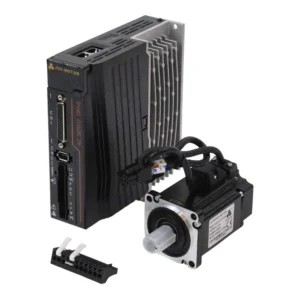 %42 Discount750W Servo Motor Set 80AST-A1C02430 with T3D-L20A-RABF DriverOriginal price was: 382.81$.221.63$Current price is: 221.63$.View
 43V AC Power Supply Toroid 200W + DC Converter Bridge Diode109.94$View
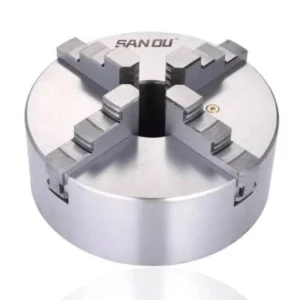 %30 Discount200x4 Sanou Lathe ChuckOriginal price was: 311.90$.218.33$Current price is: 218.33$.View
Reviews
There are no reviews yet.