
No products in the cart.
%43 Discount


1 Inch Roller Chain Sprocket 16 B1-27
Original price was: 38.38$.21.71$Current price is: 21.71$.
High-performance, single-row roller chain sprocket designed for industrial automation and power transmission applications.
In stock
🔥 Special for Today Only %43 Discount Opportunity!📦 Category: 1 Inch Sprockets🏷️ Chain Pitch: 1 in🏷️ Chain Standard: 16B-1🏷️ Number of Rows: Single Row🏷️ Number of Teeth: Z27
Mermak assuranceFrom factory to end user · importer / main dealer · strong stock
ImporterMain dealer / distributorStrong stockGood priceCorporate invoice
In stock / available to order · 14-day return for standard unused products; conditions may vary for custom size/cut products.
1 Inch Roller Chain Sprocket 16 B1-27
INDUSTRIAL AUTOMATION PARTS | SUPERIOR PERFORMANCE SERIES
Detailed Product Review
1 Inch Chain Sprocket 16 B1-27 is a critical mechanical drive component designed to efficiently transmit rotational motion and torque from one shaft to another via roller chains in industrial power transmission systems. This sprocket is engineered in accordance with ISO/R 606 standards to work perfectly with 16B-1 (1-inch pitch) single-row roller chains. Its 27 precisely machined tooth profiles ensure optimal contact with the chain rollers, guaranteeing smooth chain engagement and disengagement. This interaction achieves a specific speed and torque ratio between the driving and driven shafts, directly impacting the overall kinematic performance of systems, especially in medium to heavy-duty applications such as conveyor systems, agricultural machinery, and various automation lines. The sprocket’s geometric accuracy and tooth profile precision minimize chordal action, reduce vibration, and maximize transmission efficiency, thereby optimizing system energy consumption and extending component lifespan.
The material selection and heat treatment process for this product have been meticulously determined to meet industrial durability standards. The sprocket is manufactured from high-carbon C45 steel, and its wear resistance and surface hardness are significantly enhanced through heat treatment applied to the tooth surfaces. This metallurgical process ensures the sprocket maintains its form even under continuous load and in abrasive environments, increasing its resistance to pitting and fatigue cracks. The solid hub design offers flexibility in engineering applications, allowing users to precisely machine it according to their specific shaft diameters, keyway sizes, and setscrew hole requirements. This adaptability enables the sprocket to be easily integrated into existing or custom-designed drive systems. Providing reliable power transmission across a wide range of applications, from agricultural equipment to food processing machinery, packaging lines, and heavy industry conveyors, this sprocket offers a cost-effective and long-lasting solution for system integrators and machine manufacturers. Mermak has 16 years of experience, operating from our Ankara Uzay Sanayi factory/warehouse, ensuring up-to-date stock quantities and prices on our website. Stocked products are dispatched directly from our warehouse, eliminating production waiting times. We ensure careful packaging, meticulous invoice/document handling, and collaborate with reliable logistics partners. The Mermak team closely monitors the shipment process, and product videos or factory viewings can be arranged via WhatsApp or our contact channels upon request. We proudly supply to markets including the United Kingdom, United States, Canada, Australia, Ireland, and New Zealand, alongside similar countries and international markets.
Advantages of 1 Inch Roller Chain Sprocket 16 B1-27
Optimized Mechanical Strength and Service Life: Manufactured from high-quality C45 steel and subjected to controlled heat treatment on its tooth surfaces, this sprocket exhibits superior mechanical properties. The heat treatment maximizes resistance to abrasive wear and surface fatigue by increasing surface hardness while maintaining core toughness. This dual-phase structure reduces the risk of cracking or fracture under sudden impact loads and extends fatigue life. Consequently, it ensures long-term, uninterrupted operation even in demanding industrial conditions, extending maintenance intervals and lowering the total cost of ownership.
Kinetic Efficiency and Power Transmission Precision: The precisely machined profile of the 27 teeth, conforming to the 16B-1 (1-inch) roller chain standard, ensures minimal friction and optimal contact area between the chain rollers and the sprocket. This excellent geometric fit minimizes energy loss during power transmission, enhancing the system’s overall kinetic efficiency. The precise tooth profile reduces chordal action (speed fluctuation as chain links engage/disengage), resulting in smoother, vibration-free operation. This is particularly beneficial in high-speed applications or those requiring precise positioning, allowing for more stable and accurate performance of the driven equipment.
Precise Kinematic Adjustment and Integration Flexibility in Drive Systems: The 27-tooth configuration offers significant flexibility for engineers designing drive systems to achieve specific reduction or increase ratios. This tooth count allows for precise adjustment of desired output speed and torque values, aiding in the optimization of machine performance. Furthermore, the standard solid hub design allows users to easily machine the sprocket to their specific shaft diameters, keyway dimensions, and setscrew hole requirements. This machinability ensures the sprocket can be adapted to various shaft tolerances and mounting needs, facilitating quick and seamless integration into existing or custom-designed mechanical systems. This adaptability minimizes the risk of axial misalignment during assembly, supporting the system’s long-term efficient operation.
Technical Specifications and Capacity
Specification|Value/Description
Chain Standard|16B-1 (ISO/R 606) – Indicates compatibility with European standard single-row roller chains.
Pitch (p)|25.40 mm (1″) – The distance between the centers of the chain links.
Number of Teeth (z)|27 – The total number of teeth on the sprocket, determining the transmission ratio and influencing chordal action.
Pitch Diameter (d)|~218.8 mm – The theoretical diameter of the circle on which the chain rollers travel, essential for kinematic calculations.
Material|C45 Steel (Heat Treated) – Carbon steel optimized for high strength, toughness, and wear resistance.
Compatible Chain Roller Diameter (dr)|15.88 mm – The roller diameter of a 16B-1 standard chain, determining sprocket-chain compatibility.
Technical Frequently Asked Questions (FAQ)
What are the specific metallurgical benefits of the heat treatment applied to this sprocket, and how does it affect its performance?
The heat treatment applied to the 16 B1-27 chain sprocket typically involves surface hardening (e.g., induction or flame hardening) or through hardening and tempering processes. For a medium-carbon steel like C45, this process transforms the material’s microstructure, creating a martensitic structure on the tooth surfaces. This martensitic layer achieves high values on the Vickers hardness scale, dramatically increasing the teeth’s resistance to abrasive wear, pitting, and surface fatigue. Simultaneously, the core of the sprocket retains a tougher structure (e.g., bainitic or pearlitic), preserving its ability to absorb sudden impact loads and resist crack propagation. This “hard surface, tough core” combination extends the sprocket’s overall lifespan, delays failure modes, and ensures reliable performance even under high torque and variable loads.
What engineering advantages does the solid hub design offer for adapting this sprocket to different shaft diameters and keyway configurations?
The solid hub design provides significant adaptability in engineering. Instead of being delivered with a standard bore, this design allows the user to machine the hub according to their specific shaft diameter and torque transmission requirements. This enables the bore to be machined to the desired tolerances via turning or broaching to achieve a precise fit (e.g., interference fit or press fit). Additionally, a keyway of appropriate size can be machined, or setscrew holes can be added, depending on the torque to be transmitted and the shaft diameter. This customization capability ensures the sprocket perfectly matches different machine designs and existing shaft configurations, minimizing issues like axial misalignment and radial runout during assembly, thereby enhancing system efficiency and longevity. It also offers adaptability for taper bush systems.
What are the technical implications of the 16B-1 chain standard on this sprocket’s power transmission capacity and industrial compatibility?
The 16B-1 chain standard is a European standard defined by the ISO/R 606 international standardization body. This standard precisely defines critical dimensions such as chain pitch (25.40 mm or 1 inch), roller diameter (15.88 mm), inner link width, and pin diameter. Sprockets manufactured to this standard, like the 16 B1-27, are fully compatible with widely available 16B-1 roller chains worldwide. This compatibility simplifies spare parts procurement and ensures seamless integration with chains from different manufacturers. Technically, the 1-inch pitch indicates that the sprocket and chain system has a specific power transmission capacity and speed range. While larger pitch chains are generally preferred for higher torque and lower speed applications, the 16B-1 offers a balanced performance for medium to heavy-duty industrial applications. Standardization allows engineers to expect predictable performance and reliability when designing drive systems.
How should the engineering interaction of the 27-tooth configuration on speed and torque ratios in a drive system be analyzed?
In a drive system, the effect of a 27-tooth configuration on speed and torque ratios depends on the ratio of the number of teeth between the driving and driven sprockets. The speed ratio is calculated by the formula (N_driven / N_driver) = (Z_driver / Z_driven), and the torque ratio by (T_driven / T_driver) = (Z_driven / Z_driver). If the 27-tooth sprocket is the driving sprocket and the driven sprocket has more teeth, the output speed will decrease while torque increases (reduction). Conversely, if the driven sprocket has fewer teeth, speed will increase and torque will decrease (increase). A 27-tooth count is a sufficiently high number in chain drive systems to reduce chordal action (speed fluctuation as chain links engage/disengage), providing smoother operation and less vibration. However, very high tooth counts can increase sprocket diameter, leading to space constraints. Therefore, 27 teeth represent a carefully chosen balance point to meet specific speed and torque requirements while optimizing the overall dynamic performance of the system.
| Chain Pitch | 1 in |
|---|---|
| Chain Standard | 16B-1 |
| Number of Rows | Single Row |
| Number of Teeth | Z27 |
| Dimensions |
You must be logged in to post a review.
Taksit Tablosu
Related Products
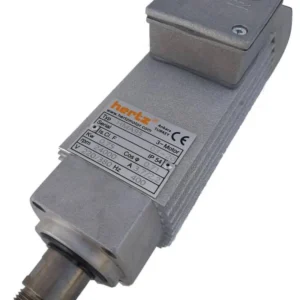 %40 Discount0.75 kW Hertz Spindle Motor ER20 24000 RPM 220VOriginal price was: 226.19$.135.71$Current price is: 135.71$.View
 CNC Router 5600x2100 Pro28,200.00$View
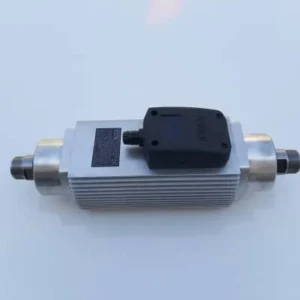 2.2 kW Double Output Spindle Motor for Door and Side Machining | Aggregate Type Motor253.38$View
Reviews
There are no reviews yet.