
No products in the cart.
%43 Discount

1 Inch Chain Sprocket 16 B2-19 Double Row
Original price was: 46.78$.26.47$Current price is: 26.47$.
High-performance industrial automation component for positive drive systems.
In stock
🔥 Special for Today Only %43 Discount Opportunity!📦 Category: 1 Inch Sprockets🏷️ Chain Pitch: 1 in🏷️ Chain Standard: 16B-2🏷️ Number of Rows: Double Row🏷️ Number of Teeth: Z19
Mermak assuranceFrom factory to end user · importer / main dealer · strong stock
ImporterMain dealer / distributorStrong stockGood priceCorporate invoice
In stock / available to order · 14-day return for standard unused products; conditions may vary for custom size/cut products.
1 Inch Chain Sprocket 16 B2-19 Double Row
INDUSTRIAL AUTOMATION PARTS | SUPERIOR PERFORMANCE SERIES
Detailed Product Review
This 1 Inch Chain Sprocket 16 B2-19 Double Row is a mechanical component designed to provide positive drive in industrial power transmission systems. The product is engineered to be fully compatible with ISO 606 standard 16B series double-row (duplex) chains. The term “1 Inch” refers to the chain pitch, meaning the distance between consecutive roller pin centers is 25.4 mm. “16B-2” indicates the 16B series chain standard and double-row configuration, while “-19” denotes the number of precisely machined teeth (Z=19) on the sprocket. The sprocket plays a critical role in transmitting rotational motion and torque from the motor or gearbox to other moving parts of the machine via the chain, with minimal loss and high mechanical efficiency. The special profile of the teeth ensures optimal engagement with the chain rollers, minimizing dynamic loads and vibrations generated during power transmission, which enhances the overall stability and lifespan of the system. The product is manufactured from high-carbon steel, and its wear resistance and surface hardness are significantly increased through a special heat treatment process applied to the tooth surfaces. This heat treatment maximizes the sprocket’s resistance to deformation and fatigue even under demanding industrial conditions, high torque, and shock loads. Its direct compatibility with 16B-2 standard double-row chains allows for easy integration into existing power transmission lines. The sprocket is typically mounted on a shaft using a keyway or a taper lock system, transferring rotational motion to the shaft. With a wide range of applications, this sprocket offers reliable and uninterrupted performance in systems requiring high power and torque, such as conveyor systems, heavy-duty agricultural machinery (harvesters, balers), continuous-operation packaging machines, construction and mining equipment (crushers, screens), and mixers or transport lines in food processing plants. Its heat-treated structure is ideal for abrasive environments or applications requiring high cycle counts.
Advantages of 1 Inch Chain Sprocket 16 B2-19 Double Row
High Torque and Load Capacity: This double-row (duplex) sprocket offers a significantly higher torque and power transmission capacity compared to its single-row counterparts. The double-row configuration distributes the driving load across two separate chain rows, substantially reducing the stress on each chain roller and pin. This increases the contact area between the chain and the sprocket, allowing the load to be spread over a wider surface. Consequently, the system’s overall load-carrying capacity is increased, resistance to sudden loads is enhanced, and more stable and reliable power transmission is achieved, especially in heavy-duty industrial applications or systems with high inertia. This feature can enable the use of smaller yet high-capacity components in system design, allowing for space and cost optimization.
Superior Wear Resistance and Long Service Life: Manufactured from high-carbon steel and subjected to a special heat treatment process, this sprocket achieves high surface hardness (typically in the range of 50-60 HRC) and core toughness. This heat treatment provides exceptional resistance to abrasive wear from constant contact with chain rollers, pitting fatigue from shock loads, and surface deformation. The hardened surface optimizes the coefficient of friction, reducing energy losses, while extending the sprocket’s life manifold compared to standard, non-heat-treated sprockets. This directly contributes to extended maintenance intervals, reduced spare parts costs, and minimized production line downtime.
Precise Power Transmission and Vibration Damping: The precise machining of the 19 teeth within strict engineering tolerances, compliant with ISO 606 and relevant DIN standards, ensures perfect alignment and engagement with the chain rollers. This precision ensures that the chain seats and disengages smoothly on the sprocket, minimizing speed fluctuations known as “chordal action” and thus reducing system vibration. Reduced vibration translates to smoother torque transmission, lower noise levels, and decreased dynamic loads on the chain, sprocket, bearings, and other drive components. This enhances overall system efficiency, extends component life, and provides a critical advantage in applications requiring precise positioning or constant speed.
Technical Specifications and Capacity
FeatureValue/Description
Chain Standard16B-2 (ISO 606, 1 Inch / 25.4 mm Pitch)
Number of Teeth (Z)19 teeth, precision-machined tooth profile
Number of RowsDouble Row (Duplex), for high load and torque transmission
Material and TreatmentHeat-Treated High-Carbon Steel, surface hardened
Product Stock Code16 B2-19, Mermak CNC Technology Market identifier
Barcode Number8692024000832, global commercial identity and tracking number
Technical Frequently Asked Questions (FAQ)
How does the heat treatment of this sprocket affect its mechanical properties and performance?
Heat treatment is a critical metallurgical process that optimizes the sprocket’s surface hardness and core toughness. High-carbon steel is typically subjected to heat treatment using methods such as induction hardening or carburizing. As a result of this process, a martensitic structure forms on the tooth surfaces, and the surface hardness typically increases to levels of 50-60 HRC (Rockwell C Scale). This increased hardness significantly enhances the sprocket’s resistance to abrasive wear and frictional fatigue resulting from constant contact with chain rollers. Simultaneously, by preserving the toughness of the core region, the risk of fracture or cracking under sudden impact loads is minimized. This combination extends the sprocket’s overall service life, reduces maintenance costs, and ensures reliable performance, especially under high-speed, heavy-load, or shock operating conditions.
How does the selection of a 19-tooth chain sprocket affect the kinematic properties and torque transmission of the drive system?
The number of teeth (Z) on a chain sprocket directly determines the speed ratio (i = Z2/Z1) and thus the torque transmission ratio of the drive system. A 19-tooth sprocket, compared to a sprocket with fewer teeth, rotates at a larger diameter and a lower angular velocity while maintaining the same linear speed. As the number of teeth increases, the “chordal action” in the chain decreases; this means the speed fluctuations and vibrations generated as the chain moves over the sprocket are minimized. More teeth provide more contact points with the chain rollers, helping to distribute the load more evenly and reducing the stress on each tooth. This contributes to smoother power transmission, lower noise levels, and extended life for both the chain and the sprocket. However, as the number of teeth increases, so does the physical size of the sprocket, so space limitations in the overall system design must be considered.
What is the mechanical basis for the increased load-carrying capacity of a double-row (duplex) chain sprocket compared to a single-row sprocket?
A double-row (duplex) chain sprocket significantly increases load-carrying capacity compared to a single-row sprocket with the same pitch. The basis for this increase lies in the distribution of the driving load across two parallel chain rows. Each chain row carries the load independently, with the total load being distributed approximately twofold. This reduces the stress on the chain pins, bushings, and rollers. Furthermore, the wider contact surface of double-row chains reduces pressure on the sprocket and increases wear resistance. Theoretically, the load-carrying capacity of a double-row chain is considered to be approximately 1.7 times that of a single-row chain, although this ratio can vary depending on the chain design and operating conditions. This mechanical advantage makes double-row sprockets a preferred choice for high-torque and heavy-duty applications, enabling greater power transmission in a more compact design.
What are the critical technical considerations for the installation and maintenance of this sprocket for optimal performance and longevity?
For optimal performance and longevity, the installation and maintenance of this sprocket rely on critical engineering principles. Firstly, clean, burr-free surfaces between the shaft and the sprocket hub, within tolerance, are essential for correct fitting and axial alignment. Axial and angular alignment are among the most critical factors directly affecting chain and sprocket life; misalignment leads to edge wear on the chain, uneven load distribution on the sprocket, and premature fatigue. Secondly, ISO 606 standard 16B-2 double-row chains must be used in the system, and chain tension must be adjusted according to manufacturer recommendations; excessive tension places unnecessary load on bearings and the chain, while slackness can cause chain skipping and shock operation. Thirdly, regular and proper lubrication reduces friction, minimizes wear, and aids in heat dissipation. The viscosity and type of lubricant used should be selected based on operating temperature and environmental conditions. Wear indicators on the sprocket and chain (tooth profile deformation, elongation, pitting) should be periodically checked, and components replaced as necessary.
Mermak has 16 years of experience in industrial automation parts. Our products are stocked and shipped from our Ankara Uzay Sanayi factory/warehouse. We ensure up-to-date stock quantities and prices on our website. Stocked items are dispatched directly from the warehouse, eliminating production wait times. We provide careful packaging, meticulous invoice and document handling, and partner with reliable logistics providers. The Mermak team closely monitors the shipment process. Upon request, we can arrange product videos or factory viewings via WhatsApp or other contact channels. We proudly supply industries in the United Kingdom, United States, Canada, Australia, Ireland, New Zealand, South Africa, and similar countries and international markets.
| Chain Pitch | 1 in |
|---|---|
| Chain Standard | 16B-2 |
| Number of Rows | Double Row |
| Number of Teeth | Z19 |
| Dimensions |
You must be logged in to post a review.
Taksit Tablosu
Related Products
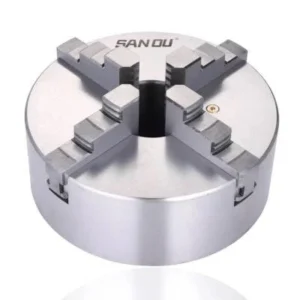 %30 Discount125x4 Sanou 4-Jaw Independent ChuckOriginal price was: 173.14$.121.20$Current price is: 121.20$.View
 %40 Discount0.75 kW Hertz Spindle Motor ER16 18000 RPM 220VOriginal price was: 226.19$.135.71$Current price is: 135.71$.View
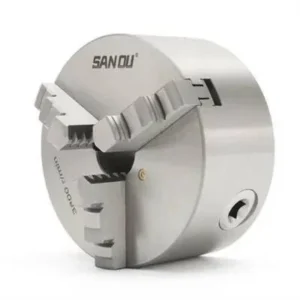 %39 Discount250x3 Sanou Lathe ChuckOriginal price was: 334.46$.204.02$Current price is: 204.02$.View

Reviews
There are no reviews yet.