
No products in the cart.
%58 Discount


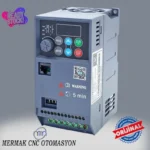
0.75 kW 220V Motor Drive Inverter
Original price was: 235.22$.98.02$Current price is: 98.02$.
Advanced power electronics device for precise speed, torque, and direction control of three-phase asynchronous motors using standard single-phase 220V AC mains voltage.
In stock
🔥 Special for Today Only %58 Discount Opportunity!📦 Category: 0.75 kW Speed Control Devices🏷️ Power: 0.75 kW🏷️ Supply Voltage: 220V
Mermak assuranceFrom factory to end user · importer / main dealer · strong stock
ImporterMain dealer / distributorStrong stockGood priceCorporate invoice
In stock / available to order · 14-day return for standard unused products; conditions may vary for custom size/cut products.
Uyumlu Ürünler
Compatible Products
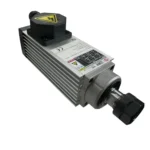
0.75 kW 220V Motor Drive Inverter
INDUSTRIAL AUTOMATION PARTS | SUPERIOR PERFORMANCE SERIES
Detailed Product Review
The K10-2SR75G model 0.75 kW (1 HP) Motor Drive Inverter, offered by Mermak CNC Technology Market, is an advanced power electronics device that converts standard single-phase 220V AC mains voltage into a variable frequency and variable voltage three-phase 220V AC output required for precise speed, torque, and direction control of three-phase asynchronous motors. This conversion is based on the principle of first converting the mains voltage into DC voltage via a rectifier bridge, and then converting this DC voltage into a three-phase AC signal of the desired frequency and amplitude using an IGBT (Insulated Gate Bipolar Transistor) inverter bridge with Pulse Width Modulation (PWM) technique. Especially thanks to the Sensorless Vector Control (SVC) algorithm, the motor’s magnetic flux and torque-generating current components are controlled independently, enabling high torque production and dynamic speed response even at low speeds. In this way, the nominal 4.5 Ampere current requirement of 0.75 kW motors used in workshops or small-scale manufacturing facilities is met stably, maximizing motor efficiency and extending its operational life.
The K10-2SR75G inverter is equipped with high-quality power semiconductors integrated within a compact housing, an advanced microprocessor-based control unit, and an effective thermal management system (aluminum heatsink and internal fan). This structure increases the device’s reliability by ensuring it remains at an optimal temperature even under continuous operating conditions. In terms of system integration, speed reference can be provided to the drive via external potentiometers, PLCs, or control panels, while commands such as start/stop, direction change, and jog operations can be given through programmable digital inputs. The built-in PID control feature eliminates the need for an external controller to maintain process variables such as pressure, temperature, or flow constant in closed-loop systems. With this technical capability, it can be safely used in various industrial applications such as spindle motor control of small-scale CNC routers and engraving machines, conveyor belts, packaging machines, workshop lathes and milling machines, ventilation fans, and mixers in the food industry. The removable front panel of the device offers installation and operational flexibility by being extendable to the control cabinet door with a cable.
Advantages of the 0.75 kW 220V Motor Drive Inverter
Superior Torque Performance with Advanced Sensorless Vector Control (SVC): Unlike traditional V/F control methods, this inverter uses an advanced Sensorless Vector Control (SVC) algorithm that separates the motor’s stator current into magnetic flux and torque-generating components, controlling each component independently. This allows the motor to produce up to 150% of its nominal torque even at startup and at very low frequencies (e.g., below 1 Hz). This technical feature prevents the motor from stalling or overheating, ensuring continuous and efficient operation, especially in applications requiring startup under heavy loads or high torque stability at low speeds (e.g., conveyor belts, mixers, processing machines). SVC estimates the rotor flux using stator current and voltage information without directly measuring the rotor position, thus providing performance close to closed-loop torque control despite being sensorless.
Application Flexibility with Wide Output Frequency Range: The K10-2SR75G model inverter offers a wide output frequency range from 0.00 Hz to 400.00 Hz, allowing control of standard 50/60 Hz industrial motors as well as high-speed special motors. This wide range is critical for high-speed spindle motors used in CNC routers and engraving machines, as these motors are typically designed to operate at high frequencies like 400 Hz to reach speeds of 24,000 RPM or higher. This frequency flexibility enables users to meet different motor types and application requirements with a single device. It also guarantees optimal motor performance in applications requiring precise positioning at low frequencies or maximum speed at high frequencies, thereby increasing the overall efficiency and processing quality of the machine. We supply to markets including the United Kingdom, United States, Canada, Australia, Ireland, and New Zealand.
Safe Operation with Comprehensive Built-in Protection Functions: This motor drive is equipped with over 20 built-in protection functions to protect both itself and the connected 0.75 kW motor against potential electrical and mechanical faults. These protection mechanisms include critical conditions such as overcurrent (exceeding nominal 4.5 Ampere current by a certain tolerance), overvoltage, undervoltage, overheating (thermal modeling for both inverter IGBTs and motor), phase loss (input or output phases), short circuit, and ground fault. If any abnormality is detected, the inverter automatically stops the motor and informs the operator by displaying an error code. This proactive protection system prevents costly equipment damage, minimizes system downtime, and reduces maintenance costs. It also extends the life of the motor and drive, ensuring long-term operational reliability. Similar countries and international markets are also supplied.
Technical Specifications and Capacity
Feature Value/Description
Model Code K10-2SR75G
Motor Power Capacity 0.75 kW / 1 HP
Input Voltage 1 Phase 220V AC (200V – 240V Tolerance)
Output Voltage 3 Phase 220V AC
Nominal Output Current 4.5 Amperes
Output Frequency Range 0.00 – 400.00 Hz
Control Modes V/F Control, Sensorless Vector Control (SVC)
Overload Capacity 150% (60s), 180% (3s)
Built-in PID Control Available (For process control applications)
Built-in Braking Unit Available (For external braking resistor connection)
Technical Frequently Asked Questions (FAQ)
What is the most critical connection detail to consider when using a 0.75 kW motor drive with a motor labeled 220/380V?
This inverter produces a three-phase 220V output from a single-phase 220V input. If your motor label shows “220/380V”, it means the motor can operate at two different voltage levels. For 220V supply, the motor windings must be connected in a DELTA (Δ) configuration. The WYE (Y) connection scheme is designed for applying 380V to each motor winding. Therefore, connecting a motor in WYE to a 220V output inverter will apply only the phase-neutral voltage of approximately 127V (220V/√3) to the motor windings, causing the motor to operate far below its nominal power, produce insufficient torque, and overheat by drawing excessive current. Ensure that the metal jumpers in the motor terminal box are set according to the DELTA connection scheme; this is a critical technical requirement for the motor to operate at its full power and efficiently.
What are the main technical advantages of the Sensorless Vector Control (SVC) mode in the K10-2SR75G model compared to V/F control mode, and in which applications should it be preferred?
Sensorless Vector Control (SVC) offers a more advanced control algorithm compared to V/F (Voltage/Frequency) control. V/F control simultaneously controls the motor’s magnetic flux and torque and is generally sufficient for simple applications like fans and pumps that do not require constant torque. SVC, on the other hand, separates the motor’s stator current into magnetic flux and torque-generating components, controlling these components independently. This technical separation allows SVC to provide much higher torque production and stability, especially at low speeds (up to 150% of nominal torque). It also responds faster to load changes and regulates speed more precisely. These advantages technically necessitate the preference of SVC mode in applications requiring high starting torque or precise torque control at low speeds, and where the load is variable, such as conveyor belts, mixers, and processing machines. V/F control is suitable for simpler and more cost-effective solutions.
What is the function of the built-in braking unit in this inverter, and when and why should an external braking resistor be connected?
The built-in braking unit manages the regenerative energy produced by the motor acting as a generator during deceleration. This energy feeds back into the DC bus voltage, causing it to rise. If it exceeds a certain threshold, it can lead to an overvoltage fault and stop the inverter. The built-in braking unit helps keep the DC bus voltage under control by converting some of this regenerative energy into heat through an internal resistor. However, in scenarios such as sudden stops, high inertia loads, or frequent start-stop operations, the amount of regenerative energy produced can exceed the capacity of the built-in unit. In such cases, connecting an external braking resistor is technically necessary to prevent the inverter from faulting due to overvoltage and to ensure the motor stops faster and more controllably. The external resistor safely dissipates excess energy, enhancing system stability and operational reliability.
Why is adjusting the start-up and stop ramps (acceleration/deceleration times) of the motor drive critically important in terms of its effects on the connected motor and mechanical system?
Adjusting the start-up and stop ramps is one of the most fundamental and critical parameters of a motor drive because these times directly affect both the electrical stress on the motor and the dynamic loading on the connected mechanical system. Sudden starts can cause the motor to draw instantaneous currents far exceeding its nominal current, creating thermal stress on electrical components and leading to voltage drops in the mains. Mechanically, sudden torque changes create shock loads on gears, belts, couplings, and other transmission elements, accelerating wear and shortening their lifespan. Similarly, sudden stops also cause stresses in the mechanical system due to inertial forces. Properly adjusting the ramps (e.g., extending the start-up time to 2-3 seconds for smooth product movement on a conveyor belt) minimizes these adverse effects. This technical optimization ensures the motor and machine operate longer, more efficiently, and more safely, while also reducing energy consumption and maintenance costs. We are a trusted supplier for customers in South Africa and similar countries/international markets.
| Power | 0.75 kW |
|---|---|
| Supply Voltage | 220V |
You must be logged in to post a review.
Taksit Tablosu
Compatible Products
Related Products
 %42 Discount1 kW Braked Servo Motor Kit 80ST-M04025Z1 T3L-L20F-RABNOriginal price was: 860.33$.498.08$Current price is: 498.08$.View
 %68 Discount1.1 kW Siemens Sinamics V20 Variable Frequency Drive (VFD) - 220V Single Phase InputOriginal price was: 410.35$.132.48$Current price is: 132.48$.View
 %42 Discount750W Servo Motor Set 80ST-M02430 T3L-L20F-RABNOriginal price was: 558.28$.323.21$Current price is: 323.21$.View
Reviews
There are no reviews yet.