





































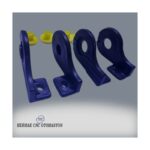


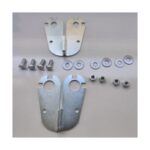





































Workpiece clamping errors directly and negatively impact cutting quality, leading to severe issues such as dimensional inaccuracies, surface roughness, burr formation, reduced tool life, and industrial safety risks. Inadequate or faulty clamping causes the workpiece to vibrate, shift, or deform under cutting forces, resulting in a final product that is out of tolerance and of low quality.
Understanding Workpiece Clamping Errors and Their Impact on Cutting Quality
In industrial automation and manufacturing processes, correctly and securely clamping a workpiece to the machining table is one of the most critical factors determining the quality of the final product. A workpiece clamping error refers to situations where the workpiece is not sufficiently secured on the machine, is misaligned, is clamped with uneven forces, or the clamping fixture itself is defective. Such errors cause the workpiece to make undesirable movements, vibrate, or deform under the dynamic forces generated during the cutting operation. Cutting quality, on the other hand, is defined by parameters such as the surface roughness of the machined part, dimensional accuracy, geometric tolerances (flatness, circularity, etc.), burr quantity, and overall surface integrity. Clamping errors directly and negatively affect all these critical quality parameters, jeopardizing the product’s conformity to specifications and often leading to scrap.
Operating Principles and Technical Data
Workpiece clamping is based on the principle of absorbing the forces generated during cutting operations to maintain the workpiece’s position and geometry. These forces include cutting forces created by the tool penetrating the material, friction forces, and dynamic vibration forces. The primary goal of the clamping system is to prevent undesirable movements such as displacement (slippage), rotation, vibration (chatter), and deformation (shape change) that can occur in the workpiece under the influence of these forces. Faulty clamping disrupts this principle, leading to a decline in cutting quality.
From a technical perspective, clamping errors affect cutting quality through the following mechanisms:
- Insufficient Clamping Force: When the workpiece is not held tightly enough against cutting forces, it cannot withstand the pressure applied by the tool and may slip or vibrate. This leads to surface undulations, dimensional deviations, and excessive tool load. This risk increases particularly in high-speed cutting (HSC) or when machining hard materials.
- Incorrect Alignment and Positioning: Improper alignment of the workpiece to the fixture or machine table leads to geometric errors from the very beginning of the cut. For example, in a milling operation, if the workpiece is angled, the entire surface may be inclined, or holes may be drilled off-axis. This is unacceptable, especially for parts requiring precise tolerances.
- Fixture Deformation or Wear: Clamping fixtures can wear out, deform, or fail to make full contact with the workpiece over time due to contamination. This results in uneven distribution of clamping force or weak holding at specific points of the workpiece. Consequently, the workpiece may vibrate or deform in certain areas, leading to localized surface defects and dimensional errors.
- Vibration and Resonance: Insufficient or unbalanced clamping can create vibrations close to the system’s natural frequency during the cutting process. This resonance condition can cause excessive tool vibration (chatter), surface marks on the workpiece (chatter marks), reduced tool life, and even tool breakage. Vibrations are a significant problem, especially when machining thin-walled or long workpieces.
- Workpiece Deformation: Applying excessive clamping force can lead to permanent deformation, especially in thin-walled or delicate workpieces made of sensitive materials. These deformations affect the final dimensions and geometry of the part, reducing its resistance to stresses, particularly after welding or assembly.
- Thermal Expansion Differences: Heat generated during machining can cause differential expansion between the workpiece and the fixture. If the clamping system cannot adequately tolerate these thermal expansions, the workpiece may loosen or be subjected to additional stresses, negatively impacting cutting quality.
These technical principles explain the direct effects of clamping errors on cutting quality. Proper clamping is fundamental to ensuring the repeatability and predictability of the machining process.
| Parameter | Value/Description |
|---|---|
| Clamping Force (Fb) | Should be at least 1.5 – 2 times greater than cutting forces (Fc) (Fb ≥ 1.5 * Fc). Insufficient force leads to slippage. |
| Workpiece Deflection | Faulty clamping can cause workpiece deflection of more than 0.01 mm under cutting forces, producing out-of-tolerance parts. |
| Surface Roughness (Ra) | With proper clamping, Ra values are typically between 0.4-3.2 µm; clamping errors can increase Ra values to 6.3 µm and above. |
| Dimensional Accuracy | For parts requiring ±0.01 mm precision, clamping errors can increase deviation up to ±0.1 mm. |
| Tool Life | Tool life can be reduced by 30% to 70% due to vibration and excessive loading. |
| Vibration Amplitude | Optimal clamping minimizes vibration amplitude, preventing chatter marks and ensuring smooth surface finishes. |
| Positioning Repeatability | In high-precision clamping systems, it’s ±0.005 mm, but can drop to ±0.05 mm in faulty systems. |

Key Considerations in the Field
- Fixture Design and Material Selection: Fixtures must be designed to match the workpiece geometry, possess sufficient rigidity, and distribute cutting forces effectively. Fixture material should be resistant to wear and deformation, and exhibit thermal stability. Especially for precision parts, specialized fixtures that support all contact surfaces of the workpiece and minimize deformation should be used. Hydraulic or pneumatic clamping systems are effective in preventing deformation by ensuring even pressure distribution. Secure and repeatable attachment of the fixture itself to the machine table is also critically important.
- Control of Clamping Force and Distribution: The clamping force must be sufficient to hold the workpiece securely but not excessive enough to damage it. This balance is crucial, especially for thin-walled or delicate materials. Modern automation systems can monitor and adjust clamping force via load cells or pressure sensors. Ensure that the force is distributed evenly and balanced across the workpiece’s contact surfaces. Spreading the force using multiple clamping points reduces the risk of localized deformation.
- Periodic Maintenance and Inspection: Clamping elements (vise jaws, collets, clamps, bolts) and fixtures should be regularly inspected for wear, corrosion, cracks, and contamination. Worn or damaged parts must be replaced immediately. Accumulation of chips or coolant residues can prevent full contact between clamping surfaces. Therefore, cleaning fixtures and workpiece contact surfaces before each clamping operation should be a standard procedure. Periodic calibration of clamping systems ensures that pressure and force values are correctly set.
- Operator Training and Awareness: Comprehensive training for operators is essential for the correct implementation of clamping processes. Topics such as which clamping method and force to use for which workpiece, how to clean and inspect fixtures, should be taught in detail. Standard operating procedures (SOPs) should be established and meticulously followed to minimize human error. Operators’ ability to identify and correct potential clamping errors is vital for production quality and safety.

Common Problems and Solutions
Workpiece clamping errors lead to various problems in the production environment. Here are the most common issues and proposed solutions:
- Problem: High Surface Roughness and Burr Formation on the Workpiece.
Explanation: Due to insufficient clamping, the workpiece vibrates or moves during cutting. This prevents the cutting tool from cleanly cutting the material, leading to undulations, scratches, and uncontrolled burrs on the surface.
Solution: Increase the clamping force and ensure it is evenly distributed across the workpiece. If necessary, use additional clamping points or a more rigid fixture. Optimize the tool path and review cutting parameters (cutting speed, feed rate) to reduce vibration. Consider placing vibration-damping elements (e.g., special rubber or polymer pads) between the fixture and the workpiece.
- Problem: Dimensional Deviations and Out-of-Tolerance Parts.
Explanation: Misalignment, slippage, or deformation of the workpiece causes the final dimensions and geometry to deviate from design specifications. This problem is particularly pronounced in complex geometries or high-precision parts.
Solution: Use precision measuring instruments (dial indicators, laser aligners) to ensure the clamping fixture and workpiece are correctly aligned relative to the machine’s zero point. Ensure the clamping force is within a range that will not deform the workpiece but will hold it securely enough. Use specialized jaws or supports that provide full contact and match the workpiece geometry. Integrate sensors to monitor clamping force for real-time feedback.
- Problem: Reduced Tool Life and Tool Breakage.
Explanation: A vibrating or moving workpiece subjects the cutting tool to excessive and irregular loads. This leads to rapid wear on tool edges, chipping, or sudden tool breakage, increasing production costs and causing downtime.
Solution: Ensure the workpiece is clamped with maximum rigidity. Reduce the load on the tool by decreasing cutting parameters (especially feed rate and depth of cut). Check the rigidity of the tool holder. Consider using more stable and vibration-damping tools or tool holders. Ensure coolant is applied correctly and sufficiently.
- Problem: Industrial Safety Risks and Accident Potential.
Explanation: An inadequately clamped workpiece can fly off or move uncontrollably during the cutting operation. This poses a serious risk of injury to operators and can damage equipment.
Solution: Ensure all clamping elements are correctly assembled and tightened. Continuously monitor clamping status using pressure sensors and safety interlocks in automatic clamping systems. Ensure operators are fully trained on clamping procedures and use protective barriers or covers against the risk of workpiece ejection. Ensure emergency stop systems are always functional.
- Problem: Lack of Repeatability and Continuous Adjustment Needs.
Explanation: Small variations or wear in the clamping system lead to different results for each workpiece. This necessitates manual adjustments for each part, extending production time and reducing automation efficiency.
Solution: Invest in high-precision, modular, and quick-change fixture systems. Regularly inspect clamping elements for wear and replace them in a timely manner. In automatic clamping systems, use positioning and force sensors to ensure the same clamping conditions are achieved every time. Standardize and periodically calibrate fixture reference points.
Expert Advice from Mermak CNC
Workpiece clamping, a fundamental pillar of industrial automation and precision manufacturing, has a direct and decisive impact on cutting quality. As seen, inadequate or faulty clamping leads to a wide range of negative consequences, from dimensional inaccuracies and surface defects to reduced tool life and industrial safety risks. Therefore, paying due attention to the clamping process is indispensable not only for final product quality but also for production efficiency, cost-effectiveness, and workplace safety.
As expert advice, it is critical for businesses to approach their clamping strategies with a holistic perspective. This is not limited to merely selecting the correct fixture but also encompasses integrated process management, including fixture design, material selection, precise control of clamping forces, periodic maintenance, and most importantly, operator training. In modern manufacturing facilities, advanced automation solutions such as sensor-based clamping force monitoring systems, automatic fixture changers, and adaptive machining strategies offer significant advantages in minimizing clamping errors and optimizing cutting quality. Vibration analysis and thermal management techniques play a proactive role in preventing clamping-related issues, especially when machining complex and precise parts. It must be remembered that a multi-story structure cannot be built without a solid foundation; similarly, in manufacturing, a quality product can only be built upon a flawless clamping foundation. Therefore, investment in clamping systems and continuous improvement efforts in this area are key to sustainable success in a competitive manufacturing environment.
For further inquiries or to discuss your specific industrial CNC router needs, please request a quote on WhatsApp. Our team is ready to provide tailored solutions for your production challenges.
FAQ
What are the main consequences of workpiece clamping errors on cutting quality?
Workpiece clamping errors lead to several critical issues including dimensional inaccuracies, poor surface finish, burr formation, reduced tool life, and increased safety risks. These problems arise because the workpiece is not held securely or precisely, causing it to shift, vibrate, or deform during the cutting process.
What are the primary causes of workpiece clamping errors?
Key factors include insufficient clamping force, incorrect alignment, wear or deformation of the clamping fixture, and vibrations or resonance during machining. Each of these can lead to the workpiece moving or deforming, directly impacting the precision and surface quality of the cut.
What measures can be taken to prevent workpiece clamping errors?
To prevent clamping errors, ensure proper fixture design and material selection, precisely control clamping force and its distribution, conduct periodic maintenance and inspection of clamping elements, and provide comprehensive operator training. Utilizing advanced systems with sensors for monitoring clamping force and position can also significantly improve reliability.
Can workpiece clamping errors affect tool life?
Yes, clamping errors can significantly reduce tool life. When a workpiece is not securely held, it can vibrate or shift, subjecting the cutting tool to irregular and excessive loads. This accelerates tool wear, can cause chipping, and in severe cases, lead to premature tool breakage, increasing operational costs and downtime.
Are there safety risks associated with improper workpiece clamping?
Absolutely. Poor clamping can cause the workpiece to become unstable, potentially leading to it flying off the machine or moving unpredictably during operation. This poses a serious risk of injury to operators and can cause significant damage to expensive industrial CNC router equipment.