




































































Understanding Geared Stepper Motors in Industrial Automation
In industrial automation systems, motion control is paramount for achieving precision, reliability, and efficiency. Stepper motors are widely utilized due to their open-loop control capabilities and precise positioning. However, the inherent torque and speed characteristics of a standalone stepper motor may be insufficient for applications requiring high torque or very low speeds. This is where gearboxes (reducers) integrated with stepper motors become essential, fundamentally altering the motor’s performance profile.
Working Principle and Technical Data
Stepper motors are brushless DC motors that convert electrical pulses into precise mechanical angles. Each electrical pulse causes the motor shaft to rotate by a specific angle (step angle), making them ideal for applications demanding precise positioning and speed control. Nevertheless, the maximum torque a stepper motor can generate is typically limited by its physical dimensions and winding current. Furthermore, they tend to lose torque at higher speeds.
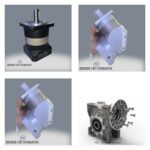
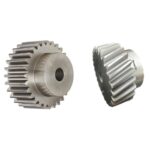
A gearbox, or reducer, is a mechanical system connected to a motor’s output shaft, transmitting motion through gears. Its primary purpose is to reduce the input speed while simultaneously increasing the output torque. Depending on the gear ratio, the torque produced by the motor is multiplied at the gearbox output, while the speed is reduced proportionally. This mechanical advantage allows geared stepper motors to handle heavier loads and achieve finer control in various industrial applications.
Advantages of Geared Stepper Motors
- Increased Torque: Gearboxes significantly multiply the motor’s output torque, enabling the movement of heavier loads and overcoming greater resistance.
- Improved Resolution: By reducing the output speed, the effective resolution of the system can be enhanced, allowing for more precise positioning.
- Enhanced Stability at Low Speeds: Geared stepper motors maintain better stability and smoother operation at very low speeds, crucial for delicate processes.
- Reduced Motor Size: For a given torque requirement, a geared stepper motor can often be smaller than a direct-drive stepper motor, saving space and cost.
For more information or to discuss your specific industrial motion control needs, request a quote on WhatsApp.