








































































What Happens If Water Stops Flowing in a Water-Cooled Spindle?
📑 Table of contents (Click to open)
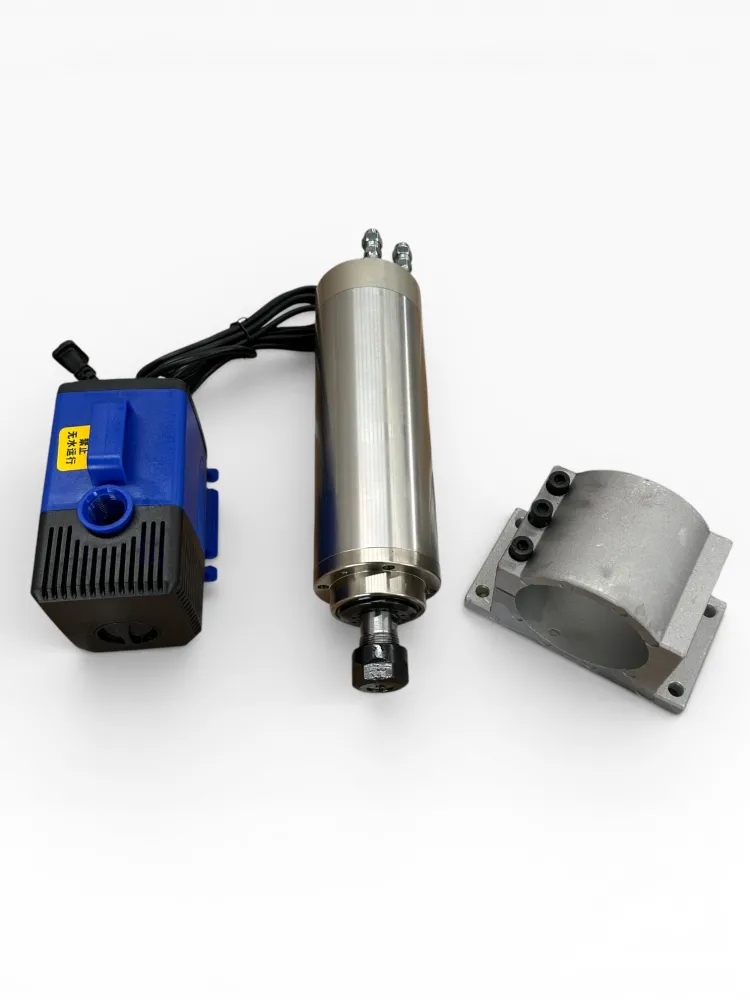
A lack of water flow in a water-cooled spindle leads to severe overheating, causing permanent bearing damage, motor winding insulation failure, significant loss of machining accuracy, and ultimately, complete spindle failure. This halts production and incurs costly repairs or replacements.
Practical notes for CNC router, automation and industrial motion systems.
The Critical Role of Water Cooling in Industrial CNC Spindles
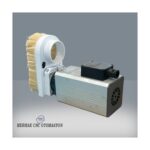
Water-cooled spindles are indispensable components in modern industrial automation, particularly in CNC machines and high-speed machining centers. Their primary function is to dissipate the intense heat generated during cutting operations. The spindle motor and its bearings produce substantial heat due to friction and electrical losses at high rotational speeds. If this heat is not effectively removed – meaning if the water circulation stops or becomes insufficient – a cascade of detrimental effects occurs, leading to serious consequences.
Consequences of Stalled Water Circulation
When water circulation ceases, the temperature inside the spindle rapidly escalates. This has a devastating impact on the spindle’s bearings. Elevated temperatures degrade the lubricant’s viscosity, diminishing its protective capabilities and accelerating bearing wear. This damage compromises the spindle’s rotational accuracy, increases vibration, and raises noise levels. Prolonged overheating can deform bearing cages and cause pitting on the bearing races, drastically shortening their lifespan and potentially leading to sudden bearing seizure.
Another critical impact is on the motor windings. These windings are insulated with materials designed to withstand specific temperature ranges. Overheating due to a lack of coolant can degrade this insulation, leading to electrical short circuits. Insulation failure reduces motor efficiency and can ultimately cause the motor windings to burn out, rendering the entire spindle unit irreparable and necessitating a complete replacement.
Furthermore, overheating causes thermal expansion of the spindle housing and internal components. This expansion alters internal clearances, increasing axial and radial runout. Consequently, machining accuracy suffers significantly. Workpieces may fall outside dimensional tolerances, surface quality deteriorates, and tool life decreases. For applications requiring high precision, such as mold making or fine part manufacturing, these deviations are unacceptable and lead to increased scrap rates. In essence, the absence of water circulation in a water-cooled spindle is a critical issue that directly impacts production quality, machine longevity, and operational costs, and must be prevented.
Operating Principles and Technical Specifications
Water-cooled spindles typically operate in conjunction with an external cooling unit, often referred to as a chiller. The chiller maintains the coolant (usually a mixture of distilled water and corrosion inhibitors) at a specific temperature and pumps it through internal cooling channels within the spindle. As the coolant circulates, it absorbs heat from the motor and bearings, warming up before returning to the chiller to be cooled again, completing a closed-loop system. This continuous circulation ensures the spindle operates within its optimal temperature range.
The critical importance of water circulation is evident in the spindle’s technical specifications and performance parameters. High-speed, high-power spindles operate at thousands of revolutions per minute (RPM) and consume significant power (kilowatts), naturally generating substantial heat. For instance, a 2.2 kW spindle can produce 500-700 Watts of heat energy under full load. Effective heat removal requires a specific flow rate, typically 3-5 liters per minute, and a coolant temperature of around 20-25°C. While a coolant temperature significantly below ambient (e.g., 10-15°C) risks condensation, a temperature above 30°C drastically reduces cooling efficiency. Therefore, the chiller’s temperature control accuracy and capacity are paramount.
If water circulation fails, spindle temperatures can rise rapidly. Bearings typically begin to sustain permanent damage at temperatures above 70-80°C, while motor winding insulation degrades quickly above 120-150°C. High temperatures also cause the spindle shaft to expand. Even a few microns of expansion in a steel shaft can lead to significant dimensional deviations in precision machining operations requiring tolerances in the micrometer range. This is unacceptable in fields like mold making, precision parts manufacturing, or the optics industry.
For optimal spindle longevity and performance, the cooling system must ensure not only water circulation but also that it flows at the correct pressure and remains clean. Low pressure results in insufficient flow rates, while contaminated water can cause blockages and corrosion in cooling channels, reducing heat transfer efficiency. Deviations in any of these technical parameters directly affect spindle lifespan and machining performance.
| Parameter | Value/Description |
|---|---|
| Coolant Flow Rate | 3-8 Liters/Minute (Depends on spindle power) |
| Coolant Temperature | 20-25°C (5-10°C below ambient, considering condensation risk) |
| Coolant Pressure | 0.15-0.3 MPa (1.5-3 Bar) |
| Max Spindle Operating Temperature | 40-50°C for motor housing (Higher temps reduce bearing and winding life) |
| Coolant Type | Distilled water + Corrosion/Algae inhibitor (Antifreeze may be region-dependent) |
| Chiller Capacity | Selected based on spindle heat load and ambient temperature (in kW or BTU/h) |
| Average Bearing Life (Ideal Conditions) | 10,000 – 20,000 hours (Overheating can reduce this by up to 80%) |
Field Maintenance and Precautions
- Periodic Coolant Level and Quality Check: Regularly check the coolant level in the chiller tank. Low levels can cause the pump to run dry or lead to insufficient flow. Monitor coolant quality (pH, conductivity) and the effectiveness of inhibitors. Contaminated or algae-filled water can block cooling channels.
- Chiller and Pump Functionality Check: Monitor the chiller’s cooling performance and pump pressure. Verify that the chiller reaches its set temperature and that the compressor and fans operate correctly. Flow meters and pressure gauges can confirm adequate pump output.
- Inspect Cooling Hoses and Connections: Visually inspect hoses for kinks, cracks, leaks, or blockages. Ensure all connections are secure and leak-free. Check for internal sediment buildup in hoses, which increases flow resistance.
- Filter Maintenance: Clean or replace filters in the chiller unit or cooling lines regularly to prevent sediment buildup. Clogged filters severely restrict water flow and reduce cooling efficiency.
- Calibrate and Monitor Sensors: Ensure temperature and flow sensors on the spindle and chiller are functioning accurately. These sensors provide early warnings of cooling system anomalies. Inaccurate readings can lead to critical failures being overlooked.
- Ensure Emergency and Protective Measures are Active: Modern CNC machines often have systems to detect spindle overheating or cooling failures, triggering alerts or shutdowns. Ensure these protective mechanisms are enabled and functioning correctly.
Proper maintenance of the water-cooling system is not just a recommendation; it’s a necessity for ensuring the longevity, accuracy, and reliability of your industrial CNC router. Neglecting this vital system can lead to catastrophic failures and costly downtime.
Don’t let cooling issues halt your production. Ensure your water-cooled spindle operates at optimal temperatures.
For expert advice on CNC spindle systems or to discuss your specific application needs, request a quote on WhatsApp today!
