
No products in the cart.
Timing Belt and Pulley Systems: Calculation and Selection for Industrial Automation
Contents
- Timing Belt and Pulley Systems: Operating Principles and Technical Data
- Timing Belt and Pulley Systems: Field Considerations for Calculation and Selection
- Timing Belt and Pulley Systems: Common Problems and Solutions in Industrial Settings
- Timing Belt and Pulley Systems: Conclusion and Expert Advice
- FAQ
Timing Belt and Pulley Systems: Introduction and Technical Analysis for Industrial Applications
At the heart of industrial automation, motion control systems are critical for process efficiency, precision, and reliability. Among the fundamental components of these systems, timing belt and pulley systems are designed to provide synchronized and slip-free power transmission in modern production lines, robotic applications, CNC machines, and packaging and printing machinery. Compared to traditional chain or V-belt drive systems, timing belts offer superior advantages such as high precision, low noise levels, ease of maintenance, and no lubrication requirements, making them an indispensable choice for industrial automation engineers. However, to fully leverage the potential of these systems, meticulous calculation and selection processes are essential. An incorrectly chosen belt or pulley can lead to reduced system performance, premature failures, production losses, and even safety risks. This technical article and field guide aim to provide a comprehensive roadmap for engineers and technicians in the industrial automation sector, covering everything from the basic principles of timing belt and pulley systems to detailed calculation methods, selection criteria, and critical considerations for field applications. Our goal is to enhance the reader’s competence in designing, implementing, and troubleshooting these systems, thereby contributing to the development of more reliable and efficient automation solutions.
Timing Belt and Pulley Systems: Operating Principles and Technical Data
Timing belt and pulley systems operate on the principle of positive drive; that is, the teeth on the belt precisely mesh with the teeth on the pulley. This mechanism, unlike the friction-based power transmission seen in V-belts, ensures precise synchronization and a constant speed ratio without slippage. This feature is vital in applications where positioning and speed control are critical. The basic components of the system consist of a timing belt, two or more timing pulleys (driving and driven), and often an idler pulley.
Belt Structure and Materials: Timing belts are typically manufactured from elastomeric materials such as synthetic rubber (neoprene) or polyurethane. These materials provide flexibility, wear resistance, and chemical durability. Inside, high-strength cords such as fiberglass, steel, aramid, or carbon fiber are embedded for reinforcement. These cords increase the belt’s tensile strength and minimize elongation. The outer surface of the belt is often supported by a nylon or similar coating to reduce wear and optimize friction.
Tooth Profiles: The performance of timing belts varies significantly depending on their tooth profiles. The most common tooth profiles include:
- Trapezoidal Tooth Profile (MXL, XL, L, H, XH, XXH): An older, but still widely used standard profile in many applications. Suitable for low to medium power transmission. Positioning accuracy is generally good.
- Curvilinear Tooth Profile (HTD – High Torque Drive, STD – Super Torque Drive): HTD and STD profiles offer higher torque transmission capacity and longer belt life. The rounded shape of the teeth improves stress distribution and reduces tooth shear. Preferred in most areas of industrial automation.
- Parabolic Tooth Profile (GT – Gates Poly Chain GT, PowerGrip GT): One of the most modern and high-performance profiles. Offers very high torque transmission capacity, compact design, and low noise levels. Ideal for heavy-duty applications and high-speed systems.
- AT and T Profiles (Metric Trapezoidal): Trapezoidal profiles used in European standards.
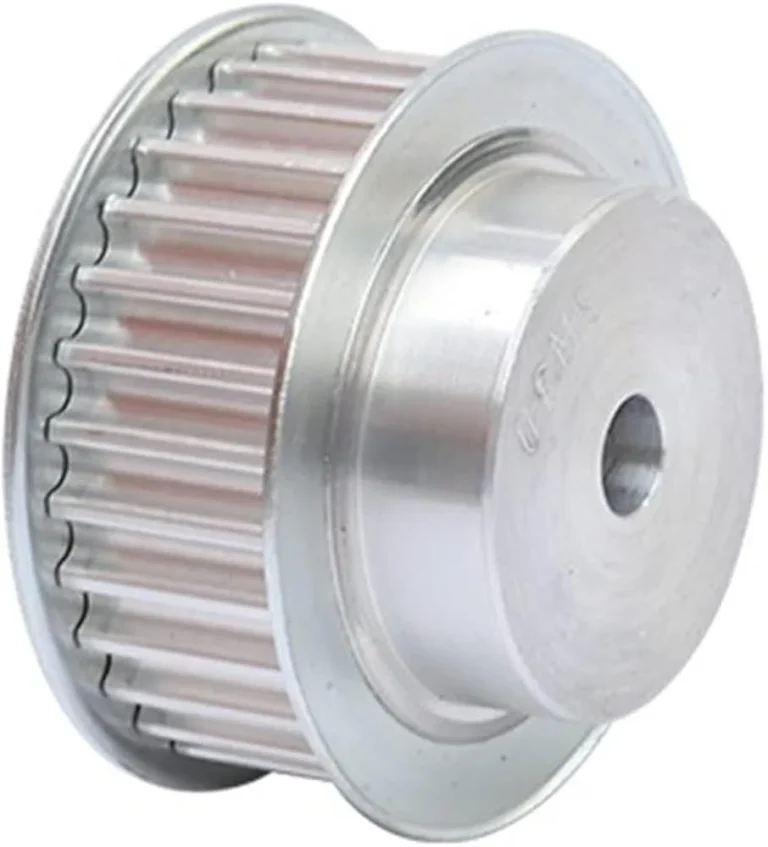
Pulleys: Pulleys are typically made from materials such as aluminum, steel, cast iron, or for some special applications, plastic. The tooth profile must exactly match the belt’s tooth profile. Correct machining of pulleys is critical for belt life and system precision. Additionally, pulleys are often designed with flanges (side walls) to prevent the belt from coming off the pulley.
Calculation and Selection Process: The correct selection of a timing belt and pulley system requires a systematic engineering approach involving the following steps and parameters:
- Determination of Required Power (P) and Torque (T): The continuous and peak power/torque values required by the driven load are determined. Inertia moments and acceleration/deceleration torques should also be considered.
- Speed Ratio (i) and Shaft Speeds (n): The speed ratio between the driving and driven shafts (i = n_driving / n_driven) is determined. This is fundamental in determining the number of teeth on the pulleys.
- Operating Environment and Conditions: Environmental factors such as ambient temperature, humidity, dust, chemicals, lubricants, affect the selection of belt material and type. A service factor (SF) is determined based on these conditions, increasing the calculated power for a safer selection.
- Center Distance (C): The distance between the centers of the driving and driven pulleys is determined. This distance is used in calculating the belt length.
- Selection of Belt Type and Tooth Profile: The appropriate tooth profile (HTD, GT, Trapezoidal, etc.) and belt series are selected, considering the required power, torque, speed, precision, and environmental conditions. Manufacturer catalogs play a critical role at this stage.
- Pulley Tooth Numbers (Z) and Diameters (D): The number of teeth for the driving and driven pulleys are determined, considering the speed ratio and minimum pulley diameter requirements (for belt bending life). The minimum number of teeth is typically around 12-16 teeth.
- Calculation of Belt Length (Lp): The pitch length (Lp) of the belt is calculated using formulas based on the selected pulley tooth numbers and center distance. The closest standard belt length available in the market is then chosen.
- Belt Width (b) and Strength Check: The required belt width is determined to ensure that the selected belt type and tooth profile can safely transmit the calculated power and torque. The tensile and tooth shear strength of the belt are checked using power transmission tables or stress calculations provided in the manufacturer’s catalogs.
- Tensioning System Selection: Automatic tensioning systems or manually adjustable idler pulleys are used to ensure optimal belt tension and absorb vibrations. Correct tension extends belt life and improves performance.
- Shaft and Bearing Load Check: The radial loads on the shafts and bearings due to belt tension should also be checked, and the overall durability of the system should be verified.
This detailed process is essential to guarantee long-lasting, efficient, and reliable system operation. Adhering to manufacturer data and engineering standards at every step will prevent potential failures.
| Parameter | Value/Description |
|---|---|
| Power Transmission Capacity | 0.1 kW – 200 kW (Varies by belt type and profile) |
| Maximum Speed Ratio | 1:1 to 1:10 (Single stage; higher in special cases) |
| Precision (Backlash) | Very low; less than 0.05 mm (Zero-backlash systems available if needed) |
| Operating Environment Temperature | -30°C to +100°C (Depending on material selection) |
| Expected Belt Life | 10,000 – 25,000 hours (With correct selection and maintenance) |
| Tooth Profile Examples | HTD 3M, 5M, 8M, 14M; GT2, GT3; T5, T10; L, H |
| Belt Material Examples | Neoprene, Polyurethane (Steel, Fiberglass, Aramid cord reinforced) |
Timing Belt and Pulley Systems: Field Considerations for Calculation and Selection
- Correct Alignment: One of the most critical factors affecting the life and performance of belt and pulley systems. The driving and driven shafts and pulleys must be perfectly parallel and in the same plane. Misalignment leads to excessive wear on belt edges, rubbing against pulley flanges, noise, and premature belt failures. Laser alignment tools should be used to check and correct shaft parallelism and angular misalignment.
- Optimal Tensioning: The tension of timing belts should be neither too tight nor too loose. An excessively loose belt causes tooth skipping (slippage) and loss of precision, while overly tight belts shorten the life of the belt and bearings, leading to shaft deflection and energy loss. The tension values recommended by the belt manufacturer should be checked and adjusted, usually with a frequency meter or tension gauge. Tension should be rechecked after installation and after a certain period of operation.
- Protection from Environmental Factors: Timing belts are sensitive to environmental factors such as dust, dirt, moisture, chemicals, oil, and high temperatures. These factors can lead to material degradation, wear, and reduced belt life. Especially in environments with abrasive particles, using protective covers or guards to keep the belt and pulleys clean is crucial. In areas with high temperatures and chemical vapors, belts made of special materials should be preferred.
- Mounting and Dismounting Techniques: During belt installation, forcing or attempting to fit with tools like levers or screwdrivers can damage the internal cords of the belt and lead to unseen cracks. The belt should always be easily fitted onto the pulleys, or the tensioning mechanism should be loosened to place it. Similar care should be taken during dismounting to avoid damaging the belt. Never bend or sharply fold the belt.
- Periodic Maintenance and Observation: Although timing belt systems are relatively low-maintenance, regular visual inspections and periodic maintenance are vital for early detection of potential problems. Check the belt surface for cracks, wear marks, broken or worn teeth, edge fraying, and abnormal noises from idler pulleys or other bearings. Discoloration or hardening of the belt can also be a sign of aging. Maintenance schedules should be established according to manufacturer recommendations and operating conditions.
- Bearing and Shaft Health: Belt tension and operating loads create radial loads on the bearings and shafts in the drive system. The health of these components directly affects belt life. Worn or faulty bearings, shaft runout, and vibrations can prevent the belt from operating smoothly, leading to premature wear or failure. Periodically check the condition of bearings and shaft runout.
Timing Belt and Pulley Systems: Common Problems and Solutions in Industrial Settings
Problems encountered with timing belts and pulleys in industrial automation systems typically result from incorrect selection, faulty installation, or inadequate maintenance. Here are some common issues and suggested solutions:
1. Belt Skipping or Tooth Shear:
- Problem: The belt teeth skip from the pulley or the belt teeth shear off during system operation. This usually occurs during sudden load changes or at start/stop moments.
- Possible Causes: Insufficient belt tension, overloading (higher than calculated torque), excessive wear on pulleys or belt, incorrect tooth profile selection, shaft misalignment, excessive system inertia.
- Solutions:
- Adjust belt tension according to manufacturer recommendations and check regularly.
- Recalculate the system’s actual load and torque requirements; if necessary, select a belt with higher torque capacity (e.g., from HTD to GT) or a wider belt.
- Check pulley and belt teeth for wear, replace worn components.
- Check and correct shaft and pulley alignment with laser tools.
- Consider reducing system inertia or choosing a stronger belt option.
2. Premature Belt Wear and Deterioration:
- Problem: Cracks on the belt surface, fraying at the edges, material loss on teeth, or overall deterioration much sooner than expected.
- Possible Causes: High or low belt tension, misalignment, environmental contamination (dust, oil, chemicals), excessive temperature, incorrect belt material selection, belt rubbing against pulley flanges, pulley surface roughness.
- Solutions:
- Ensure optimal belt tension.
- Check and correct alignment.
- Use protective covers to keep the environment clean, prevent chemical exposure.
- Select belt material suitable for the operating environment temperature.
- Prevent the belt from rubbing against pulley flanges (alignment or pulley replacement).
- Check the surface quality of the pulleys, replace rough or worn pulleys.
3. Excessive Noise and Vibration:
- Problem: Abnormal sounds (humming, rubbing, clicking) and/or vibrations from the system.
- Possible Causes: Incorrect belt tension, misalignment, worn bearings or shafts, pulley imbalance, belt rubbing against pulley flanges, resonance, incorrect tooth profile or pitch selection.
- Solutions:
- Adjust belt tension correctly.
- Check and correct alignment.
- Check bearings and shafts, replace if faulty.
- Check pulley balance.
- Prevent the belt from rubbing against pulley flanges.
- Consider belts with quieter operation (e.g., GT series) or a different tooth profile.
- Analyze system resonant frequencies to optimize operating speeds.
4. Belt Breakage:
- Problem: Sudden snapping or tearing of the belt.
- Possible Causes: Overloading, shock loads, chemical degradation, excessive temperature, belt aging and fatigue, damage during installation (damage to internal cords), manufacturing defect.
- Solutions:
- Analyze maximum system loads and shock loads; if necessary, select a stronger or shock-absorbing belt.
- Prevent the belt from being exposed to chemicals and excessive temperatures, or select a belt made of appropriate material.
- Replace the belt periodically when its service life is complete.
- Strictly follow installation instructions, avoid forcing the belt.
- If a manufacturing defect is suspected, contact the supplier.
These troubleshooting approaches will help identify the root cause of the system problem and implement the correct solution. Always refer to manufacturer manuals and technical specifications for the most accurate approach.
Timing Belt and Pulley Systems: Conclusion and Expert Advice
Timing belt and pulley systems are indispensable mechanical transmission elements in modern industrial automation. The high precision, synchronization capability, ease of maintenance, and efficiency offered by these systems make them ideal for many critical applications. However, fully realizing these advantages is possible only through a combination of detailed engineering approach and field experience. The correct calculation and selection process are fundamental factors that directly affect the system’s life, reliability, and overall performance. In addition to basic parameters such as required power, torque, speed, and center distance, secondary but equally important factors like environmental conditions, expected life, and precision must be meticulously evaluated. An incorrect belt type, unsuitable tooth profile, or faulty tension adjustment can lead to short-term efficiency losses and long-term costly failures and production downtime. Therefore, it is essential to ensure full compliance with industry standards, manufacturer catalogs, and engineering principles during the design phase. In field applications, correct alignment, optimal tension adjustment, and periodic maintenance are key to long-lasting and trouble-free system operation. It should be remembered that the performance of a timing belt system is determined not only by the quality of the belt or pulley but also by considering the entire system (shafts, bearings, chassis) as an integrated part. As industrial automation professionals, understanding the complexity of these systems, anticipating potential problems, and developing proactive solutions are critical competencies for achieving operational excellence. As expert advice, always choose the solution that provides the required performance and reliability for the longest period, optimizing the total cost of ownership (TCO), rather than just the most cost-effective solution. Furthermore, close collaboration with the technical support teams of belt and pulley manufacturers is of great importance for accessing the most up-to-date information and the most accurate selection tools. We hope this guide serves as a valuable reference for engineers and technicians in the industrial automation sector and helps them design more robust, efficient, and reliable drive systems.
FAQ
What are timing belt and pulley systems?
Timing belt and pulley systems are mechanical drive components that use a toothed belt and matching toothed pulleys to transmit power synchronously without slippage. They are crucial for precise motion control in industrial automation, CNC machines, and robotics.
What are the critical factors for selecting the right timing belt and pulley system?
Key factors include required power and torque, speed ratio, operating environment (temperature, contaminants), center distance, and desired precision. The correct tooth profile (e.g., HTD, GT) and belt material must be chosen based on these parameters.
What are common problems with timing belt systems and how can they be resolved?
Common issues include belt skipping (due to low tension or overload), premature wear (misalignment, contamination), excessive noise/vibration (misalignment, worn bearings), and belt breakage (overload, chemical exposure). Proper calculation, installation, and regular maintenance are key to prevention.
What maintenance practices extend the life of timing belts and pulleys?
Accurate alignment of shafts and pulleys is paramount. Optimal belt tension, as recommended by the manufacturer, prevents slippage and excessive wear. Regular visual inspections for wear, cracks, and abnormal noises, along with protection from environmental contaminants, are also essential.
How do timing belt systems differ from V-belt drive systems?
While V-belts rely on friction and can slip, timing belts use interlocking teeth for positive, synchronous power transmission, ensuring precise positioning and speed control. Timing belts also generally require less maintenance and no lubrication.