




































































Troubleshooting Servo Motor Vibration: Key Parameters for CNC Stability

📑 Table of contents (Click to open)
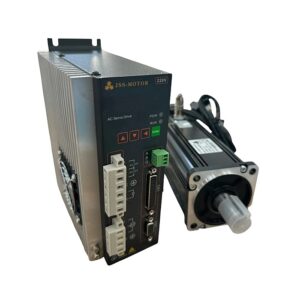
A servo motor vibrating at a standstill on your CNC machine can indicate issues with PID tuning, mechanical backlash, encoder feedback, or motor-drive compatibility. This article guides you through the critical parameters to check for stable operation.
Practical notes for CNC router, automation and industrial motion systems.
Understanding Servo Motor Vibration at Standstill
In industrial automation, particularly with CNC router machines, a servo motor exhibiting forward-backward oscillation or vibration while stationary is a critical performance issue. This phenomenon, often termed ‘hunting,’ occurs when the motor’s control system continuously overcorrects minor positional errors, leading to a continuous, undesirable movement. Such vibrations can degrade the precision of CNC operations, reduce the lifespan of mechanical components like linear guide rails and ball screws, and negatively impact the quality of finished parts. The root cause typically lies within the closed-loop control system, where the feedback mechanism is either too sensitive or inadequately damped. A servo system relies on an encoder to report the motor’s actual position back to the servo drive. The drive then compares this to the commanded position and adjusts the motor’s output to minimize the error. Vibration arises when this error correction process becomes unstable.
Core Principles and Technical Data
Servo motors are essential for applications demanding precise control over position, speed, and torque. Their operation hinges on a control loop managed by a controller (like a PLC or CNC system) and a servo drive. The drive interprets command signals and feedback from the encoder to drive the motor. The stability of this loop is often governed by PID (Proportional-Integral-Derivative) control parameters:
- P (Proportional) Gain (Kp): Responds directly to the current error. Higher Kp leads to faster response but can cause overshoot and oscillation if set too high.
- I (Integral) Gain (Ki): Addresses accumulated past errors to eliminate steady-state error. While it improves accuracy, excessive Ki can introduce lag and sustained oscillations.
- D (Derivative) Gain (Kd): Reacts to the rate of change of the error, helping to dampen overshoot and oscillations. However, high Kd can amplify system noise.
The correct balance of these PID gains is crucial for stable and responsive performance. Vibration often points to an overly aggressive Kp or insufficient Kd. Beyond PID tuning, other factors like mechanical backlash in the drive train, system compliance, or resonant frequencies can disrupt control loop stability. Noise or intermittent signals from the encoder can also lead to erroneous position data, prompting the drive to make incorrect adjustments.
| Parameter | Value/Description |
|---|---|
| Proportional Gain (Kp) | High Kp provides quick response but can induce oscillation. A primary parameter to check when vibration occurs. |
| Derivative Gain (Kd) | Provides damping. Insufficient Kd increases oscillation; excessive Kd amplifies noise sensitivity. |
| Integral Gain (Ki) | Eliminates steady-state errors. Excessive Ki can cause long-term oscillations or lag. |
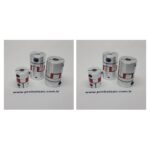
| Mechanical Backlash/Compliance | Play in couplings, gearboxes, ball screws, or flexible mounting can trigger vibration. |
| Encoder Feedback | Check signal quality (noise, dropouts), cabling (shielding), resolution, and connection integrity. |
| Motor and Load Inertia Ratio | The ratio between motor inertia and load inertia (ideally 1:1 to 1:10) is key for stability. Mismatches can cause vibration. |
| Resonant Frequencies | When mechanical system’s natural frequencies align with control loop frequencies, resonance and vibration occur. Use notch filters on the drive. |
Practical Checks for Industrial Environments
- Mechanical System Inspection:
Thoroughly examine all mechanical components connected to the motor, including couplings, gearboxes, ball screws, and linear guide rails. Backlash, loose connections, or excessive compliance are common mechanical culprits. Worn gears, loose couplings, or faulty bearings can prevent the motor from accurately tracking commands, forcing the servo drive into constant corrective action. Ensure all fasteners are tight, alignment is correct, and components show no signs of excessive wear.
- Electrical Connections and Encoder Feedback:
Proper wiring of the encoder is vital for accurate feedback. Cables should be well-shielded, grounded, and routed away from sources of electromagnetic interference (EMI). Noisy or intermittent encoder signals mislead the servo drive, causing incorrect motor adjustments. Verify the integrity of all connectors, check for cable damage, and confirm the encoder’s functionality (signal waveforms can be checked with an oscilloscope). Separating motor power cables from signal cables also helps minimize interference.
- PID Gain Tuning and Autotuning:
Most servo drives feature an autotuning function to automatically set PID gains based on the system’s characteristics. Re-running this function is often the first troubleshooting step. If autotuning fails to resolve the vibration, manual tuning may be necessary. Typically, vibration indicates a Kp that is too high; gradually reducing Kp and increasing Kd to improve damping is a common approach. Ki is adjusted to eliminate steady-state errors without introducing excessive oscillation. Tuning aims to balance responsiveness with stability.
- Load Inertia Ratio and Resonance:
The ratio of the load’s inertia to the motor’s inertia significantly impacts dynamic response. An ideal ratio is usually between 1:1 and 1:10. The servo drive software should be configured with the correct inertia ratio. Mechanical systems possess natural resonant frequencies; if these align with the control loop’s operating frequencies, severe vibrations can occur. Modern servo drives offer notch filters to counteract resonance at specific frequencies. Identifying and filtering out these problematic frequencies is essential for smooth operation.
Addressing servo motor vibration requires a systematic approach, examining both the control parameters and the physical integrity of the machine. By carefully checking these critical areas, you can restore stable and precise operation to your industrial CNC router machine.
Is your CNC machine experiencing similar servo motor issues? Don’t let vibration impact your production quality. Request a quote on WhatsApp to discuss solutions with our experts!
Related product categories: Genel · AC Servo Motor