No products in the cart.
How Servo Motor Gearbox Backlash Affects Positional Accuracy
Contents
Servo motor gearbox backlash, the mechanical play between the motor shaft and the gearbox output, directly causes positional errors, especially during direction changes. This impacts precision and repeatability in industrial automation.
Mermak CNC Technical Guide
Practical notes for CNC router, automation and industrial motion systems.
Understanding Servo Motor Gearbox Backlash and Positional Errors
In industrial automation, servo motors and their integrated gearboxes are crucial for precise motion control. However, a seemingly minor component, gearbox backlash, can significantly impact overall system performance. Backlash refers to the mechanical clearance between meshing gear teeth. When the motor’s rotation direction changes, the motor shaft turns a certain amount before the gearbox output shaft begins to move, due to this inherent play. This lost motion directly translates into a positional error, affecting the system’s accuracy, repeatability, and dynamic performance.
This phenomenon is particularly problematic in applications demanding high precision, such as CNC machines, robotic arms, packaging equipment, and medical devices. The greater the backlash, the larger the deviation from the target position. Beyond static accuracy, backlash can also lead to dynamic performance issues, including vibrations, oscillations (overshoot and undershoot), and unwanted noise. Therefore, understanding, measuring, and managing gearbox backlash is vital for the reliability and efficiency of industrial automation systems.
How Backlash Affects Positional Accuracy: Principles and Technical Data
The impact of backlash on positional accuracy is rooted in fundamental mechanical principles. A servo motor receives commands from a controller to achieve a specific position or speed. This rotational motion is transmitted through the gearbox to the output shaft. Backlash is the sum of small clearances between the gears. When the motor’s direction reverses, its gears rotate to take up this slack before the output shaft starts moving in the new direction. This delay, or “dead band,” manifests as a direct positional error.
This effect becomes more pronounced in high-speed and high-acceleration applications. Sudden load changes during direction reversals can exacerbate the backlash, leading to shocks, vibrations, and accelerated wear. In closed-loop control systems, backlash can cause stability issues. If the controller detects that the output shaft hasn’t reached the desired position, it commands further motor movement. When the backlash is suddenly taken up, this can result in overshooting the target. This can cause the system to continuously oscillate around the target position, a phenomenon known as “hunting.”
Gearbox backlash is typically quantified as an angular value, measured in arc-minutes (arc-min) or arc-seconds (arc-sec). High-precision applications often require gearboxes with backlash as low as 1-3 arc-minutes or less, while less critical applications might tolerate 5-15 arc-minutes. Gearbox manufacturers specify this value in their product catalogs, making it a key criterion for evaluating gearbox precision.
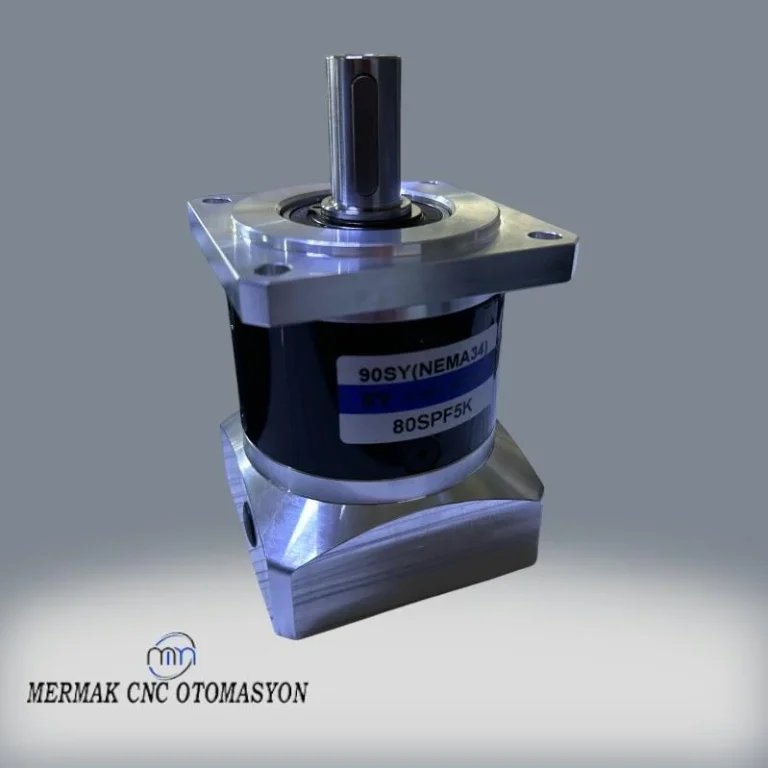
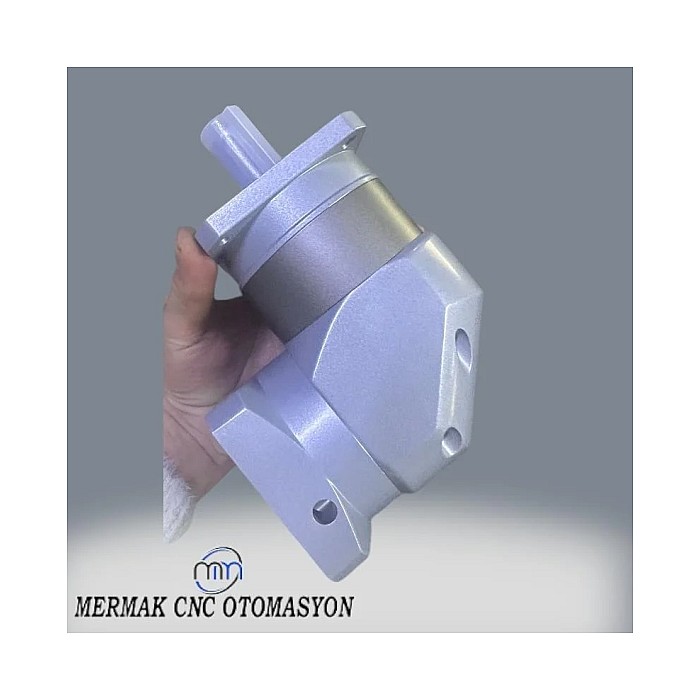
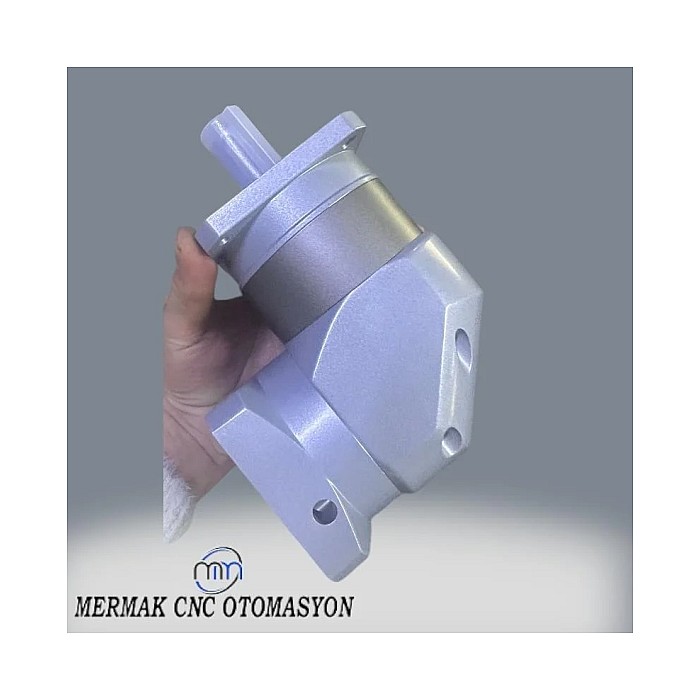
Modern gearbox designs employ various techniques to minimize backlash. These include using helical gears, preloaded gears, and specialized zero-backlash or low-backlash designs. Planetary gearboxes are particularly popular in servo applications due to their high torque density and low backlash options. Worm gearboxes, while naturally having higher backlash, can feature adjustable backlash mechanisms in some designs.
| Parameter | Value/Description |
|---|---|
| Backlash Unit | Arc-Minute (arc-min), Arc-Second (arc-sec) |
| Typical Values (Standard Planetary Gearbox) | 5-15 arc-min |
| Typical Values (Precision Planetary Gearbox) | 1-3 arc-min or lower |
| Measurement Method | Rotating input shaft within the backlash zone while output shaft is held stationary |
| Affected Performance Parameters | Positional Accuracy, Repeatability, Settling Time, Vibration, Noise |
| Mitigation Methods | Preloaded Gears, Helical Gears, Zero-Backlash Designs, Software Compensation |
| Application Areas | CNC Machines, Robotics, Medical Devices, Automation Lines |
Key Considerations in Practice
- Correct Gearbox Selection and Backlash Tolerance: Accurately defining the required positional accuracy and repeatability for your application is paramount. For high-precision tasks, select gearboxes with minimal backlash (e.g., less than 3 arc-minutes).
- Mounting Precision and Alignment: Proper mounting of the gearbox to the servo motor and the driven load prevents additional backlash and misalignment issues. Using the correct coupling and ensuring precise alignment between the motor and gearbox ensures that backlash originates solely from the gearbox itself. Eccentricity or angular misalignment can increase existing backlash and lead to premature wear. Adhering to torque specifications and maintaining clean mounting surfaces are crucial.
- Periodic Maintenance and Wear Monitoring: Gearbox backlash can increase over time due to gear wear, bearing play, or insufficient lubrication. Regular maintenance, including checking oil levels, proper lubrication, and visual inspections, can slow down wear. Measuring backlash periodically and comparing it to catalog values can help detect potential issues early. If excessive backlash is detected, gearbox overhaul or replacement may be necessary.
- Control System Settings and Backlash Compensation: Modern servo drives and PLCs often feature software-based backlash compensation. This function allows the motor to move an extra amount during direction changes to take up the slack, minimizing positional errors at the output shaft. However, this compensation does not eliminate the mechanical issue; it only mitigates its effects. Accurate backlash measurement is essential for proper compensation tuning.
- Load Characteristics and Rigidity: The dynamic loads, inertia, and overall rigidity of the system significantly influence the effects of gearbox backlash. High inertia loads or rapid direction changes can make backlash more apparent. A higher overall system rigidity will reduce vibrations and oscillations caused by backlash. Enhancing mechanical rigidity may involve using sturdier machine frames and shorter, thicker shafts.
Common Issues and Solutions
Gearbox backlash in industrial automation systems can lead to several common problems:
- Reduced Part Quality: In CNC machining, excessive backlash can result in inaccurate dimensions, poor surface finish, and inconsistent part quality. The tool may not follow the programmed path precisely, especially during complex contouring operations.
- Decreased Throughput: Systems with significant backlash may require longer settling times to ensure accuracy, reducing overall production speed. The “hunting” behavior mentioned earlier also wastes time and energy.
- Increased Wear and Tear: The repeated impact and shock associated with backlash can accelerate wear on gears, bearings, and other mechanical components, leading to premature failure and increased maintenance costs.
- Control Instability: As discussed, backlash can challenge the stability of closed-loop control systems, leading to oscillations and making it difficult to achieve precise positioning.
Solutions often involve a combination of:
- Selecting low-backlash or zero-backlash gearboxes appropriate for the application’s precision requirements.
- Implementing precise mechanical alignment and rigid mounting of all components.
- Utilizing software backlash compensation in the servo drive or motion controller, with accurate tuning.
- Establishing a robust preventive maintenance schedule to monitor and address wear.
- Considering alternative motion transmission methods if backlash remains a critical issue (e.g., direct drive motors in some specialized applications, though these have their own trade-offs).
By carefully considering these factors and implementing appropriate strategies, manufacturers can effectively manage servo motor gearbox backlash, ensuring high precision, reliability, and efficiency in their automated production processes. For solutions tailored to your specific industrial CNC router machine or automation needs, consult with our experts.
Ready to optimize your machine’s precision? Request a quote on WhatsApp today!
Related product categories: Genel · 60 Gövde Servo Motor Planet Redüktörler · 0.75 ve 1 kW Servo Motor Redüktörleri