









































































What Happens When Servo Motor Gain Settings Are Too High?

📑 Table of contents (Click to open)
Excessive servo motor gain settings can lead to instability, excessive vibration, mechanical wear, positioning errors, overheating, and reduced production quality. This article explains the technical reasons and practical implications for industrial CNC router machines.
Practical notes for CNC router, automation and industrial motion systems.
Understanding Servo Motor Gain and Its Impact on CNC Machines
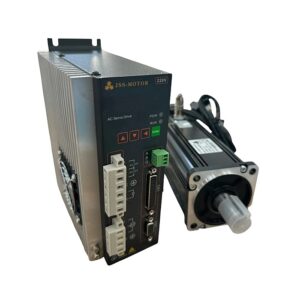
Servo motors are fundamental components in industrial automation, providing precise motion control for CNC router machines and other advanced manufacturing equipment. They operate on a closed-loop system, constantly monitoring and adjusting their position to match the desired command. The ‘gain’ settings within the servo’s control loop dictate how aggressively the motor responds to errors between its target and actual position. While proper gain tuning is crucial for optimal performance, setting these values too high can introduce significant instability and operational problems.
The Technical Basis of Servo Gain Settings
Servo control systems commonly utilize PID (Proportional-Integral-Derivative) controllers to manage motor movement. Each component of the PID controller plays a role:
- Proportional Gain (Kp): This is the most direct influence on responsiveness. A higher Kp means the motor will react more strongly to even small position errors. If set too high, it causes the motor to overreact, leading to oscillations around the target position – a phenomenon known as ‘hunting’ or ‘overshoot’.
- Integral Gain (Ki): Addresses steady-state errors by accumulating past errors. If too high, it can slow down the system’s response and increase overshoot.
- Derivative Gain (Kd): Dampens the system’s response by considering the rate of change of the error. It helps to reduce oscillations caused by high Kp. An excessively high Kd can make the system overly stiff and sensitive to noise.
When gain settings are excessively high, the system’s bandwidth increases, making it react faster but also amplifying noise and minor mechanical imperfections. This leads to several critical technical issues:
- Mechanical Stress and Wear: Rapid, constant back-and-forth movements place immense stress on motor bearings, couplings, gearboxes, and the overall machine structure. This significantly shortens the lifespan of components and increases the risk of premature failure.
- Overheating: The continuous acceleration and deceleration demanded by high gain settings cause the servo motor and its drive to draw excessive current, generating substantial heat. High temperatures degrade performance and can cause permanent damage to motor windings and drive electronics.
- Increased Energy Consumption: Inefficient, oscillating movements require more power, leading to higher operating costs and reduced energy efficiency.
- Loss of Positioning Accuracy: System hunting means the motor cannot settle precisely at the target position. This directly impacts the quality of manufactured parts, leading to defects and increased scrap rates, especially in precision applications.
- Noise Pollution: High-frequency vibrations and mechanical oscillations generate audible noise, creating an uncomfortable and potentially hazardous working environment.
- System Instability and Failures: In severe cases, excessive gain can lead to uncontrollable movements, system crashes, and the activation of emergency stop mechanisms, resulting in production downtime and safety risks.
Key Parameters and Their Impact When Set Too High
| Parameter | Consequences of Excessive Setting |
|---|---|
| Proportional Gain (Kp) | System instability, oscillations, over-reaction. |
| Integral Gain (Ki) | Slow response, overshoot, long settling times. |
| Derivative Gain (Kd) | Increased sensitivity to noise, system stiffness, potential vibrations. |
| System Stability | Uncontrollable oscillations, erratic operation. |
| Mechanical Wear | Reduced lifespan of bearings, couplings, gearboxes; premature failure. |
| Energy Consumption | Significant increase due to constant motor acceleration/deceleration. |
| Production Quality | Positioning errors, surface defects, loss of precision. |
Practical Considerations for Tuning Servo Gains
- Mechanical System Integrity: The rigidity and condition of the machine’s mechanical components (couplings, bearings, frame) are paramount. Backlash, loose connections, or worn parts can amplify vibrations, especially with high gain settings. Ensure the mechanical system is in perfect condition before tuning.
- Load Inertia: Servo motors are designed for specific load inertia ratios. Significant deviations, particularly higher-than-expected inertia, can cause oscillations even with seemingly reasonable gain settings. Ensure the drive is configured with the correct inertia values.
- Feedback Device Accuracy: The encoder or resolver provides crucial position feedback. Noise or inaccuracies in this signal can lead to incorrect control commands when gains are high.
- Auto-Tuning vs. Manual Tuning: While auto-tuning functions in modern servo drives provide a good starting point, they may not be optimal for all applications. Manual fine-tuning, involving gradual adjustments while observing system response, is often necessary for complex or dynamic tasks.
- Motion Profile Requirements: The required speed, acceleration, and settling times for your specific application will influence the appropriate gain settings. High-performance applications may require higher gains but demand careful stability management.
- Environmental Factors: Temperature, humidity, and electrical noise can affect electronic component performance and sensor accuracy, potentially impacting stability.
- Periodic Checks: Regular inspection and re-evaluation of servo gain settings are essential to maintain optimal performance and prevent issues arising from wear or environmental changes.
Properly tuning servo motor gains is a delicate balance between achieving fast, responsive motion and maintaining system stability and longevity. Overly aggressive settings on your industrial CNC router can lead to costly downtime and reduced product quality. Always consult your servo drive’s documentation and consider the specific dynamics of your machine and application when making adjustments.
For expert advice on optimizing your CNC machinery’s performance or to discuss your specific requirements, request a quote on WhatsApp.
Related product categories: Mekanik · Genel · Elektronik