









































































When is Servo Motor Encoder Reset Performed?

📑 Table of contents (Click to open)
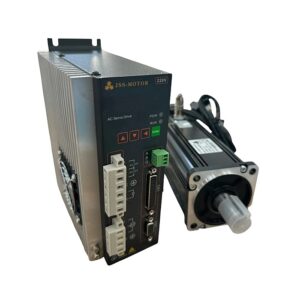
Servo motor encoder resets are essential for maintaining the precision of your CNC operations. This process, also known as homing or setting the reference point, ensures your machine’s control system accurately understands the motor’s position. It’s crucial during initial setup, after component replacements, or when correcting cumulative errors. Proper encoder resetting guarantees accurate movements, high-quality production, and reliable machine operation.
Practical notes for CNC router, automation and industrial motion systems.
Understanding Servo Motor Encoder Resets
In industrial automation, servo motors are the backbone of precise control for position, speed, and torque. The accuracy of these motors relies heavily on their encoders, which are sensors that detect the motor shaft’s position or movement. An encoder reset, or setting the reference point, is the critical procedure where the motor’s specific physical position is communicated to the control system (like a PLC, CNC, or servo drive) as the “zero” or “home” point. This ensures the machine can execute movements accurately and repeatably.
Encoder resets are necessary in several scenarios:
- Initial Installation: Setting the baseline position when a new system is first powered up.
- Component Replacement: After replacing a servo motor or its encoder, the new component needs to be calibrated to the system.
- Mechanical Alignment Issues: If there are problems with mechanical alignment, backlash, or slippage that affect position accuracy.
- Correcting Cumulative Errors: Over time, small positional inaccuracies can accumulate. A reset helps correct these cumulative errors.
- System Calibration: As part of routine maintenance and calibration to ensure ongoing accuracy.
- Absolute Encoder Battery Replacement: When the battery for an absolute encoder is changed, its internal reference may need resetting.
- Redefining a Reference Point: When a specific machine component needs to be repositioned to a new starting point.
Failing to perform a proper encoder reset can lead to positioning errors, reduced production quality, increased machine wear, and even operational downtime. It directly impacts the overall performance, quality, and reliability of your industrial CNC router machine.
How Servo Motor Encoder Resets Work
The exact method for resetting a servo motor encoder varies depending on the encoder type and the control system. However, the core objective is always to synchronize the motor shaft’s physical position with the digital position data within the control system.
Incremental Encoders
Incremental encoders track relative movement from a starting point. They lose their position memory when power is lost. Therefore, systems using incremental encoders require a “homing” procedure each time they start up. This typically involves moving the motor towards a limit switch or a dedicated reference sensor. When the sensor is triggered, that position is designated as the zero point. This process is usually configured through the servo drive’s parameters or programmed within the PLC.
Absolute Encoders
Absolute encoders retain their position information even after power loss. Each shaft position has a unique digital code. While they generally don’t need a homing procedure after power cycles, a reset might be necessary if:
- The encoder’s internal battery is replaced.
- The encoder’s internal reference needs to be synchronized with the system’s mechanical reference.
This often involves using the servo drive’s specialized software or an HMI panel to set an offset or perform a reset. Multi-turn absolute encoders can track multiple rotations, further reducing the need for frequent resets.
Technical Considerations:
- Mechanical Integrity: Ensure the motor, encoder, and connected components are correctly aligned and securely mounted. Loose connections or excessive backlash can lead to inaccurate position readings.
- Control System Parameters: Proper configuration of servo drive parameters and PLC programming is essential for accurate homing and position tracking.
- Reference Sensors: For incremental encoders, the reliability and correct positioning of limit switches or reference sensors are critical.
A correctly performed encoder reset is fundamental for the precision and reliability of any motion control system, especially on advanced CNC machines.
| Parameter | Details |
|---|---|
| Encoder Types | Incremental (Relative Position) / Absolute (Unique Position per Rotation) |
| Reset Method (Incremental) | Homing procedure using limit switches or reference sensors. |
| Reset Method (Absolute) | Initial setup, battery replacement, or offset adjustment. |
| Required Components | Servo Drive, CNC Controller, Programming Software, Reference Sensors (if applicable). |
| Repeatability | The system’s ability to return to the same reference point consistently (measured in microns or arcseconds). |
Key Considerations for Field Operations
- Verify Mechanical Alignment: Before any electronic reset, meticulously check that the motor, encoder, and driven load are perfectly aligned. Misalignment, loose couplings, or excessive backlash can cause the encoder to report incorrect positions, rendering the electronic reset ineffective. Ensure all mechanical connections are secure and torqued correctly.
- Check for Backlash: Mechanical backlash in gears, ball screws, or couplings can introduce positional errors. While some backlash is inherent, excessive play must be addressed. The servo drive’s parameters can often compensate for a certain amount of backlash, but significant issues require mechanical correction.
- Environmental Factors: Extreme temperatures, vibration, or electromagnetic interference can affect encoder performance and accuracy. Ensure the encoder and its cabling are properly shielded and protected from harsh industrial environments.
- Software and Parameter Settings: Always refer to the specific servo drive and motor manufacturer’s documentation. Incorrect parameter settings (e.g., incorrect encoder resolution, wrong control loop gains) can lead to unstable operation or failure to home correctly.
- System Integration: Ensure seamless communication between the servo drive, the CNC controller, and any other integrated components like vacuum tables or tool changers. A fault in any part of the system can impact the encoder’s ability to function correctly.
Performing encoder resets correctly is vital for maintaining the high precision required by modern CNC router machines. It ensures that every command from the controller is executed with the utmost accuracy, leading to superior part quality and efficient production.
For expert assistance with your CNC machinery, including servo motor setup and maintenance, request a quote on WhatsApp today.
Related product categories: Mekanik · Genel · Elektronik