




































































Troubleshooting: What to Check When a Lubrication Pump Isn’t Building Pressure
📑 Table of contents (Click to open)
A lubrication pump failing to build pressure can halt production. This guide covers essential checks including oil level, filter status, suction line integrity, pressure relief valve settings, pump wear, and motor/coupler issues. Essential for maintaining CNC machinery and industrial equipment.
Practical notes for CNC router, automation and industrial motion systems.
Troubleshooting a Lubrication Pump That Isn’t Building Pressure
In industrial automation, proper lubrication is paramount for the longevity and efficiency of machinery. Lubrication pumps are the heart of these systems, delivering oil at specific pressures to reduce friction, prevent wear, and dissipate heat. When a lubrication pump fails to build pressure, it signals a critical issue that can lead to severe damage, equipment failure, and costly production downtime. Promptly identifying and resolving the root cause of pressure loss is vital for preventing extensive repairs and ensuring operational continuity. This guide provides a step-by-step approach to understanding and resolving lubrication pump pressure problems.
Understanding Lubrication Pump Operation and Technical Data
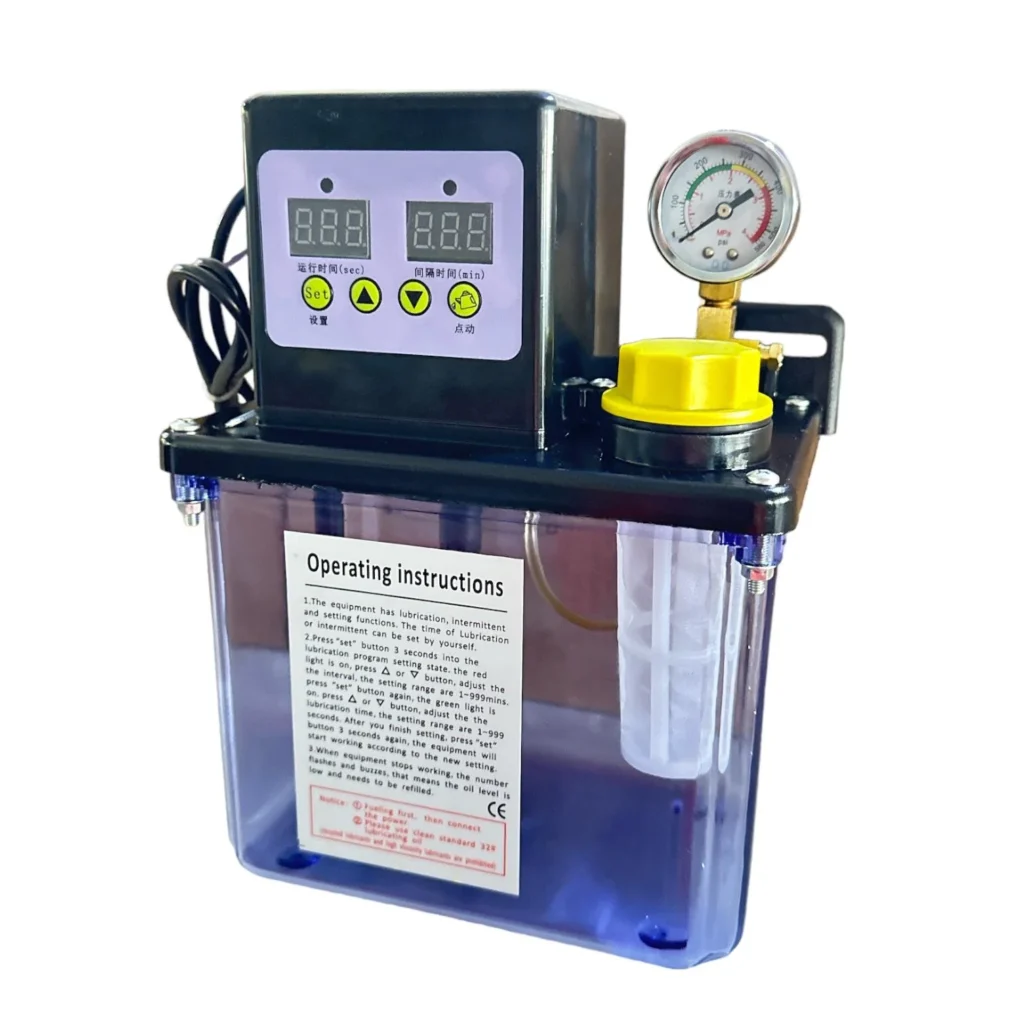
Lubrication pumps typically operate on a positive displacement principle, drawing a fixed volume of lubricant per cycle to generate pressure. Common types include gear pumps (internal and external), piston pumps, and vane pumps, each suited for different applications. Gear pumps are favored for their simplicity and reliability, while piston pumps offer higher pressure and precise flow control for demanding tasks. The pump draws oil from a reservoir via a suction line, filters it, and then delivers it under pressure through distribution lines to lubrication points, often via injectors or distributors. Key system components include the oil tank, suction and pressure filters, the pump unit (motor and pump), a pressure relief valve (PRV), pressure sensors/gauges, and distribution lines. System efficiency is directly tied to parameters like oil viscosity, operating temperature, pump capacity, and system pressure drops. Adequate pressure ensures lubricant reaches all points, forming a protective film. Pressure loss compromises this film, accelerating wear.
| Parameter | Value/Description |
|---|---|
| Pump Type | Gear (Internal/External), Piston, Vane, Screw |
| Operating Pressure Range | Typically 5 – 250 Bar (Application Dependent) |
| Flow Rate Capacity | 0.1 – 5000 cc/min (Depending on pump size and application) |
| Filtration Accuracy | Typically 10 – 25 microns (Lower for critical applications) |
| Oil Tank Capacity | 0.5 Liters – 1000 Liters+ (Based on system size) |
| Motor Power | 0.09 kW – 1.5 kW+ (Based on pump flow and pressure) |
| Oil Viscosity (ISO VG) | Typically ISO VG 32 – ISO VG 460 (Dependent on ambient temperature and application) |
| Operating Temperature Range | -10°C to +80°C (Depending on oil type and system components) |
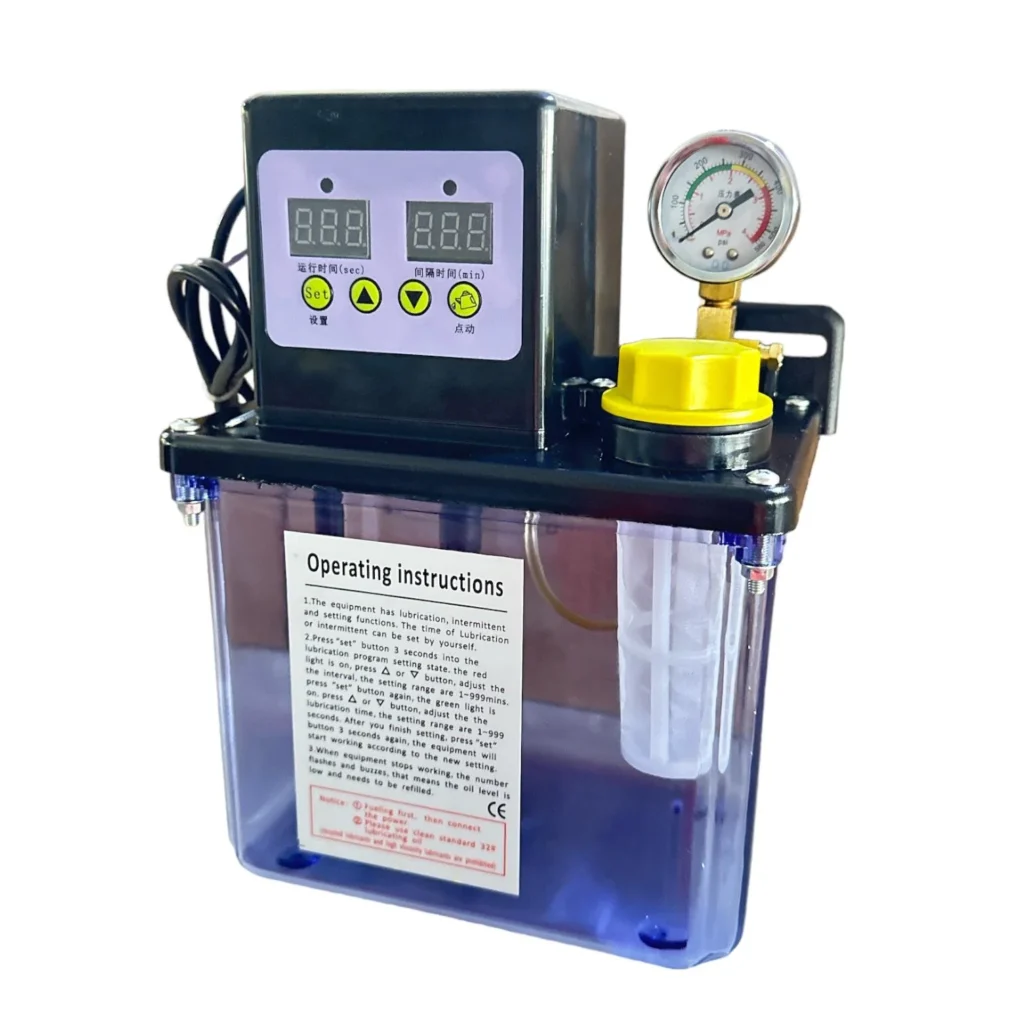
On-Site Troubleshooting Steps
- Oil Level and Quality: The most common cause of a lubrication pump not building pressure is a critically low oil level in the tank. Insufficient oil can cause the pump to ingest air, leading to cavitation and pressure loss. Additionally, using oil with an incorrect viscosity (too thin or too thick) can impair pump performance. Contaminated or water-laden oil also negatively impacts performance and can damage internal components. Regularly check the oil level, ensure the correct type and viscosity of oil are used, and periodically analyze oil quality.
- Suction Line Inspection: Issues within the suction line, which draws oil from the tank, are a frequent cause of pressure failure. Air leaks in the suction line, blockages (debris, sediment), or an excessively dirty suction filter can prevent the pump from drawing sufficient oil, thus failing to generate pressure. Suction line connections may be loose, or the hose could be kinked or damaged. Visually inspect the entire suction line for leaks, clear any blockages, and ensure the suction filter is clean or replaced as per the maintenance schedule.
- Filter Condition and Clogging: Filters in lubrication systems remove particles from the oil to protect components. Over time, these filters can become clogged, restricting oil flow to the distribution lines and causing system pressure to drop or fail to materialize. Some systems have bypass valves or indicators for clogged filters. Regular inspection, cleaning, or replacement of filters, especially the pressure line filter, is crucial for maintaining system operation and directly impacts pump output pressure.
- Pressure Relief Valve (PRV) Adjustment and Malfunction: The PRV prevents system pressure from exceeding a safe limit, protecting the pump and other components. If the PRV is set too low, stuck open, or leaking, the pump cannot achieve the desired system pressure, as the valve will continuously divert oil back to the tank. Inspect the PRV setting, check for internal blockages or wear, and clean or replace it if necessary.
- Pump Mechanism Wear: Over time, the pump’s internal components can wear. Increased clearances in gear pumps, loss of sealing in piston pumps, or worn vanes in vane pumps lead to higher internal leakage, preventing the pump from generating adequate pressure. Signs of wear include reduced efficiency, unusual noises, and higher operating temperatures. Pump wear typically requires overhaul or replacement.
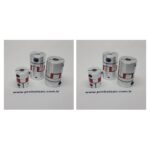
- Drive System (Motor and Coupler): Failures in the electric motor or the coupler connecting it to the pump can also cause pressure loss. If the motor is not rotating at the correct speed (e.g., due to low voltage, phase loss), or if the coupler is slipping or broken, the pump will not operate at full capacity. Check the motor’s electrical connections, voltage, and current. Inspect the coupler for damage and ensure all mechanical connections are secure.
- Pressure Gauges/Sensors: Occasionally, the issue lies not with the pump or system, but with the measuring device. A faulty pressure gauge or sensor might incorrectly indicate low pressure even when adequate pressure exists. This can lead to unnecessary interventions and wasted time. Verify the accuracy of the pressure gauge or sensor by comparing it with a calibrated instrument. Replace the sensor or gauge if found to be faulty.
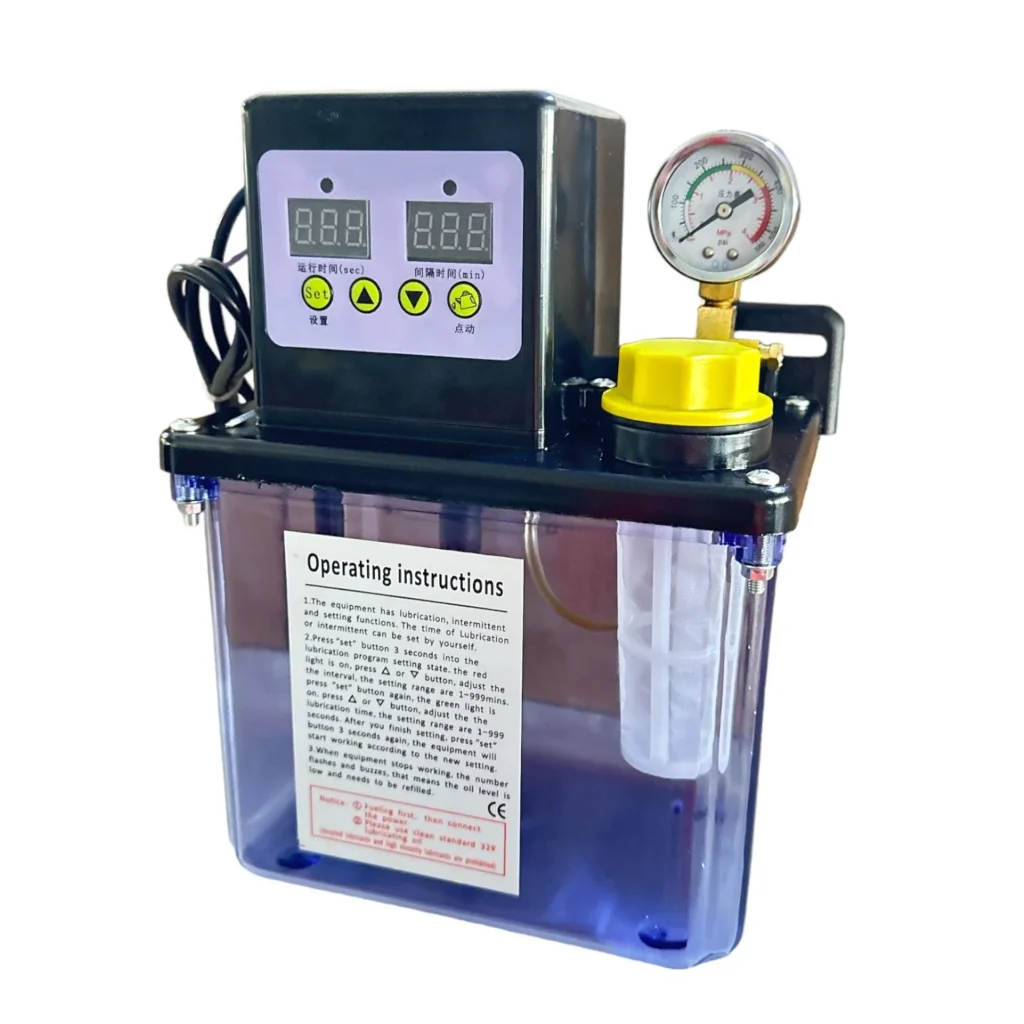
Addressing these potential issues systematically will help diagnose and resolve lubrication pump pressure problems, ensuring your industrial machinery operates reliably. For expert assistance or replacement parts, contact Mermak CNC.
Need reliable lubrication solutions for your CNC machinery? Request a quote on WhatsApp today!
Related product categories: Genel · Mekanik · AC Servo Motor
