


































































What Happens When a Compressor Filter Clogs? Impact on Your CNC Machine
📑 Table of contents (Click to open)
A clogged compressor filter can lead to system pressure drops, significantly increased energy consumption, compressor overload, degraded air quality, pneumatic equipment failures, and reduced production efficiency, negatively impacting the overall performance and lifespan of your machinery.
Practical notes for CNC router, automation and industrial motion systems.
Understanding Compressor Filter Clogs and Their Consequences
Compressors are the heart of industrial automation systems, essential for production processes. Their efficient and uninterrupted operation relies on the quality and continuity of the compressed air they provide. The compressor filter plays a crucial role by removing dust, particles, moisture, and other contaminants from the intake air, protecting the compressor’s internal components and downstream pneumatic equipment. Over time, these filters accumulate particles and become clogged. A clogged filter directly restricts the compressor’s air intake capacity, triggering a cascade of issues. The most immediate effect is a drop in system pressure. To compensate, the compressor must work harder, leading to motor overload and increased energy consumption. A restricted airflow can slow down or halt production lines. Unfiltered contaminants can then enter the compressed air line, causing malfunctions, wear, and performance degradation in sensitive pneumatic valves, cylinders, and other equipment. This not only escalates maintenance costs but also compromises production quality and reliability.
Operating Principle and Technical Data
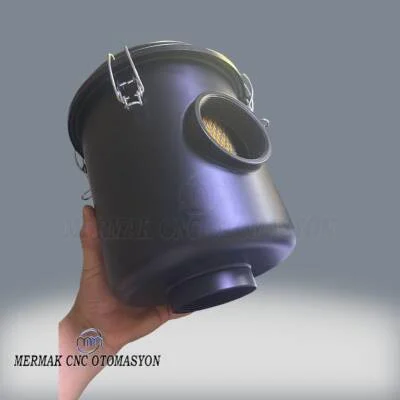
Compressor filters act as a barrier at the air intake, ensuring clean air enters the compressor. They function by mechanically trapping airborne solid particles within their porous structure. As contaminants accumulate on the filter surface or within its depth, the filter’s permeability decreases, creating a differential pressure between the filter’s inlet and outlet. A healthy filter exhibits low differential pressure; however, as it clogs, this pressure increases. This rise forces the compressor’s motor to consume more power and operate at higher speeds to draw the required amount of air. For instance, in screw compressors, a clogged air filter increases intake manifold vacuum, altering the compression ratio, reducing efficiency, and overworking the rotors. In piston compressors, cylinder filling is impaired, leading to reduced flow and overheating. A clogged filter can also reduce cooling airflow, contributing to compressor overheating. This shortens the lifespan of critical components like bearings, seals, and the lubrication system. The following technical data table summarizes typical compressor filter performance and the potential effects of clogging:
| Parameter | Value/Description |
|---|---|
| Filter Type | Paper/Synthetic Intake Filter |
| Normal Differential Pressure | 0.05 – 0.15 bar (new filter) |
| Critical Differential Pressure Threshold | 0.3 – 0.5 bar (replacement required) |
| Filtration Efficiency | 98.5% – 99.9% (for 3-5 micron particles) |
| Service Life (Average) | 2000 – 4000 operating hours (environment dependent) |
| Energy Consumption Increase When Clogged | 0.7% – 1.0% per 0.1 bar pressure drop |
| Impact on Machine Performance | Flow loss, pressure drop, overheating, premature failure |
Field Considerations
- Differential Pressure Monitoring: The most reliable way to monitor compressor filter health is by continuously tracking the pressure difference (differential pressure) across the filter element. Many modern compressor systems are equipped with sensors that automatically monitor this data and alert operators when a specific threshold is reached. Operators and maintenance personnel must regularly check these indicators and replace the filter immediately upon reaching the manufacturer’s specified critical pressure threshold. This proactive approach prevents sudden failures and unnecessary energy consumption.
- Regular Maintenance and Replacement Schedule: Compressor filters are consumables and require replacement after a certain period of operation. Adhering strictly to the manufacturer’s recommended replacement intervals (e.g., every 2000-4000 hours or annually) is crucial. However, environmental conditions (dusty environments, high humidity, etc.) may necessitate shorter intervals. Therefore, a “condition-based” maintenance approach, based on differential pressure monitoring, is most effective. Regular maintenance also includes inspecting the filter housing and seals.
- Air Quality and Contamination Risks: A clogged filter not only restricts clean airflow but can also lead to the ingress of contaminants into the system, either through filter element degradation or bypass. This shortens the lifespan of pneumatic tools, valves, actuators, and other automation components operating on compressed air. Air quality standards are particularly critical in sectors like food, pharmaceuticals, and electronics. Contamination can reduce final product quality, cause production defects, and result in significant costs. Always use original or equivalent high-efficiency filter elements when replacing filters.
- Impact on Energy Efficiency: A clogged compressor filter is a major contributor to increased compressor energy consumption. The compressor must draw more power to overcome the rising resistance in the filter. This leads to a noticeable increase in electricity bills. Every 0.1 bar of additional pressure drop can increase a compressor’s energy consumption by approximately 0.7% to 1.0%. As compressors often represent a significant portion of a facility’s total electricity usage, filter maintenance is vital for energy efficiency.
- Equipment Lifespan and Reliability: Filter clogging causes more than just immediate performance drops; it negatively impacts the long-term lifespan of the compressor and connected equipment. Continuous operation of the compressor motor under overload conditions accelerates wear on motor windings and bearings. Increased operating temperatures cause compressor oil to degrade faster, leading to a less efficient lubrication system. Ingress of contaminants causes wear, corrosion, and premature failures in pneumatic equipment, jeopardizing production reliability and continuity.

Common Issues and Solutions
Here are common problems associated with clogged compressor filters and practical solutions:
- Issue: Low System Pressure and Flow Loss. Pneumatic tools or processes on the production line slow down or stop due to insufficient air pressure. The compressor’s output pressure drops, while indicators show the compressor is working harder. Solution: First, check the differential pressure gauge of the compressor’s air intake filter. If it exceeds the threshold, replace the filter immediately. After replacement, re-check system pressure and flow. Also, inspect the condition of other filters in the air line (line filters, dryer filters).
- Issue: Increased Energy Consumption and High Electricity Bills. The compressor consumes excessive energy to maintain the required pressure. Solution: Implement a regular filter replacement schedule based on differential pressure monitoring and operating hours. Optimize compressor load management and consider variable speed drive (VSD) compressors if applicable. Ensure proper sealing of the compressed air system to prevent leaks.
- Issue: Compressor Overheating. The compressor’s operating temperature rises beyond normal limits, potentially triggering shutdown alarms or causing damage. Solution: Ensure the air intake filter is clean and not restricting airflow. Check the compressor’s cooling system (radiator, fan) for blockages or malfunctions. Verify the oil level and condition. A clogged filter significantly reduces cooling airflow.
- Issue: Premature Wear of Pneumatic Components. Valves, cylinders, and other air-powered equipment experience faster wear, leading to leaks or malfunctions. Solution: Ensure the compressor filter is replaced regularly with a high-quality element. Verify the effectiveness of downstream air treatment components like dryers and coalescing filters. Regularly inspect pneumatic components for signs of wear or contamination.
Maintaining clean compressor filters is not merely a routine task; it is a critical aspect of ensuring the longevity, efficiency, and reliability of your industrial CNC router machines and entire production facility. Proactive filter maintenance directly translates to reduced operational costs, improved air quality, and uninterrupted production.
Ready to ensure your operations run smoothly? Request a quote on WhatsApp for high-quality compressor filters and maintenance solutions!
Related product categories: Genel · Elektronik · Mekanik
