





































































Diagnosing Pump Failures in Water-Cooled Spindles
📑 Table of contents (Click to open)
A failing pump in a water-cooled spindle can lead to overheating and damage. This article details how to recognize the signs of pump failure, including abnormal temperature rises, reduced coolant flow, unusual noises, and pressure drops. Learn the technical principles and practical checks to ensure your CNC spindle operates efficiently.
Practical notes for CNC router, automation and industrial motion systems.
Understanding Pump Failures in Water-Cooled Spindles
Water-cooled spindles are essential components in high-speed industrial machinery like CNC routers, laser cutters, and machining centers. They generate significant heat during operation, which must be efficiently dissipated to maintain performance, longevity, and precision. The water pump is the heart of this cooling system, responsible for circulating coolant through the spindle and the external cooling unit (radiator or chiller). A pump failure disrupts this critical circulation, leading to spindle overheating, damage to bearings and motor windings, and costly production downtime. Early detection and prompt intervention are crucial for protecting your equipment and ensuring operational continuity.
Working Principle and Technical Data
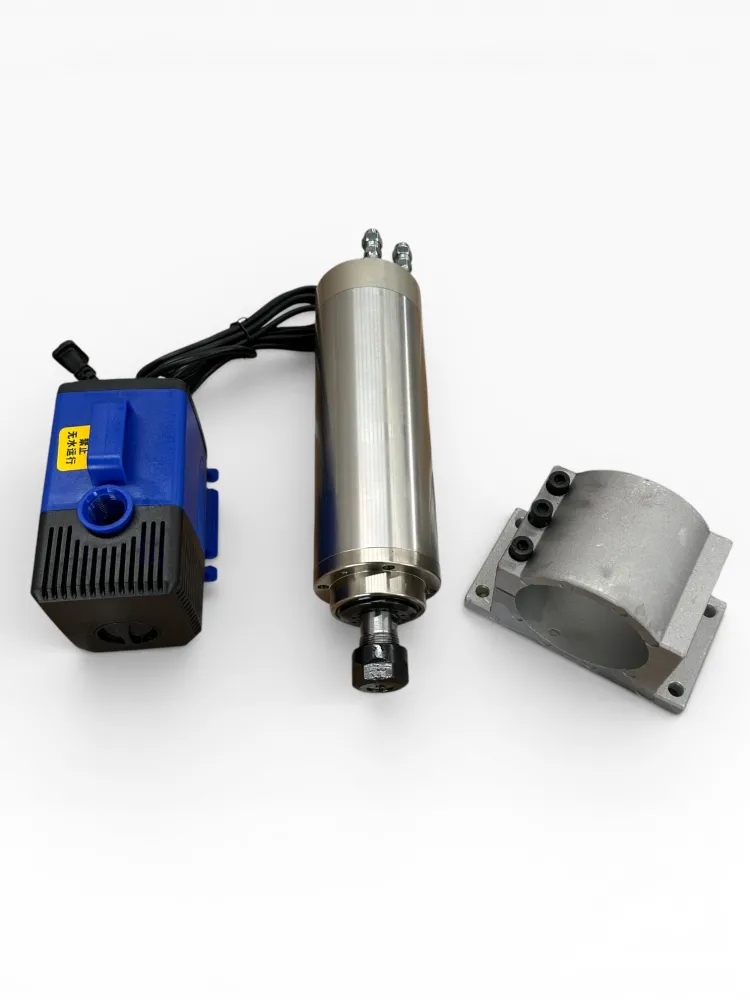
Water-cooled spindle systems operate on a closed-loop principle. The pump draws coolant from a reservoir, pushes it through a filter, and then circulates it through the spindle’s internal cooling channels. After absorbing heat, the coolant flows out, passes through a radiator or chiller to dissipate heat, and returns to the reservoir. The pump’s primary function is to maintain adequate flow rate (debit) and pressure throughout this cycle. Typically, centrifugal pumps are used for their high flow capacity at low pressures, though positive displacement pumps may be found in systems requiring precise flow control. The pump’s specifications are directly tied to the spindle’s power and cooling requirements. Insufficient flow or pressure prevents effective heat transfer, causing the spindle to overheat. Temperature, flow, and pressure sensors continuously monitor these parameters, indicating the system’s health.
| Parameter | Value/Description |
|---|---|
| Spindle Power | Typically 0.8 kW – 24 kW. Pump capacity is selected based on spindle power. |
| Cooling Capacity Requirement | Approximately 20-30% of spindle power for heat dissipation (e.g., ~500-700W for a 2.2 kW spindle). |
| Pump Type | Centrifugal pump (most common), sometimes diaphragm or gear pump. |
| Nominal Flow Rate | Typically 3-15 L/min. Varies by spindle model. |
| Nominal Pressure (Head) | Typically 0.5-2.0 bar (50-200 kPa). Depends on system resistance and flow rate. |
| Coolant Type | Distilled water, deionized water, or specialized coolant with antifreeze/corrosion inhibitors. |
| Monitoring Sensors | Temperature sensor (spindle, coolant), flow sensor, pressure sensor (in advanced systems). |
Key Indicators of Pump Failure
- Monitoring Spindle and Coolant Temperatures:
This is a critical indicator. Most water-cooled spindles have temperature sensors. Regularly check the temperature readings on your CNC controller or an external display. Normal operating temperatures are usually between 20-30°C. A rapid temperature increase, exceeding a set threshold (e.g., 40°C), strongly suggests a cooling system issue, likely a malfunctioning or non-operational pump. Elevated reservoir coolant temperature also points to a disrupted cooling cycle.
- Observing Coolant Flow and Flow Sensors:
Many cooling units have a visual flow indicator. Ensure coolant is visibly flowing when the pump is running. Weak, intermittent, or absent flow indicates a potential pump failure, blockage, or airlock. Advanced systems use flow switches or meters that trigger an alarm or shut down the machine if the flow rate drops below a minimum. Verify these sensors are functioning correctly.
- Evaluating Pump Unit Noise and Vibrations:
A healthy pump typically emits a steady, low hum. Abnormal noises like high-pitched squealing might indicate bearing wear or mechanical friction. Knocking, rattling, or grinding sounds could signal foreign objects in the pump or impeller damage. Excessive vibration often points to motor or bearing issues. These changes are early warning signs of impending failure.
- Checking Pressure Gauges and Sensors:
Some systems include pressure gauges or sensors in the coolant line. These allow you to verify if the pump is delivering adequate pressure. The normal operating pressure is defined by the system design. A drop in pressure can indicate the pump is underpowered, there’s a blockage, or a leak in the system.
- Physical Checks and Visual Inspection:
Regularly inspect the pump and coolant lines. Check hoses for kinks or blockages. Look for leaks around the pump body or connections. Feel the pump motor for excessive heat (use caution). Ensure the coolant reservoir level is adequate, as low levels can cause cavitation or dry running.
- Electrical Checks:
Inspect the pump motor’s electrical connections and wiring for looseness or damage. Use a multimeter to measure the motor’s current draw; abnormal readings can indicate motor or mechanical problems. Check for tripped thermal overload protectors or blown fuses.
- Assessing Coolant Quality:
The coolant’s appearance provides clues. Dirty, cloudy, or particle-filled coolant suggests internal corrosion, algae growth, or debris accumulation. Such contamination can damage the pump impeller or block cooling channels, hindering flow. Regular coolant changes and filter maintenance are vital for pump longevity and system efficiency.
Addressing these indicators promptly can prevent severe damage to your CNC router machine‘s spindle. Regular maintenance, including coolant checks and filter cleaning, is key to ensuring the reliable operation of your industrial CNC router.
If you suspect a pump failure or need assistance with your spindle’s cooling system, our experts are ready to help. Request a quote on WhatsApp for expert consultation and service.
Related product categories: Genel · Gdz Motor · Spindle Pens Setleri
