































































23×129 Surface Coated Sigma Profile 8 Channel Wholesale
Detailed Product Review
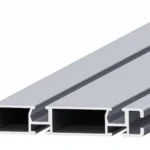
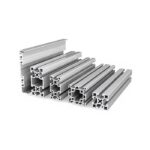
The 23×129 Surface Coated Sigma Profile with 8 Channels is a high-strength, modular aluminum extrusion profile that functions as a structural skeleton element in industrial automation systems, machine manufacturing, and R&D projects. Its primary role is to maintain structural integrity under dynamic and static loads, enabling precise mounting of various mechanical and electronic components. The profile’s 23mm depth and 129mm width offer a cross-sectional geometry optimized for applications requiring a wide surface area while maintaining a low profile height. The eight T-slot channels on the perimeter surface allow for quick, flexible, and repositionable mounting of components using standard T-nuts and fasteners. This structure facilitates the easy design and construction of complex constructions, robotic cells, conveyor systems, and ergonomic workstations, while also enhancing the adaptability of systems to future modification or expansion needs. The surface coating increases the profile’s resistance to environmental factors, ensuring long-lasting performance and a professional appearance that meets industrial aesthetic standards.
This sigma profile is manufactured via extrusion from a high-strength aluminum alloy conforming to the EN AW-6063 T6 standard. The inherent lightness and corrosion resistance of aluminum, combined with an optimized cross-sectional geometry, provide high torsional and bending resistance. The profile’s 8 T-slot channels offer broad compatibility with various metric standard T-nuts, bolts, corner connectors, and other accessories such as M4, M5, M6, and M8. This integration capability allows engineers and designers to reliably build complex structures using diverse connection configurations. The surface coating is typically achieved through anodizing (anodization), a process that creates a controlled, hard, dense, and wear-resistant aluminum oxide layer on the profile’s surface. Anodized coating enhances the profile’s resistance to chemical vapors, moisture, and mechanical abrasion, while also providing electrical insulation properties that protect sensitive electronic components and minimize the risk of short circuits. The modular nature of the profile offers flexibility in production lines, enabling rapid adaptation to different product variants or changes in production capacity. This adaptability is crucial for companies seeking a competitive edge in dynamic market conditions. Its easy integration with advanced computer-aided design (CAD) software speeds up engineering processes, reduces prototyping costs, and optimizes project cycles.
Advantages of 23×129 Surface Coated Sigma Profile 8 Channel Wholesale
Optimum Strength-to-Weight Ratio: This profile combines the high tensile and yield strength properties of the EN AW-6063 T6 aluminum alloy with an optimized 23x129mm cross-section, offering significant weight savings compared to traditional steel constructions. This structural optimization reduces inertia, particularly in systems subjected to dynamic loads (e.g., robotic arms or moving conveyors), leading to lower energy consumption and higher acceleration/deceleration capabilities. The profile’s high torsional and bending resistance minimizes structural deformation in applications requiring precise positioning, thereby enhancing the overall accuracy and repeatability of the system.
Enhanced Modularity and Design Flexibility: The profile’s eight standard 8mm T-slot channels offer full compatibility with a wide range of metric fasteners and accessories from M4 to M8. This modular structure allows engineers to quickly and precisely integrate sensors, actuators, protective panels, and other peripheral components in complex automation projects. The multi-directional orientation of the channels enables the easy creation of three-dimensional structures that can be rapidly modified as needed. This flexibility accelerates prototyping processes, reduces design revision costs, and increases the adaptability of production lines to different product variants or capacity changes.
Superior Surface Protection and Electrical Insulation: The anodized (anodic oxidation) surface coating creates a hard, non-porous aluminum oxide layer, 10-20 microns thick, on the profile’s aluminum matrix. This layer significantly enhances the profile’s resistance to corrosion, chemical vapors, abrasion, and scratches, ensuring a long-lasting and aesthetic appearance even in harsh industrial environments. The inherent electrical insulation properties of the anodized coating reduce the risk of short circuits when the profile is used in electrically powered systems and provide an additional layer of protection for sensitive electronic components. This feature offers a critical advantage, especially in controlled environments such as cleanroom equipment and laboratory setups.
Technical Specifications and Capacity
SpecificationValue/Description
Material StandardEN AW-6063 T6 Aluminum Alloy, high corrosion resistance and excellent weldability.
Cross-Section Dimensions23mm (Depth) x 129mm (Width). Optimized wide surface area.
Channel Type and Width8 Channel T-Slot, 8.2 mm channel width. Full compatibility with standard 8mm T-nuts.
Surface TreatmentAnodized (Anodic Oxidation), 10-20 micron coating thickness.
Moment of Inertia (Ix)Approx. 120 cm4. High bending resistance against vertical loads.
Moment of Inertia (Iy)Approx. 25 cm4. Sufficient bending resistance against horizontal loads.
Surface Hardness200-300 HV (Anodized layer). Superior resistance to abrasion and scratching.
Technical Frequently Asked Questions (FAQ)
How do the T-slot channels of this profile ensure the security of fasteners under dynamic loads, and what torque values are recommended?
The T-slot channels of the 23×129 Surface Coated Sigma Profile are designed with specific geometries that allow T-nuts to seat fully within the channel and distribute load over a wide surface area. This reduces localized stresses at connection points, providing high tensile and shear strength even under dynamic loads. The locking of T-nuts within the channel minimizes loosening caused by vibration. Proper torquing of fasteners is critical for structural integrity and longevity. Generally, torque values ranging from 6-8 Nm for M5 bolts, 10-12 Nm for M6 bolts, and 20-25 Nm for M8 bolts are recommended. However, these values should be adjusted based on specific application loads, fastener material, and environmental conditions, and periodic checks with a torque wrench should be performed. Overtorquing can lead to deformation of the profile or fasteners, while undertorquing can result in connection loosening.
What are the effects of anodized surface coating on the profile’s chemical resistance and electrical insulation properties?
The anodizing (anodic oxidation) process thickens the naturally occurring oxide layer on the aluminum profile’s surface through electrochemical methods, creating a harder, denser, and more uniform aluminum oxide (Al2O3) layer. This coating significantly enhances the profile’s chemical resistance, providing high protection against mild acidic and alkaline solutions, particularly those with a pH between 4.0 and 9.0. However, strong acids (e.g., hydrochloric acid) and strong bases (e.g., sodium hydroxide) can damage the anodized layer. In terms of electrical insulation, the anodized layer acts as a dielectric barrier. An anodized layer of 10-20 microns thickness typically provides a dielectric strength of up to 1000V, allowing the profile to be safely used in applications involving sensitive electronic components or in environments with potential short-circuit risks. This property is a critical advantage, especially in controlled environments like cleanroom equipment and laboratory setups.
What engineering approaches should be applied to maintain the integrity of the surface coating during profile cutting and machining?
Maintaining the integrity of the anodized surface coating during profile cutting and machining is important for both aesthetic appearance and corrosion resistance. For cutting operations, high-speed, carbide-tipped saw blades should be used in conjunction with cutting fluids or coolants specifically designed for aluminum. This dissipates heat generated during cutting, preventing thermal deformation of the coating and ensuring a smooth cut surface. For machining operations such as drilling and milling, sharp tools and appropriate feed rates should be employed. Careful deburring after machining is critical, especially for any burrs inside the T-slot channels, to ensure proper seating of fasteners. In areas where the anodized coating may have been compromised by machining, applying a suitable protective coating (e.g., clear varnish or epoxy-based paint) can restore corrosion resistance. Additionally, it is recommended to use protective tapes or soft supports to prevent scratches on the unmachined surfaces of the profile.
How do the profile’s moments of inertia (Ix and Iy) play a role in structural rigidity and the selection of application orientation?
The moment of inertia (area moment of inertia) is an engineering parameter that describes a cross-section’s resistance to bending. The Ix and Iy values indicate the bending rigidity of the profile around its principal axes. For the 23×129 profile, the Ix value (approx. 120 cm4) and Iy value (approx. 25 cm4) show that the profile’s bending resistance around its width axis (129mm) is significantly higher than around its depth axis (23mm). This indicates that the primary load-bearing direction of the profile should be aligned with the axis having the higher moment of inertia. Therefore, to achieve maximum rigidity and minimum deflection against vertical loads (gravity or downward forces), the 129mm width side of the profile should preferably be positioned perpendicular to the direction of loading. The Iy value represents the profile’s bending resistance around its narrower axis and is used to assess the profile’s stability against lateral loads or torsional effects. Engineers use these values to perform structural analyses, calculate deflections, and determine if the profile has sufficient rigidity for a specific application, while also selecting the most appropriate mounting orientation. Mermak serves clients in the United Kingdom, United States, Canada, Australia, Ireland, New Zealand, South Africa, and similar countries and international markets, leveraging 16 years of experience from our Ankara Uzay Sanayi factory/warehouse. Our website displays up-to-date stock quantities and prices. Stocked products are dispatched directly from our warehouse without production delays, ensuring careful packaging and meticulous invoice/document handling. We partner with reliable logistics providers, and the Mermak team closely monitors the shipment process. Video tours of our products and factory are available upon request via WhatsApp or our contact channels.