
No products in the cart.
%38 Discount

40×40 Sigma Profile 10 Channel Heavy Duty
Original price was: 30.30$.18.68$Current price is: 18.68$.
In stock
🔥 Special for Today Only %38 Discount Opportunity!📦 Category: 10 Channel Sigma Profiles🏷️ Dimensions: 40x40🏷️ Slot Size: 10 Slots🏷️ Profile Size: 40x40
Mermak assuranceFrom factory to end user · importer / main dealer · strong stock
ImporterMain dealer / distributorStrong stockGood priceCorporate invoice
In stock / available to order · 14-day return for standard unused products; conditions may vary for custom size/cut products.
40×40 Sigma Profile 10 Channel Heavy Duty
INDUSTRIAL AUTOMATION PARTS | SUPERIOR PERFORMANCE SERIES
Detailed Product Review
The 40×40 Sigma Profile 10 Channel Heavy Duty is an aluminum extrusion profile specifically developed for structural applications in industrial automation systems and machine manufacturing processes that require high strength, rigidity, and modularity. This profile is preferred as a fundamental structural element, especially in environments with high dynamic loads, significant inertial forces, and continuous vibration, where flexible design and rapid adaptation capabilities are also critical. The “Heavy Duty” designation indicates that the profile has a thicker wall thickness and an optimized internal geometry compared to standard 40×40 series profiles. This significantly increases the profile’s section modulus (area moment of inertia) and thus its resistance to bending and torsion, providing superior load-bearing capacity for high static and dynamic loads and excellent resistance to deformation. This structural optimization ensures the long-term and reliable operation of systems while also enhancing vibration damping capabilities.
The product is manufactured using the extrusion method from high-quality 6063-T5 aluminum alloy. This alloy combines lightness with high strength, facilitating ease of assembly and transportation, while offering durable and reliable solutions with its superior mechanical properties. The profile’s 10-channel design, featuring two T-slot grooves on each surface and additional channels at the corners, provides unparalleled mounting flexibility. This extensive channel structure allows for versatile and precise integration of various fasteners (T-nuts, corner connectors), sensors, actuators, protective panels, cable management systems, and other automation components. The anodized (anodic oxidation) coating applied to the profile’s surface electrochemically enhances aluminum’s natural oxidation resistance, providing superior protection against corrosion, abrasion, and scratches even in harsh industrial environments, while also offering an aesthetic and professional appearance. Furthermore, post-production heat treatment optimizes the material’s grain structure, increasing its strength, hardness, and toughness, which significantly reinforces the profile’s overall performance and structural durability. With these technical specifications, the 40×40 Sigma Profile 10 Channel Heavy Duty forms a robust, flexible, high-performance, and long-lasting foundation for your engineering solutions.
Advantages of 40×40 Sigma Profile 10 Channel Heavy Duty
High Structural Rigidity and Load-Bearing Capacity: The heavy-duty design increases the profile’s section modulus (Ixx, Iyy) and torsional constant (J) compared to standard profiles, providing superior resistance to bending and torsional deformations. This is critical in applications such as automation machinery, robotic cells, and conveyor systems where high static and dynamic loads, acceleration, and deceleration forces are significant. Increased rigidity raises the system’s natural frequency, reducing the risk of resonance and maximizing operational stability, which is a key advantage for applications requiring precise positioning and repeatability.
Extensive Mounting Flexibility and Modular Integration: The profile’s 10-channel geometry offers multiple T-slot grooves on each surface, allowing fasteners, sensors, actuators, cable management systems, and other peripheral components to be mounted in a versatile and independent manner at any point along the profile. This design provides maximum flexibility in system integration, offering an ideal platform for rapid prototyping, on-site modifications, and future system expansions. The number and distribution of mounting points facilitate the optimization of complex mechanical assemblies and wiring solutions, thereby saving time and costs in design and assembly processes.
Optimized Material Properties and Surface Durability: The use of high-quality aluminum alloy (e.g., 6063-T5) optimizes the profile’s weight-to-strength ratio, while the applied heat treatment (T5 temper) enhances the material’s yield strength, tensile strength, hardness, and fatigue resistance. This ensures the profile maintains its structural integrity during prolonged operation even in demanding industrial conditions. The anodized coating on the surface creates a dense and homogeneous aluminum oxide (Al2O3) layer at the micron level, acting as a superior barrier against corrosion, chemical attack, and mechanical wear. This coating also improves the profile’s electrical insulation properties, providing an additional layer of protection in systems with sensitive electronic components and extending the profile’s lifespan.
Technical Specifications and Capacity
Specification|Value/Description
Profile Size|40×40 mm (Nominal outer dimensions)
Channel Type|10 Channel (T-slot geometry offering a wide mounting surface and versatile connection possibilities)
Structural Type|Heavy Duty (High load-bearing capacity and rigidity with increased wall thickness and optimized cross-sectional geometry)
Weight per Meter|Approx. 1.65 Kg/Meter (A critical indicator for structural stability and durability, directly related to the moment of inertia)
Material|High-Quality Aluminum Alloy (6063-T5 temper, providing lightness, high strength, and corrosion resistance)
Surface Treatment|Anodized Coating (Electrochemical process that enhances oxidation resistance, protects against scratches, and offers an aesthetic finish, typically 10-15 microns thick)
Mechanical Treatment|Heat Treatment Application (T5 temper process applied after extrusion optimizes material strength, hardness, and toughness)
Technical Frequently Asked Questions (FAQ)
How does the “Heavy Duty” feature of the 40×40 Sigma Profile 10 Channel Heavy Duty affect structural analysis parameters and what advantages does it offer over standard profiles?
The “Heavy Duty” feature increases the profile’s cross-sectional area and consequently its area moment of inertia (Ixx, Iyy) and torsional constant (J). This directly impacts bending stresses (σ = My/I) and deflections (δ = PL^3/48EI) in structural analyses; a higher moment of inertia means lower stress and deflection under the same load. Compared to standard profiles, Heavy Duty profiles may exhibit higher yield strength and ultimate tensile strength because the optimized wall thickness increases the material’s load-carrying capacity and improves resistance to local buckling. These advantages allow for the creation of more reliable and durable structures, especially in applications with high dynamic loads, vibration, or large spans, by increasing the overall rigidity and stability of the system.
What possibilities does the 10-channel design of the profile offer engineers in terms of fastener selection and mounting strategies?
The 10-channel design provides multiple T-slot grooves on each surface, offering high flexibility in the placement of fasteners and mounting strategies. This allows engineers to mount various accessories such as T-nuts, corner connectors, plate brackets, and hinges at any point on the profile, in multiple directions, and at different angles. Particularly in complex frame geometries or when integrating numerous peripheral components (sensors, cable channels, pneumatic cylinders), this multi-channel structure facilitates optimal component positioning, cable management, and load distribution. It also allows for less costly and faster correction of assembly errors or future revision needs, optimizing design and manufacturing processes.
How do the anodized coating and heat treatment applications affect the profile’s environmental resistance and mechanical lifespan?
The anodized coating significantly enhances the profile’s corrosion resistance by electrochemically increasing the thickness and density of the natural oxide layer on the aluminum surface. This coating prevents rusting and surface degradation in industrial environments with moisture, chemical vapors, or abrasive particles, thus preserving its aesthetic appearance and structural integrity for many years. Heat treatment (T5 temper) optimizes the aluminum alloy’s microstructure, increasing the material’s yield strength, tensile strength, hardness, and toughness. This strengthens the profile’s resistance to deformation and fatigue cracking under continuous load or repeated stresses. The combination of both treatments maximizes the system’s overall lifespan and reliability by enhancing both the profile’s resistance to environmental factors and its performance under mechanical loads.
What advantages does manufacturing this profile from lightweight aluminum alloy offer in terms of inertia and energy efficiency in dynamic systems?
Manufactured from lightweight aluminum alloy, the 40×40 Sigma Profile 10 Channel Heavy Duty significantly reduces inertial forces in dynamic systems. Lower mass shortens system acceleration and deceleration times, thereby optimizing cycle times and increasing overall production efficiency. In applications such as robotic arms, CNC machines, or high-speed conveyor systems, low inertia allows motors to consume less energy and enables the use of smaller actuators. This not only reduces initial investment costs but also saves on operational energy expenses. Furthermore, low inertia allows for higher precision positioning and less vibration in the system, positively impacting machining quality and equipment lifespan.
| Dimensions | 40x40 |
|---|---|
| Slot Size | 10 Slots |
| Profile Size | 40x40 |
You must be logged in to post a review.
Taksit Tablosu
Related Products
 %38 Discount90x135 Sigma Profile | 10 ChannelOriginal price was: 172.73$.106.51$Current price is: 106.51$.View
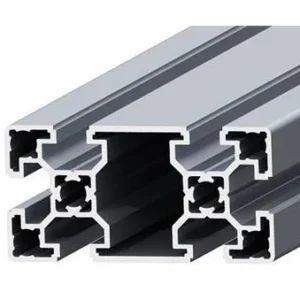 %35 Discount45x90 Sigma Profile 10 Channel Light DutyOriginal price was: 44.40$.29.02$Current price is: 29.02$.View
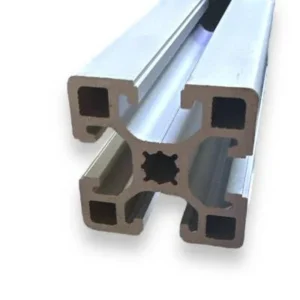 %38 Discount45x45 Sigma Profile | 10 Channel | Heavy DutyOriginal price was: 36.72$.22.64$Current price is: 22.64$.View
Reviews
There are no reviews yet.