
No products in the cart.
%38 Discount


45×45 Sigma Profile | 10 Channel | Heavy Duty
Original price was: 36.72$.22.64$Current price is: 22.64$.
High-strength, rigid, and stable structural element for industrial automation systems.
In stock
🔥 Special for Today Only %38 Discount Opportunity!📦 Category: 10 Channel Sigma Profiles🏷️ Slot Size: 10 Slots🏷️ Profile Size: 45x45
Mermak assuranceFrom factory to end user · importer / main dealer · strong stock
ImporterMain dealer / distributorStrong stockGood priceCorporate invoice
In stock / available to order · 14-day return for standard unused products; conditions may vary for custom size/cut products.
45×45 Sigma Profile 10 Channel Heavy Duty
INDUSTRIAL AUTOMATION PARTS | SUPERIOR PERFORMANCE SERIES
Detailed Product Review
The 45×45 Sigma Profile 10 Channel Heavy Duty is a structural element designed for applications in industrial automation systems that require high strength, rigidity, and stability. This profile offers engineering solutions, particularly in the construction of critical infrastructure such as machine frames, heavy-duty conveyor systems, robotic work cells, precision assembly lines, and vibration-sensitive test stands. Its heavy-duty configuration, featuring thicker wall sections and an optimized internal geometry compared to standard sigma profiles, significantly increases resistance to bending moments and torsion, thereby maximizing deformation resistance against static and dynamic loads. This structural superiority extends operational life while ensuring that systems maintain their geometric accuracy and positioning precision even under high-speed movements and repetitive loads, thus enhancing the overall performance and reliability of the system. Mermak has 16 years of experience supplying such components internationally, including to the United Kingdom, United States, Canada, Australia, Ireland, and New Zealand, alongside similar countries and international markets.
The material composition of the product consists of a high-quality aluminum alloy such as AlMgSi0.5 F22 or a similar industrial standard. This alloy offers excellent machinability, weldability, and a high strength-to-weight ratio. The profile surface has undergone a special anodizing (anodic oxidation) coating process. This treatment creates a controlled oxide layer on the aluminum surface, enhancing corrosion resistance, durability against chemical agents, and surface hardness. Furthermore, the mechanical properties of the profile have been optimized through heat treatment processes (e.g., T5 or T6 temper). These heat treatments relieve internal stresses, improve the crystalline structure, and increase yield and tensile strength through age hardening, thereby maximizing the profile’s fatigue life and toughness. The 10-channel (T-Slot) design features a total of ten T-slots, two on each edge. This wide range of channels allows for versatile and secure integration of various fasteners such as T-nuts, corner brackets, panel mounts, and other accessories. This modular structure enables complex systems to be designed and assembled quickly, easily adapting to future modifications and expansions, offering flexibility and cost-effectiveness in engineering projects.
Advantages of 45×45 Sigma Profile 10 Channel Heavy Duty
High Load Capacity and Rigidity: The heavy-duty design increases the profile’s cross-sectional area and thus its moment of inertia (Ixx, Iyy), significantly enhancing bending and torsional rigidity compared to standard profiles. This provides minimal deformation and vibration damping capacity in systems subjected to higher static and dynamic loads. Especially for long spans or high-mass moving systems, the profile’s increased section modulus (Z) reduces stress concentrations and maintains structural integrity, extending the system’s operational life and minimizing maintenance and repair requirements.
Advanced Modularity and Flexible System Integration: The profile’s 10-channel (T-Slot) structure offers multiple connection points on each surface, allowing for quick and precise integration of a wide range of accessories such as T-nuts, corner brackets, hinges, and panel mounts. This feature enables the easy design and installation of complex modular systems, machine frames, automation cells, and custom workstations. Design flexibility allows the system to be easily expanded, reconfigured, and modified according to future requirements, increasing adaptability and return on investment in engineering projects.
Superior Surface and Mechanical Strength Properties: The profile’s surface gains high resistance against environmental factors through industrial-standard anodizing. This coating thickens the aluminum’s natural oxide layer, creating a superior barrier against corrosion, chemical agents, UV radiation, and abrasion. Furthermore, applied heat treatment processes optimize the material’s internal microstructure, increasing yield strength, tensile strength, and hardness. This combination ensures long-term, trouble-free performance of the profile even in harsh industrial environments (e.g., humid, chemically laden, or high-temperature areas) while also enhancing fatigue resistance, contributing to the preservation of structural integrity.
Technical Specifications and Capacity
FeatureValue/Description
Profile Type45x45 Sigma Profile, 10 Channel, Heavy Duty (Optimized internal geometry and increased wall thickness)
MaterialHigh-Quality Aluminum Alloy (AlMgSi0.5 F22 or equivalent, compliant with EN AW-6063 T5/T6 standard)
Weight per MeterApprox. 1.957 Kg/Meter (Density supporting high moment of inertia and increased load-bearing capacity)
Surface TreatmentAnodizing: Protective oxide layer of 10-15 microns thickness, providing resistance to corrosion, abrasion, and chemicals.
Heat TreatmentApplied (T5 or T6 temper): Increases material yield and tensile strength, hardness, and fatigue resistance.
Channel Structure10 Channels (T-Slot): 2 on each edge, offering universal compatibility for standard T-nuts and fasteners.
Cross-Sectional AreaApprox. 725 mm² (Nominal value used in calculations, indicator of high strength)
Moment of Inertia (Ix, Iy)Approx. 26.5 cm⁴ (Critical parameter for bending rigidity, high values ensure low deformation)
Technical Frequently Asked Questions (FAQ)
How is the difference in static and dynamic load capacity of this heavy-duty profile calculated compared to standard 45×45 sigma profiles?
The static and dynamic load capacity of the heavy-duty profile is primarily determined by its higher cross-sectional area, moment of inertia (I), and section modulus (Z) compared to standard profiles. Under static loads, the profile’s strength is evaluated using formulas for bending stress (σ = M/Z) and deflection (δ = PL³/48EI). Due to increased wall thicknesses and optimized internal geometries in heavy-duty profiles, I and Z values are significantly higher. For instance, under the same length and load, the higher moment of inertia of the heavy-duty profile reduces deflection, providing a more rigid structure. For dynamic loads, the profile’s fatigue strength is related to material properties (increased yield and tensile strength after heat treatment) and the minimization of stress concentration areas. The more robust structure of the heavy-duty profile helps reduce vibration amplitudes and increase natural frequencies, lowering the risk of resonance and improving the system’s dynamic performance. The exact capacity difference can be determined by comparing the detailed cross-sectional properties of both profiles (obtained from CAD models or manufacturer data sheets) and through Finite Element Analysis (FEA).
What is the effect of anodizing on the electrical conductivity of the profile, and what should be considered for grounding applications?
Anodizing creates an electrically insulating aluminum oxide (Al₂O₃) layer on the aluminum surface. This oxide layer significantly reduces the high electrical conductivity of raw aluminum. The dielectric strength of a typical anodized coating, depending on its thickness, can range from several hundred to thousands of volts. Therefore, using anodized profiles directly in grounding applications will not provide a reliable electrical connection due to the insulating layer on the surface. For safe grounding in industrial automation systems, the anodized layer must be mechanically removed at connection points, or special grounding lugs and fasteners must be used. These specialized elements make direct contact with the conductive aluminum core by piercing or scraping through the oxide layer via threaded connections or sharp-edged washers, establishing a low-resistance grounding path. This is a critical engineering requirement for electrostatic discharge (ESD) control and electrical safety.
How does the 10-channel T-Slot structure manage thermal expansion and contraction effects, and what design strategies are recommended for large-scale structures?
The 10-channel T-Slot structure does not directly manage thermal expansion and contraction effects; however, it offers design flexibility to minimize the adverse impacts of these effects on structural integrity. Aluminum’s coefficient of thermal expansion (approx. 23 x 10⁻⁶ m/(m·K)) is higher than steel’s, meaning more significant dimensional changes with temperature variations. In large-scale structures, design strategies must be implemented to absorb stresses caused by thermal expansion. For example, expansion joints can be created in long profiles where one end is fixed and the other is free, or sliding fasteners are used. The 10-channel structure allows for easy integration of such sliding fasteners (e.g., special T-nuts or elongated plates used with spring nuts). Additionally, over-tightening of fasteners during assembly should be avoided, and clearance should be provided at specific intervals to allow for thermal movement. These approaches prevent excessive stress on the profile and connected components, ensuring long-term system reliability.
How does the heat treatment of this profile affect its mechanical properties after welding or machining?
The heat treatment of the 45×45 Sigma Profile (e.g., T5 or T6 temper) enhances its mechanical properties by increasing the material’s yield strength, tensile strength, hardness, and fatigue resistance. However, welding or intensive machining (e.g., deep drilling or milling) on these heat-treated profiles can locally alter the material’s heat-treated condition. The high temperatures generated during welding can revert or recrystallize the age hardening in the weld zone and the heat-affected zone (HAZ), reducing the material’s strength and hardness. This can create weak points in the welded joints that fall below the profile’s original mechanical properties. Machining operations, especially at high speeds and feed rates, can lead to localized stress concentrations and surface hardening, but generally do not have as dramatic an effect as welding. Therefore, if welding or intensive machining is necessary on heat-treated profiles, post-process re-heat treatment (aging) or the use of mechanical joining methods like fasteners are critical to preserve the profile’s structural integrity and performance.
| Dimensions | |
|---|---|
| Slot Size | 10 Slots |
| Profile Size | 45x45 |
You must be logged in to post a review.
Taksit Tablosu
Related Products
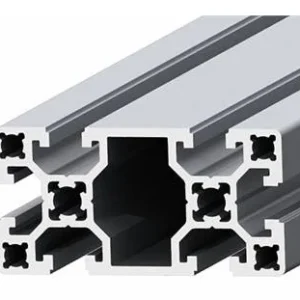 %35 Discount45x90 Sigma Profile 10 Channel Heavy DutyOriginal price was: 60.70$.39.67$Current price is: 39.67$.View
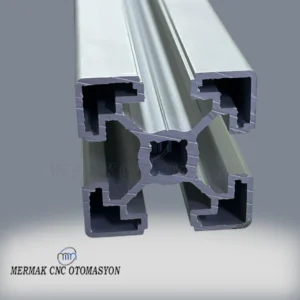 %35 Discount45x45 Sigma Profile 10 Channel Light TypeOriginal price was: 25.32$.16.55$Current price is: 16.55$.View
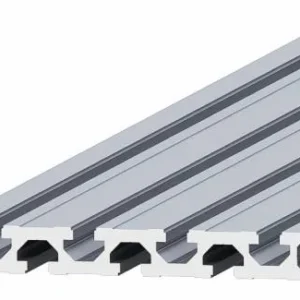 %38 Discount22.5x180 Surface Coated Sigma Profile 10 ChannelsOriginal price was: 105.96$.65.34$Current price is: 65.34$.View
Reviews
There are no reviews yet.