
No products in the cart.
%45 Discount


Sce 20 Wuu Linear Bearing Long Type
Original price was: 11.75$.6.43$Current price is: 6.43$.
High precision, long stroke, and enhanced stability for industrial automation.
Only 0 left in stock
🔥 Special for Today Only %45 Discount Opportunity!📦 Category: 20 mm Bearing Types
Mermak assuranceFrom factory to end user · importer / main dealer · strong stock
ImporterMain dealer / distributorStrong stockGood priceCorporate invoice
In stock / available to order · 14-day return for standard unused products; conditions may vary for custom size/cut products.
Sce 20 Wuu Linear Bearing Long Type
INDUSTRIAL AUTOMATION PARTS | SUPERIOR PERFORMANCE SERIES
Detailed Product Review
Developed according to Mermak CNC’s engineering principles, the Sce 20 Wuu Linear Bearing Long Type is a linear motion component designed for applications requiring high precision and operational stability in industrial automation systems. This “long type” configuration is optimized to minimize deflection and vibration issues that standard linear bearings may encounter, particularly in applications involving long stroke distances or high instantaneous loads on shaft axes. The extended body structure allows the balls or rollers within the bearing to distribute the load over a larger contact area, significantly reducing the bearing pressure on the shaft. This effectively lowers elastic deformation (deflection) on long and slender shafts, thereby increasing the overall rigidity of the system. Consequently, micron-level vibrations and oscillations, which directly impact machining quality, are effectively damped, maintaining superior operational precision and repeatability even in critical applications. This structural advantage maximizes dynamic stability, especially during high-speed and high-acceleration motion profiles, directly influencing system longevity and performance.
The Sce 20 Wuu series features a flanged mounting structure with four bolt holes, facilitating easy integration into machine frames and ensuring a robust connection. This four-point fixing mechanism ensures the bearing maintains its position flawlessly even under dynamic loads, acceleration, and sudden direction changes, while also increasing the overall torsional and bending rigidity of the system. This robust structure, demonstrating superior resistance to high speeds, accelerations, and impact loads encountered in industrial environments, allows shaft axes to remain stable even over long distances, minimizing positioning errors. Manufactured using high-quality, heat-treated bearing steel and precision grinding techniques, the Sce 20 Wuu optimizes the surface hardness and smoothness of the ball raceways, offering a low coefficient of friction and high wear resistance. This material and processing quality promises long-lasting, maintenance-free performance, reducing the total cost of ownership and guaranteeing uninterrupted production continuity. The product’s corrosion-resistant surface treatment ensures its performance is maintained even in industrial environments exposed to moisture or chemical vapors.
Sce 20 Wuu Linear Bearing Long Type Advantages
High Axial Rigidity and Positioning Accuracy: The extended body design of the Sce 20 Wuu increases the contact length between the load-carrying elements (balls) and the shaft within the bearing, minimizing shaft elastic deformation (deflection) and bearing clearance under applied forces. This structural feature provides higher resistance against bending and torsional moments, especially in systems operating with long shaft axes. As a result, the positioning and motion accuracy of the machine’s moving parts are maximized, offering a critical advantage for precision machining, measurement, and assembly applications requiring micron-level repeatability. Increased rigidity also prevents unwanted vibrations under dynamic loads, maintaining system stability.
Enhanced Mounting Stability and Vibration Damping: This linear bearing can be securely fixed to the machine frame thanks to its four-point flanged connection feature. The four bolt holes optimize load distribution across the bearing’s base area and apply a higher clamping force to the mounting surface. This robust connection effectively absorbs vibrations caused by inertial forces and external impacts during high-speed and acceleration, enhancing overall system stability. Furthermore, the flanged structure maintains the bearing’s axial and radial position even under dynamic loads, minimizing deviations in the motion path and ensuring continuous machining accuracy. This is critically important in applications with high cutting forces or frequent start/stop cycles.
Optimized Performance and Longevity on Long Strokes: The “long type” design of the Sce 20 Wuu distributes the load over a larger surface area compared to conventional linear bearings, reducing Hertzian contact stresses on the bearing elements. This decreases fatigue stresses and wear rates in the bearing raceways and balls. Especially in applications requiring long-distance movements, where the total number of load cycles the bearing endures increases, this optimized load distribution significantly extends bearing life. Low contact stress and effective load distribution allow the bearing to operate at higher dynamic load capacities while reducing maintenance needs and unplanned downtime. This feature contributes to lowering total operating costs in industrial automation systems requiring continuous operation.
Technical Specifications and Capacity
FeatureValue/Description
Product CodeSce 20 Wuu
TypeLinear Bearing, Long Type
Shaft Diameter CompatibilityØ20 mm (Nominal)
Mounting TypeFlanged, 4 Bolt Holes
Dynamic Load Capacity (C)~980 N (Reference value according to ISO 10285)
Static Load Capacity (C0)~1500 N (Reference value according to ISO 10285)
Operating Temperature Range-20°C to +80°C (Depending on recommended lubricant properties)
Housing MaterialHigh Strength Bearing Steel (e.g., 100Cr6 or similar)
Surface TreatmentCorrosion-Resistant Coating (e.g., Black oxide or chrome plating)
Technical Frequently Asked Questions (FAQ)
What engineering advantages does a “long type” linear bearing like the Sce 20 Wuu offer over a standard linear bearing, and in what types of applications do these advantages become critical?
The “long type” configuration of the Sce 20 Wuu includes a longer raceway surface and consequently more load-carrying ball or roller elements compared to standard linear bearings. This allows the applied radial and moment loads to be distributed over a larger area, significantly reducing Hertzian contact stresses on the bearing elements. From an engineering perspective, this minimizes elastic deformation (deflection) and bearing clearance on the shaft, thereby increasing the overall system rigidity and positioning accuracy. In applications with long stroke distances, such as CNC routers, laser cutting machines, or gantry systems, shaft sag and vibrations caused by the shaft’s own weight or machining forces can directly affect machining quality. The long type bearing ensures the shaft remains more stable in such applications, meeting high precision and repeatability requirements. Furthermore, lower contact stresses increase the bearing’s dynamic load capacity and extend its fatigue life, reducing maintenance intervals and lowering operational costs.
What is the technical impact of the Sce 20 Wuu’s flanged, four-bolt hole mounting structure on system rigidity and dynamic performance?
The flanged and four-bolt hole mounting structure of the Sce 20 Wuu has a direct and positive impact on the overall rigidity and dynamic performance of the linear motion system. Four-point fixing allows the bearing to be attached to the mounting surface much more robustly and resistant to torsion. This minimizes microscopic movements or flexures at the interface between the bearing and the machine frame, especially during high accelerations, sudden stops, or direction changes that generate inertial forces and moment loads. Compared to single or dual bolt connections, four bolts optimize load distribution across the bearing’s base area, allowing for a higher preload force to be applied to the mounting surface. This increases the system’s natural frequency, reducing the risk of resonance and more effectively damping external vibrations. Consequently, the positioning accuracy and repeatability of the moving system are maintained even under dynamic conditions, which is a critical engineering requirement for precision machining and assembly operations.
What technical benefits does a low coefficient of friction in linear bearings provide in terms of energy efficiency and thermal management?
A low coefficient of friction in linear bearings offers significant technical benefits for system energy efficiency and thermal management. Friction is a loss mechanism that converts kinetic energy into heat. A bearing like the Sce 20 Wuu with a low coefficient of friction requires less driving force for movement, meaning motors draw less current and consequently consume less energy. This directly reduces operational costs, especially in continuously operating industrial automation systems. In terms of thermal management, low friction results in less heat generation within the bearing. Excessive heat can reduce the lubricant’s viscosity, leading to lubricant film breakdown, decreased bearing steel hardness, and precision loss due to thermal expansion. Low heat generation extends lubricant life, preserves the structural integrity of the bearing material, and maintains the system’s operating temperature within optimal ranges, enhancing long-term performance and reliability. This is a critical factor, particularly in high-speed and high-load applications.
What engineering constraints and design considerations arise from the Sce 20 Wuu’s operating temperature range (-20°C to +80°C)?
The specified operating temperature range of the Sce 20 Wuu (-20°C to +80°C) introduces certain engineering constraints and design considerations for system integration and operational reliability. The lower limit of -20°C can cause the lubricant’s viscosity to increase excessively and solidify in low-temperature environments, raising starting torque and restricting free bearing movement. In such cases, selecting synthetic lubricants suitable for low-temperature performance or heating the environment may be necessary. The upper limit of +80°C, while below the tempering temperature of bearing steel, can be close to the thermal degradation limit of the lubricant. High temperatures accelerate lubricant oxidation, reduce viscosity, and lead to thinning of the lubricant film, increasing wear. Furthermore, different thermal expansion coefficients of the bearing and shaft materials can cause changes in bearing clearance with temperature variations, potentially leading to precision loss or seizure. Therefore, for continuous operation near +80°C, detailed engineering analysis considering thermal management, appropriate lubricant selection, and thermal expansion tolerances is essential.
| Dimensions |
|---|
You must be logged in to post a review.
Taksit Tablosu
Related Products
 %49 DiscountSce 40 Wuu Linear Bearing Long TypeOriginal price was: 57.72$.29.56$Current price is: 29.56$.View
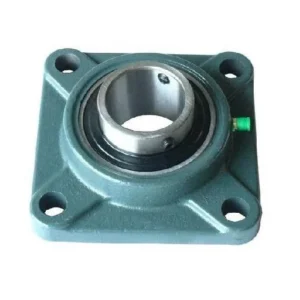 %51 DiscountUCF 204 Pillow Block Bearing UnitOriginal price was: 4.57$.2.26$Current price is: 2.26$.View
 %40 DiscountKWVE20-B-ES-V1-G4 INA 20 mm Linear CarriageOriginal price was: 113.71$.68.23$Current price is: 68.23$.View

Reviews
There are no reviews yet.