





















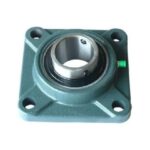

















































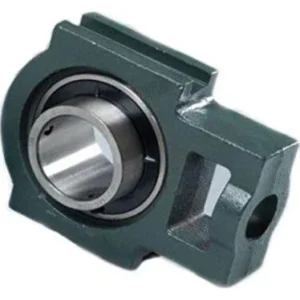
UCT 209 Take-Up Cast Iron Housing Unit
Detailed Product Review
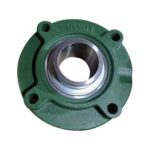
The UCT 209 bearing unit is a critical machine element designed for tension adjustment in power transmission mechanisms within industrial automation systems. Positioned in the Gerdirmeli (Take-Up) Cast Iron Housing Unit category, it features a 45 mm nominal shaft diameter. This bearing unit offers the ability to be precisely positioned with millimeter accuracy by moving back and forth on slide and slot channels, particularly in belt, chain, and belt-driven systems, to ensure optimal tension of the drive elements. The spherical outer ring structure of the inner bearing seat effectively absorbs misalignment errors of up to ±2 degrees that may occur during installation or under operational loads. This minimizes edge loading on the inner bearing components, thereby directly increasing the system’s overall reliability and bearing life. This self-aligning feature allows for simplified complex assembly procedures and flexibility in tolerance requirements under field conditions.
The housing of the UCT 209 bearing unit is manufactured from high-quality cast iron; this material selection provides superior strength, rigidity, and damping capacity against high vibration, impact, and static/dynamic load working conditions encountered in heavy industrial environments. The integrated grease nipple mechanism offers periodic and controlled lubrication to reduce friction between the inner bearing races and rolling elements and prevent wear, significantly extending the bearing’s operational life while reducing maintenance costs. The product’s sealing structure is designed to prevent the ingress of dust, chips, moisture, and other particulate contaminants into the bearing’s internal cavity. This is critical for maintaining uninterrupted and reliable operational performance, especially in dirty and demanding environments such as mining, cement, agriculture, and heavy manufacturing. When correct installation and regular maintenance protocols are applied, the UCT 209 is a solution designed in accordance with engineering principles to provide many years of trouble-free service life in industrial systems.
UCT 209 Take-Up Cast Iron Housing Unit Advantages
Precise Shaft Diameter Compatibility and High Load Capacity: The UCT 209 bearing unit, with its inner ring specifically designed for a 45 mm nominal shaft diameter, ensures a precise fit with minimal clearance on the shaft. This engineering detail optimizes load transfer between the shaft and the bearing, providing high stability and rigidity even under dynamic and static loads. The wide inner ring design improves load distribution by increasing the contact surface area with the shaft, thereby reducing the unit stress on the bearing elements. This prevents overstressing of the bearing, especially in systems requiring high torque transmission or subject to sudden load changes, extending fatigue life and increasing operational reliability.
Self-Aligning Spherical Outer Ring Structure: The spherical outer ring structure of the UCT 209 allows the bearing’s inner ring and rolling elements to have a certain degree of angular freedom within the housing. This feature automatically compensates for shaft-housing misalignment (typically up to ±2 degrees) that may occur during installation or system operation. The absorption of misalignments prevents edge loading and localized stress concentrations on the bearing elements. This prevents premature fatigue and wear mechanisms that shorten bearing life, allowing the system to operate continuously for longer periods and optimizing installation time by reducing the need for high mounting precision.
Optimized Maintenance and Environmental Resistance: The integrated grease nipple allows for easy and effective periodic lubrication of the UCT 209. Regular application of the correct type and amount of lubricant creates a continuous oil film between the bearing elements, minimizing friction, heat generation, and wear. This significantly extends the bearing’s service life and optimizes maintenance intervals. Furthermore, the bearing’s environmental resistance is ensured by advanced sealing elements that prevent dust, chips, moisture, and other industrial contaminants from penetrating the inner components. This sealing structure helps protect bearing performance and life even in harsh and dirty working environments such as heavy industry, mining, and construction, preventing unexpected failures and production downtime.
Technical Specifications and Capacity
Feature
Value/Description
Product Model
UCT 209
Bearing Type
Take-Up Cast Iron Housing Unit
Nominal Shaft Diameter
45 mm
Housing Material
High-Quality Cast Iron
Outer Ring Structure
Spherical (Self-aligning) – Tolerates minor misalignments
Lubrication Mechanism
Periodic Lubrication via Grease Nipple
Sealing
Standard Industrial Sealing Elements (Resistant to dust, chips, and dirty environments)
Technical Frequently Asked Questions (FAQ)
What is the critical role and performance contribution of the “Take-Up” design of the UCT 209 in industrial systems?
The take-up design of the UCT 209 is vital for ensuring optimal tension of drive elements, especially in belt, chain, and belt-driven power transmission systems. This design allows the bearing housing to be precisely moved back and forth on slide or slot channels. Maintaining optimal tension minimizes power transmission losses and maximizes energy efficiency by preventing slippage or oscillation of the drive elements. Excessive tension creates unnecessary load on bearings and shafts, while insufficient tension leads to slippage, wear, and efficiency loss. The UCT 209, by enabling tension to be adjusted with millimeter precision, ensures stable system operation even under dynamic loads, extends component life, and reduces unplanned downtime, thereby enhancing overall operational reliability.
How does the spherical outer ring structure in the UCT 209 technically compensate for shaft alignment errors, and what are its long-term benefits?
The spherical outer ring structure of the UCT 209 is a self-aligning feature that allows the bearing’s inner ring and rolling elements a degree of angular freedom within the housing. This design automatically absorbs minor misalignments (typically up to ±2 degrees) between the shaft and the bearing housing that may occur during installation or system operation. In standard rigid bearings, misalignments cause edge loading and localized stress concentrations on the rolling elements, leading to premature fatigue and wear. The spherical outer ring distributes these stresses, homogenizing the load on the bearing elements, thereby significantly extending the bearing’s fatigue life, reducing friction, and heat generation. In the long term, this contributes to reduced maintenance costs, longer uninterrupted system operation, and increased overall operational reliability.
What is the impact of the integrated grease nipple and sealing mechanisms of the UCT 209 on performance in heavy industrial conditions?
The integrated grease nipple in the UCT 209 provides periodic and controlled lubrication to create a continuous oil film between the bearing elements. In heavy industrial conditions with high loads and vibrations, the effectiveness of the lubricant is critical. The grease nipple allows for easy application of the correct type (e.g., with EP additives) and amount of lubricant, minimizing friction, heat generation, and wear, which extends the bearing’s service life. The sealing mechanism prevents external contaminants such as dust, chips, moisture, and aggressive chemicals from entering the bearing’s internal cavity. Ingress of contaminants can degrade the lubricant and lead to abrasive wear, shortening bearing life. Advanced sealing elements protect the internal components, maintain lubricant integrity, and ensure the bearing operates reliably and continuously even in harsh environments.
In which specific industrial scenarios does the high-quality cast iron housing of the UCT 209 offer a distinct advantage over alternative materials?
The high-quality cast iron housing of the UCT 209 offers distinct advantages in industrial scenarios characterized by heavy impact loads, continuous vibrations, and high static/dynamic stresses. Cast iron possesses properties such as high compressive strength, excellent vibration damping capacity, and good thermal conductivity. These characteristics are critical in applications like crushers in mining, rotary kilns in cement plants, heavy-duty conveyor systems, and vibrating screens. The cast iron housing effectively absorbs shock loads and vibrational energy generated in these environments, reducing stress on the inner bearing components and preserving the structural integrity of the bearing system. Compared to stamped steel or light alloy housings, cast iron better maintains dimensional stability under overload and environmental conditions, enhancing the system’s long-term reliability and operational life.
Mermak has 16 years of experience in providing industrial automation parts. Our products are stocked and prepared from our Ankara Uzay Sanayi factory/warehouse, ensuring up-to-date stock quantities and prices on our website. Stocked items are dispatched without production delays. We ensure careful packaging, meticulous invoice and document follow-up, and utilize reliable logistics partners. The Mermak team closely monitors the shipment process. Product videos and factory viewings are available upon request via WhatsApp or our contact channels. We proudly supply industries in the United Kingdom, United States, Canada, Australia, Ireland, New Zealand, South Africa, and similar countries and international markets.


Reviews
There are no reviews yet.