






























































































































Does Incorrect Lubricant Use Damage Linear Systems?

📑 Table of contents (Click to open)
Practical notes for CNC router, automation and industrial motion systems.
The Critical Role of Lubrication in Linear Systems
Linear systems, the backbone of industrial automation, are engineered for precision, repeatability, and longevity. These systems, comprising components like linear guide rails, ball screws, and linear motors, rely heavily on proper lubrication to function optimally. Lubrication is not merely about reducing friction; it’s essential for preventing wear, dissipating heat, protecting against corrosion, and flushing contaminants. The question, “Does incorrect lubricant use damage linear systems?” has a definitive and serious answer: Yes. Using the wrong type or quality of lubricant can drastically shorten a system’s lifespan, reduce operational efficiency, and lead to unexpected failures.
Selecting the correct lubricant is a complex decision influenced by factors such as operating conditions, load capacity, speed, ambient temperature, and environmental contaminants. Each linear system component has specific lubrication requirements defined by its manufacturer, including viscosity, base oil type, and additive packages. Failure to adhere to these specifications can result in inadequate lubrication films, leading to metal-to-metal contact and severe damage.
Understanding the Mechanics: How Lubrication Works
The smooth operation of linear systems hinges on maintaining a sufficient lubricant film between moving surfaces. This film acts as a barrier, minimizing friction and wear. The thickness and integrity of this film depend on the lubricant’s properties and the system’s operating conditions. Lubrication regimes include boundary, mixed, and hydrodynamic/elastohydrodynamic (EHD) lubrication. Incorrect lubricant use accelerates the transition from the ideal EHD regime to boundary lubrication, which is the primary cause of wear.
Key Lubricant Parameters:
- Viscosity: This measures a lubricant’s resistance to flow and is perhaps the most critical parameter. A lubricant with too low a viscosity may not form an adequate film under high loads or temperatures, leading to metal-to-metal contact, especially on the precise surfaces of linear guide rails and ball screws. Conversely, a lubricant with excessively high viscosity can create unnecessary resistance, increasing energy consumption and heat generation, particularly at low speeds or temperatures. Manufacturers typically specify lubricants by their ISO VG (Viscosity Grade).
- Base Oil Type: Lubricants are typically based on mineral, synthetic (PAO, ester-based), or semi-synthetic oils. Mineral oils are cost-effective for general use but are more susceptible to oxidation and viscosity changes at high temperatures. Synthetic oils offer superior stability across a wider temperature range, better oxidation resistance, and longer service life, making them ideal for demanding conditions like extreme temperatures, high speeds, or heavy loads. Using the wrong base oil can lead to lubricant degradation, sludge formation, and reduced system performance.
- Additives: Various additives enhance lubricant performance. These include Anti-Wear (AW), Extreme Pressure (EP) additives, rust and corrosion inhibitors, oxidation inhibitors, and foam suppressants. Lubricants specifically formulated for linear systems contain these additives in precise ratios. For instance, EP additives are crucial for ball screws subjected to high loads. The absence or incorrect proportion of these additives in a general-purpose lubricant can lead to rapid component failure.
In essence, incorrect lubricant use causes microscopic damage to the surfaces of bearings, guide rails, and ball screws, resulting in pitting, scoring, friction, and fatigue wear. This degrades the system’s precision, causes noisy operation, increases vibrations, and can ultimately lead to complete failure. In industrial settings, such failures halt production lines, necessitating costly repairs and significant downtime.
| Parameter | Value/Description |
|---|---|
| Viscosity (ISO VG) | Must comply with manufacturer specifications (e.g., ISO VG 32, 46, 68). Directly related to ambient temperature and operating load. |
| Base Oil Type | Mineral, Synthetic (PAO, Ester), Semi-Synthetic. Selected based on application conditions (temperature, speed). Synthetics offer a wider range. |
| Additives | AW (Anti-Wear), EP (Extreme Pressure), Rust & Corrosion Inhibitors, Oxidation Inhibitors, Anti-Foam. Specific formulations for linear systems are important. |
| Application Environment | Normal, Heavy Load, High Speed, Cleanroom, Food Industry, Vacuum. Specific lubricants are available for each environment. |
| Operating Temperature Range | Depends on the lubricant’s viscosity index and base oil type. For example, -30°C to +150°C is common for synthetic oils. |
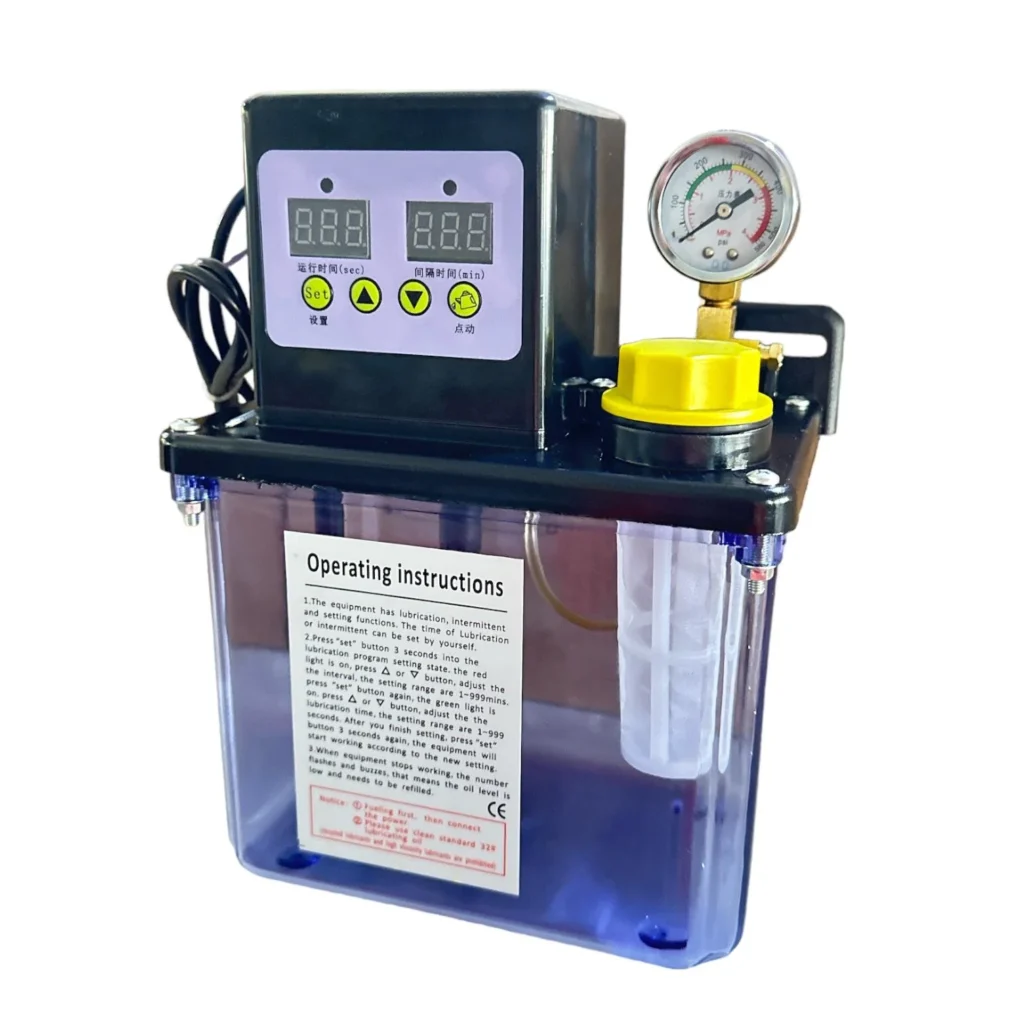
| Lubrication Frequency & Quantity | Determined by manufacturer recommendations, duty cycle, load, speed, and environmental conditions. Automatic lubrication systems are preferred. |
| Damage Mechanisms | Wear (abrasive, adhesive, fatigue), corrosion, pitting, fatigue, thermal degradation. Incorrect lubricants accelerate all these mechanisms. |
Key Considerations for Industrial Applications:
- Strict Adherence to Manufacturer Specifications: Every linear system component has specific lubrication requirements outlined by the manufacturer, potentially including viscosity, base oil type, and even specific brands or models. Deviating from these can void warranties and lead to premature failure. Always consult the system’s manual and technical documentation.
- Evaluate Environmental Conditions: Factors like ambient temperature, humidity, dust levels, and potential chemical exposure significantly impact lubricant choice. High temperatures reduce viscosity, while low temperatures increase it, hindering flow. In dusty or humid environments, lubricants resistant to contamination and corrosion, with good sealing properties, are essential. Special environments like cleanrooms or food processing require food-grade lubricants (e.g., NSF H1 certified) or those with low particle emissions.
- Consider Application Loads and Speeds: The load capacity and operating speed of the linear system directly affect lubricant film strength. Heavy loads and high speeds demand lubricants with greater film strength, often requiring EP additives or higher viscosity. High-speed applications benefit from lower viscosity lubricants that minimize friction and control heat generation while maintaining adequate film integrity.
- Optimize Lubrication Frequency and Quantity: Insufficient lubrication is a primary cause of wear. Over-lubrication, however, can lead to unnecessary costs, attract contaminants, cause lubricant leakage, and contribute to environmental pollution. Proper maintenance schedules and the use of automatic lubrication systems ensure consistent and correct application.
Ensuring the correct lubricant is used and maintained is paramount for the reliability and performance of any industrial CNC router or automated machinery. It’s an investment in operational efficiency and longevity.
For expert advice on selecting the right lubricants and maintaining your CNC machinery, request a quote on WhatsApp today!
Related product categories: Genel · 25 Mm Lineer Kızak, Rulman Ve Yataklar · 20 Mm Lineer Kızak, Rulman Ve Yataklar
