






























































































































Troubleshooting Square Cuts on CNC Machines: Common Issues and Solutions
📑 Table of contents (Click to open)
- Understanding Square Cut Errors on Industrial CNC Routers
- How CNC Machines Achieve Precision: Working Principles and Technical Data
- The Impact of Backlash and Machine Rigidity
- The Role of the Control System and Electrical Components
- Common Causes for Skewed Square Cuts and How to Check Them
- 1. Mechanical Component Checks
- 2. Axis Calibration and Alignment
- 3. Machining Parameters and NC Code Verification
- 4. Electrical and Control System Issues
- Practical Industrial Example
- Conclusion
Square cuts on your CNC router machine appearing skewed? This guide details common causes, from loose mechanical components and calibration errors to incorrect machining parameters. Learn how to diagnose and fix these issues for improved precision.
Practical notes for CNC router, automation and industrial motion systems.
Understanding Square Cut Errors on Industrial CNC Routers
In industrial automation and precision manufacturing, CNC (Computer Numerical Control) machines are indispensable for accurately processing materials like metal, plastic, and wood. However, when square cuts on a CNC machine deviate from their intended geometry, appearing skewed or trapezoidal, it signifies a critical production quality issue requiring immediate attention. Such inaccuracies not only affect the aesthetic quality but can lead to assembly mismatches, functional defects, and increased scrap rates. The root causes of skewed square cuts can range from simple setting errors to complex mechanical failures. Identifying and rectifying these issues is crucial for maintaining machine efficiency and optimizing production costs. This guide provides a systematic approach to diagnosing and resolving these common problems encountered in industrial CNC operations.
How CNC Machines Achieve Precision: Working Principles and Technical Data
CNC machines operate by precisely controlling tool movements based on programmed commands. This high level of accuracy is typically achieved through the coordinated operation of components such as servo motors, high-resolution encoders, ball screws, and linear guide rails. The geometric accuracy of a square cut is directly linked to the perpendicularity (orthogonality) of the X and Y axes and the linear precision of movement along each axis. Deviations, backlash, or repeatability issues in either axis will result in a skewed square cut.
The Impact of Backlash and Machine Rigidity
Backlash refers to the play or looseness in a mechanical system, where a motor moves but the tool doesn’t immediately respond. This often stems from wear in the ball screw nut or looseness in mechanical connections. Backlash is particularly problematic at direction changes, such as the corners of a square, leading to dimensional inaccuracies and skewing. The rigidity of the CNC machine is also paramount. Insufficient rigidity can cause vibrations and tool deflection under cutting forces, leading to uneven surfaces and geometric errors. Furthermore, the thermal stability of the machine is important; temperature fluctuations during prolonged operation can cause expansion in the machine structure and ball screws, affecting axis positioning accuracy.
The Role of the Control System and Electrical Components
The CNC control unit processes signals sent to the axis motors and uses feedback from encoders to continuously correct positioning. This closed-loop control system is fundamental to achieving high precision. However, any electronic interference, wiring issues, or drive malfunctions can disrupt the smooth operation of servo motors, causing deviations in axis movement. The integrity of the motion control system, including the servo drives and their associated wiring, is therefore critical.
Common Causes for Skewed Square Cuts and How to Check Them
1. Mechanical Component Checks
The first step in diagnosing skewed cuts is a thorough inspection of the machine’s mechanical components. This includes:
- Fasteners and Mountings: Check for any loose bolts, nuts, or mounting hardware on the linear guide rails, ball screws, motor mounts, and the machine frame itself. Vibrations can gradually loosen these over time.
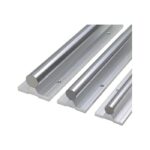
- Linear Guide Rails and Bearings: Inspect the linear guide rails and their corresponding bearing blocks for wear, damage, or debris. Ensure they move smoothly without binding or excessive play. Clean and lubricate them as per the manufacturer’s recommendations.
- Ball Screws: Examine the ball screws for signs of wear, damage, or contamination. Check the pre-load settings and ensure the ball nut is securely mounted. Excessive wear can lead to significant backlash.
- Spindle Motor and Tooling: Ensure the spindle motor is functioning correctly and that the cutting tool is sharp, properly seated in the tool holder, and appropriate for the material being cut. A worn or incorrectly installed tool can affect cutting accuracy.
2. Axis Calibration and Alignment
Precise calibration is essential for accurate cuts. Issues here can include:
- Axis Perpendicularity: Verify that the X and Y axes are perfectly perpendicular to each other. Misalignment can be caused by frame distortions or improper assembly. Specialized calibration tools or test cuts can help identify this.
- Axis Parallelism: Ensure that the linear guide rails for each axis are perfectly parallel to the machine’s travel direction. Any deviation will result in skewed cuts.
- Backlash Compensation: Most modern CNC controllers have settings for backlash compensation. Ensure this is correctly configured and adjusted based on measured backlash values. If backlash is excessive due to wear, mechanical repair is necessary.
- Squareness Test: Perform a precise squareness test using a calibrated gauge or by cutting a large square and measuring its diagonals. The diagonals should be equal in length for a perfect square.
3. Machining Parameters and NC Code Verification
Incorrect settings or programming errors can also lead to skewed cuts:
- Cutting Speed and Feed Rate: Inappropriate speeds and feeds can cause excessive cutting forces, leading to tool deflection and vibration, especially in harder materials. Adjust these parameters based on the material, tool, and machine capabilities.
- Spindle Speed (RPM): Ensure the spindle speed is correct for the tool and material. Incorrect RPM can affect chip load and surface finish.
- NC Code Review: Carefully review the generated NC code for any errors in coordinate data, tool path commands, or G-code syntax. Sometimes, CAM software settings or post-processor issues can introduce errors.
- Workpiece Clamping: Ensure the workpiece is securely and accurately fixtured to the vacuum table or clamping system. Any movement or shifting during machining will result in dimensional inaccuracies.
4. Electrical and Control System Issues
Problems within the electrical and control systems can manifest as erratic axis movements:
- Servo Drive and Motor Performance: Check the status of the servo drives and motors. Error codes on the drives can indicate specific problems. Ensure connections are secure and free from corrosion.
- Encoder Feedback: Faulty encoders or corrupted feedback signals can lead the control system to misinterpret the actual position of the axes, causing errors.
- Cabling and Connections: Inspect all cables connecting the control unit, drives, motors, and encoders for damage, loose connections, or electromagnetic interference.
Practical Industrial Example
Consider a scenario where an industrial CNC router is tasked with producing precise square pockets for component assembly. After initial setup, the operator notices that the pockets are consistently slightly wider on one side and shorter on the other, creating a trapezoidal shape rather than a perfect square. Upon investigation, the team first checks the machine’s mechanical integrity. They find that the ball screw on the Y-axis has developed noticeable play due to wear. Additionally, a routine check of the X-axis linear guide revealed a slight binding issue, likely caused by contamination. The solution involved replacing the worn ball screw and nut assembly, thoroughly cleaning and lubricating the X-axis linear guides, and then recalibrating both axes, including backlash compensation. After these adjustments, test cuts confirmed that the square pockets were now within the required tolerance, ensuring proper component fit and reducing rework.
Conclusion
Achieving accurate square cuts on an industrial CNC router machine is fundamental to high-quality manufacturing. When deviations occur, a systematic troubleshooting process focusing on mechanical integrity, precise axis calibration, appropriate machining parameters, and the reliability of the control system is essential. By diligently checking each of these areas, manufacturers can quickly identify the root cause of skewed cuts and implement effective solutions, ensuring consistent precision and optimal production output. Regular maintenance and calibration are key to preventing these issues and maximizing the performance of your CNC equipment.
If you’re experiencing persistent issues with your CNC machine’s accuracy or require expert assistance, don’t hesitate to reach out. Request a quote on WhatsApp for tailored solutions and support.
Related product categories: Genel · 25 Mm Lineer Kızak, Rulman Ve Yataklar · 20 Mm Lineer Kızak, Rulman Ve Yataklar
