
No products in the cart.
%35 Discount


45×90 Sigma Profile 10 Channel Heavy Duty
Original price was: 60.70$.39.67$Current price is: 39.67$.
High-strength aluminum extrusion profile for industrial automation and machine building.
In stock
🔥 Special for Today Only %35 Discount Opportunity!📦 Category: 10 Channel Sigma Profiles🏷️ Dimensions: 45x90🏷️ Slot Size: 10 Slots🏷️ Profile Size: 45x90
Mermak assuranceFrom factory to end user · importer / main dealer · strong stock
ImporterMain dealer / distributorStrong stockGood priceCorporate invoice
In stock / available to order · 14-day return for standard unused products; conditions may vary for custom size/cut products.
45×90 Sigma Profile 10 Channel Heavy Duty
INDUSTRIAL AUTOMATION PARTS | SUPERIOR PERFORMANCE SERIES
Detailed Product Review
The 45×90 Sigma Profile 10 Channel Heavy Duty is an aluminum extrusion profile specifically designed for constructions requiring high structural rigidity, modularity, and longevity in industrial automation systems and machine building applications. With its 90 mm width and 45 mm height within the 45 mm series, this profile offers a wider cross-sectional area compared to standard profiles, indicating a structure reinforced through engineering calculations to maximize system stability under high moment loads, dynamic vibrations, and heavy static loads. The designation “10 Channel” refers to the 10 mm wide T-slots located on all four surfaces of the profile, which are fully compatible with M10 standard fasteners. These channels provide system designers with a wide range of mounting options and flexibility for the quick and precise integration of sensors, actuators, protective panels, and other mechanical components. The “Heavy Duty” classification signifies that this profile has a thicker wall thickness than standard sigma profiles, significantly increasing its moments of inertia (Ix, Iy) and torsional stiffness (J). This enhances its resistance to bending and torsion, providing superior resistance to deformation in critical applications such as heavy-load conveyor systems, large robotic cell frames, or the support of high-acceleration moving axes.
The material composition of this profile consists of a high-quality aluminum alloy (typically 6063-T5 or similar extrusion alloys), known for its excellent strength-to-weight ratio. The anodized coating applied to its surface further enhances the aluminum’s natural corrosion resistance through an electrochemical process, creating a hard, dense, and wear-resistant aluminum oxide layer. This coating not only increases the profile’s resistance to chemical agents, moisture, and atmospheric oxidation but also improves surface hardness, significantly enhancing its scratch and abrasion resistance. Additionally, the applied heat treatment (tempering) optimizes the alloy’s mechanical properties, increasing its yield and tensile strength, thereby ensuring the profile exhibits long-lasting, maintenance-free performance in demanding industrial conditions. For system integration, the 10 mm T-slots offer full compatibility with M10 T-nuts, corner connectors, and various channel accessories, enabling rapid prototyping and easy modification in a wide range of applications such as modular machine frames, test benches, automation cells, and gantry systems.
Advantages of 45×90 Sigma Profile 10 Channel Heavy Duty
High Mechanical Rigidity and Load-Bearing Capacity: The 45×90 mm wide cross-section and increased wall thickness of this heavy-duty profile significantly elevate its cross-sectional moments of inertia (Ix and Iy) and torsional stiffness (J). This enhances the profile’s resistance to deformation under bending and torsion, offering superior rigidity under dynamic and static loads. High moments of inertia ensure minimal deflection and angular twist even over long spans, maximizing positioning accuracy and repeatability in precision motion systems. This structural advantage directly impacts the overall stability and operational precision of systems, particularly in applications involving high-acceleration moving axes, heavy-load conveyor belts, or large robotic work cells.
Extended Performance with Enhanced Corrosion and Abrasion Resistance: The specialized anodized coating applied to the profile surface electrochemically thickens and densifies the natural passivation layer of the aluminum alloy, providing superior corrosion resistance. This oxide layer helps the profile maintain its surface integrity even in industrial environments with moisture, chemical vapors, or abrasive particles. Furthermore, the anodized coating increases the profile’s surface hardness, improving its resistance to scratches, friction, and general wear. These properties ensure the profile maintains its aesthetic and functional performance for many years under harsh operating conditions, while minimizing maintenance requirements and operational costs.
Modular Connection and Flexible System Integration: The 10 mm T-slot design of the profile is engineered to industrial automation standards and is fully compatible with M10 T-nuts, corner connectors, hinges, covers, and other accessories. This standardized interface offers system designers and engineers extensive connection and mounting flexibility. The ability to freely position and easily adjust components along the channel provides unique adaptability for rapid prototyping, system modifications, and future expansions. This modular structure reduces assembly times, simplifies engineering processes, and allows production lines or machine configurations to be quickly adapted to changing requirements, thereby increasing overall operational efficiency.
Technical Specifications and Capacity
FeatureValue/Description
Profile Size45 mm (Height) x 90 mm (Width)
Channel Type and Width10 Channels (Standard 10 mm T-Slot geometry)
Profile ClassHeavy Duty (Optimized wall thickness for high-strength construction)
Weight per MeterAverage 3.389 Kg/Meter (Dependent on cross-sectional area)
Surface TreatmentAnodized Coating and Heat Treatment (For corrosion and wear resistance)
MaterialHigh-Quality Aluminum Alloy (e.g., EN AW-6063 T5)
Compatible FastenersM10 T-nuts, corner connectors, and other 10-channel accessories
Technical Frequently Asked Questions (FAQ)
What are the key parameters to consider for calculating the bending rigidity and deflection of this profile?
For calculating the bending rigidity and deflection of the 45×90 Sigma Profile 10 Channel Heavy Duty, the primary parameters are the profile’s cross-sectional moments of inertia (Ix and Iy). These values, determined by the profile’s geometry and material distribution, represent its resistance to bending around a specific axis. Heavy-duty profiles, due to their increased wall thickness compared to standard profiles, have higher moments of inertia, resulting in lower deflection and greater bending rigidity. The calculation also utilizes the aluminum alloy’s modulus of elasticity (Young’s Modulus, E), approximately 70 GPa. Deflection (δ) calculations employ relevant beam deflection formulas (e.g., δ = (PL^3) / (48EI) for a simply supported beam with a point load), considering the type of load (point, distributed), load position, and support conditions (simply supported, cantilever, etc.). For torsional rigidity, the torsional constant (J) and shear modulus (G) are required. Accurate use of these parameters is vital for ensuring the structural integrity and precision of the system.
How does the “Heavy Duty” classification affect the profile’s performance under static and dynamic loads compared to standard profiles?
The “Heavy Duty” classification indicates that the 45×90 Sigma Profile has thicker wall sections than its standard counterparts. This increased thickness significantly enhances its cross-sectional moments of inertia (Ix, Iy) and torsional constant (J). Under static loads, this translates to higher load-bearing capacity and a reduced risk of permanent deformation due to increased yield and tensile strength. The enhanced bending and torsional rigidity minimize deflection and angular twist over longer spans or under high concentrated loads. Under dynamic loads, the increased mass and rigidity raise the system’s natural frequency, reducing the risk of resonance and improving vibration damping characteristics. This is a critical advantage, especially in applications with high-speed moving axes, robotic manipulators, or impact loads, directly affecting operational precision and system lifespan. Heavy-duty profiles are also more effective in reducing vibration amplitudes due to higher damping coefficients.
Through which engineering principles do anodized coating and heat treatment improve the profile’s surface and mechanical properties?
Anodized coating relies on the principle of controlled electrochemical oxidation to thicken and densify the natural aluminum oxide layer on the aluminum surface. This process creates a microscopic, porous, yet very hard Al2O3 layer. By preventing direct contact between the aluminum and the environment, this layer significantly enhances corrosion resistance. Furthermore, the anodized coating increases the profile’s surface hardness (e.g., Vickers hardness 200-400 HV), improving its resistance to scratches, abrasion, and friction. Heat treatment (tempering, typically T5 or T6) optimizes the mechanical properties of the aluminum alloy by altering its microstructure. This process triggers precipitation hardening, increasing yield strength, tensile strength, and hardness while relieving internal stresses. The combination of these two treatments enhances both the surface durability and overall structural integrity of the profile, ensuring longer-lasting and more reliable performance in demanding industrial environments.
How can optimal connection strength and vibration resistance be achieved in joints using M10 fasteners?
To achieve optimal connection strength and vibration resistance in joints between M10 fasteners and the 45×90 Sigma Profile 10 Channel Heavy Duty, several engineering principles must be applied. Firstly, the correct tightening torque is critical. For M10 bolts, the recommended torque value varies depending on the bolt grade (strength class) and the T-nut material, but it typically ranges from 40-60 Nm. This torque ensures sufficient preload in the bolt, preventing the joint from loosening under static and dynamic loads. Secondly, the T-nut must seat properly within the channel, ensuring adequate thread engagement, which increases the connection’s shear resistance. For applications with vibration, anti-loosening measures such as spring washers, lock nuts (nyloc), or chemical threadlockers should be used. When using corner connectors, ensuring full contact between the connection plates and the profile surface, and tightening the bolts in a cross pattern, optimizes stress distribution in the joint, enhancing strength and preventing localized stress concentrations.
| Dimensions | 45x90 |
|---|---|
| Slot Size | 10 Slots |
| Profile Size | 45x90 |
You must be logged in to post a review.
Taksit Tablosu
Related Products
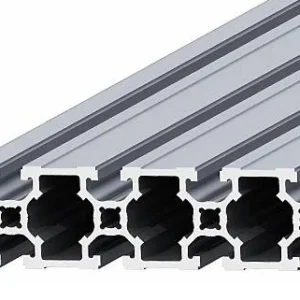 %44 Discount45x180 Sigma Profile 10 ChannelOriginal price was: 113.51$.63.70$Current price is: 63.70$.View
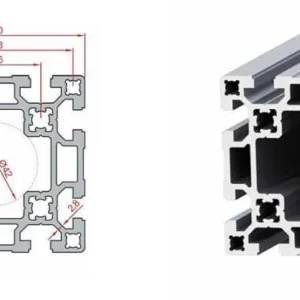 %36 Discount90x90 Sigma Profile | 10 Channel | Heavy DutyOriginal price was: 126.72$.81.26$Current price is: 81.26$.View
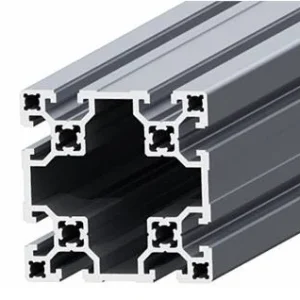 %35 Discount80x80 Sigma Profile | 10 Channel | Light DutyOriginal price was: 56.60$.37.00$Current price is: 37.00$.View

Reviews
There are no reviews yet.