


















































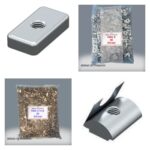


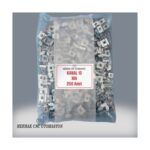














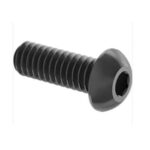


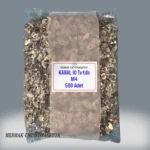
10mm Slot M4 Serrated Nut (500 pcs)
Detailed Product Review
This 10mm Slot M4 Serrated Nut is engineered to provide high connection integrity, even under dynamic loads and continuous vibration, specifically for K10 series aluminum profiles. The specially processed serrations on the nut’s surface create micro-deformations in the softer aluminum profile when inserted into the slot and tightened with a bolt, resulting in a mechanical interlocking effect. This interlocking significantly increases friction and minimizes axial and rotational movement of the nut within the profile slot. Consequently, it greatly reduces the risk of bolt preload loosening due to resonance vibrations or impact loads during machine operation, preventing connection weakening over time and enhancing the overall stability and reliability of the system. The design ensures the fastener sits perfectly within the profile slot, optimizing load distribution and preventing localized stress concentrations.
The nut is manufactured from high-strength steel with a zinc-plated surface for enhanced corrosion resistance. This zinc coating protects the nut against oxidation, even in humid or mildly corrosive environments, extending its lifespan and preserving its mechanical properties. The Metric 4 (M4) thread standard provides a common interface for mounting sensors, actuators, protective covers, small panels, and light mechanical components widely used in industrial automation. This standardization ensures full compatibility with M4 bolts from various manufacturers, simplifying system integration and spare parts procurement. The 500-piece packaging offers optimal cost-efficiency and inventory management for production lines, large-scale assembly projects, and continuous manufacturing workshops, supporting supply chain continuity.
Advantages of the 10mm Slot M4 Serrated Nut (500 pcs)
Superior Vibration Resistance and Preload Stabilization: The primary engineering advantage of serrated nuts is maintaining bolt preload under dynamic loads. The specially designed serrations on the nut penetrate the aluminum profile’s slot walls upon tightening, creating a mechanical lock. This micro-penetration provides additional frictional and form-fit resistance against nut rotation or axial slippage within the profile. As a result, the tendency for bolts to loosen due to continuous vibrations, impacts, or thermal expansion/contraction cycles during machine operation is minimized. This feature enhances connection security and extends maintenance intervals, especially in high-speed automation lines, robotic systems, and applications requiring precise positioning.
Flexible Installation and Revision Capability: These serrated nuts offer significant flexibility in engineering projects by supporting two distinct installation methods. The first method involves sliding the nut into the profile slot from the end, ideal for new assemblies or when the profile is not yet enclosed. The second, more critical method is the “drop-in” or “top-load” capability. This feature allows the nut to be inserted directly into the slot from any point on an existing profile structure when retrofitting or making revisions, without needing to disassemble the profile. This flexibility considerably shortens assembly times, reduces labor costs, and enables modifications or additions to be made quickly, minimizing operational downtime. This is a critical time and cost advantage, particularly in complex and modular systems.
Optimal Material Selection and Standard Thread: The high-quality zinc-plated steel used in manufacturing ensures high tensile strength and wear resistance, guaranteeing the longevity of the connection point. The zinc plating protects the nut’s surface against environmental factors, preventing corrosion and preserving the fastener’s mechanical integrity over time, crucial for machines operating in humid or industrial environments. Furthermore, the Metric 4 (M4) thread size is an internationally recognized standard, offering full compatibility with a wide range of standard M4 bolts, studs, and other fasteners. This standardization provides design engineers with a broad selection of bolt options while simplifying supply chain management and ensuring seamless integration of components from different manufacturers. This combination delivers a reliable, durable, and universally compatible fastening solution.
Technical Specifications and Capacity
Product Code
K10-M4-T
Thread Standard
Metric 4 (M4)
Compatible Slot Width
10 mm (K10 Series)
Material
High-Quality Zinc-Plated Steel
Mounting Type
Sliding and Drop-in
Package Contents
500 pcs
Barcode
8692024001549
Technical Frequently Asked Questions (FAQ)
What is the engineering difference in vibration resistance between serrated nuts and standard T-nuts?
Serrated nuts, unlike standard T-nuts, engage directly with the profile slot’s inner surface through specially machined teeth or serrations on their sides. While standard T-nuts rely primarily on friction and bolt preload, serrated nuts create a mechanical lock by micro-penetrating the softer aluminum profile material when tightened. This micro-penetration significantly increases resistance to rotation and axial slippage. In dynamic loads, vibrations, or thermal cycles, standard T-nuts can lose bolt preload over time, leading to loosening. The mechanical interlock in serrated nuts helps maintain connection integrity even if preload is reduced, thereby enhancing long-term system stability and reliability, a critical advantage in high-vibration or impact-load industrial applications.
What are the recommended tightening torque values for M4 serrated nuts and the potential risks of over-torquing?
Recommended tightening torque values for M4 bolts typically range from 2 Nm to 4 Nm, depending on the bolt’s strength class (e.g., 8.8 or 10.9) and friction coefficient. When used with aluminum profiles, the profile’s material strength must also be considered. Over-torquing can lead to several engineering issues: first, plastic deformation or stripping of the bolt or nut threads, permanently reducing the connection’s load-bearing capacity. Second, localized crushing or deformation of the aluminum profile’s slot walls can occur, weakening the profile’s structural integrity and complicating future assembly or revisions. Third, excessive tightening can induce overstress in the fasteners, shortening their fatigue life. Therefore, using correct torque values is critical for extending the life of the fasteners and profile, ensuring a secure connection, and optimizing system performance. Using a torque wrench is the most effective way to achieve this precision.
What is the effect of zinc plating on the corrosion resistance and mechanical performance of these nuts?
Zinc plating significantly enhances the corrosion resistance of these serrated nuts. As zinc is more electrochemically active than steel, it acts as a sacrificial anode, protecting the steel surface through galvanic corrosion. In the presence of moisture or electrolytes, zinc oxidizes, preventing the steel from rusting. This protection extends the nut’s lifespan, especially in industrial environments exposed to humidity or mild chemical vapors. Mechanically, the thin zinc coating generally has no significant adverse effect on the nut’s fundamental tensile strength or hardness. In fact, it can provide a degree of resistance to minor scratches and abrasion during assembly and use. However, at very high temperatures or in aggressive chemical environments, the protective properties of zinc plating may diminish. Thus, zinc plating is a cost-effective solution that preserves the nut’s basic mechanical properties while maintaining its long-term reliability and aesthetic appearance.
Are there specific design or assembly considerations when using these serrated nuts with K10 series aluminum profiles?
When using these serrated nuts with K10 series aluminum profiles, specific considerations are necessary due to the profile’s slot geometry and material properties. The 10mm slot width of K10 profiles is critical for a snug fit; the nut must move without excessive play or binding for proper alignment and load transfer. During assembly, ensure the nut is fully seated in the profile slot and the serrations properly engage with the profile surface. When the bolt is tightened, the serrations should embed evenly into the aluminum surface, providing uniform interlocking and stress distribution. Over-torquing can cause localized plastic deformation or crushing at the edges of the profile slot, negatively impacting the connection’s strength and the profile’s lifespan. Additionally, when mounting near profile ends, where the cross-sectional area is reduced, exercise extra caution and adjust bolt torque accordingly. For applications expecting high dynamic loads, periodic inspection of connection points and re-torquing if necessary are recommended to maintain system reliability. Cleanliness of the profile slots is also important for smooth nut insertion and full contact.


Reviews
There are no reviews yet.