



































































Understanding Z-Axis Backlash in CNC Machines and Its Impact

📑 Table of contents (Click to open)
Z-axis backlash in CNC machines can lead to significant precision loss, reduced machining quality, and decreased tool life. This article explores the causes and consequences of Z-axis backlash in industrial CNC routers and offers insights into maintaining optimal performance.
Practical notes for CNC router, automation and industrial motion systems.
What Happens When the Z-Axis Develops Backlash? Understanding the Issue
In industrial automation and mechanical engineering, Z-axis backlash refers to the unwanted play or delay between input and output when the direction of motion changes in a mechanical system. Particularly in CNC machines, robotic arms, 3D printers, and other automated systems, the Z-axis is responsible for the vertical positioning of the workpiece or tool. Backlash in this axis arises from microscopic or macroscopic wear, looseness, or manufacturing tolerances in its motion components, such as screws, nuts, gears, and bearings. This play prevents the system from accurately and instantaneously reflecting commanded movements, leading to critical issues with precision and repeatability. In essence, a discrepancy occurs between the movement command from the control system and the actual response of the mechanical system. Even if this difference is only at the millimeter or micron level, it can lead to unacceptable outcomes in modern manufacturing processes, directly impacting production quality.
Working Principle and Technical Implications of Z-Axis Backlash
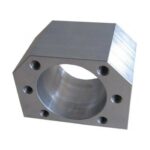
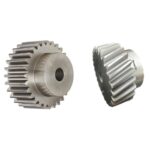
Z-axis backlash typically originates from wear in components like ball screws or lead screws used in linear motion systems, as well as in their bearing elements or gearboxes. These components convert the rotational motion from an electric motor into linear motion along the Z-axis. When backlash is present, a small amount of free movement occurs between the threads of the screw and nut, or between gear teeth, when the motor’s rotation direction reverses. This causes the motion table to experience a delay or slip before reaching the commanded position. This is particularly critical for operations requiring precise depth control, such as drilling, milling, and grinding. Z-axis backlash disrupts the system’s dynamic response and reduces static positioning accuracy.
Technically, Z-axis backlash can manifest and be measured in several ways:
- Loss of Positioning Accuracy: Backlash prevents the system from reaching its target position precisely. For instance, 100 microns of backlash introduces this much error with every direction change. This leads to product scrap in precision machining processes with tight tolerances and fails to meet dimensional accuracy expectations.
- Reduced Surface Quality: Backlash during the tool’s entry into or exit from the workpiece can cause vibrations and sudden changes in cutting forces. This results in surface roughness, waviness, or marks on the machined surface. This is a significant problem in applications requiring mirror finishes, such as optics, mold making, or medical device manufacturing.
- Decreased Tool Life: Irregularities in tool entry and exit, sudden loads, and vibrations due to backlash cause premature wear or breakage of tool tips. This necessitates frequent tool changes, increasing production costs and reducing operational efficiency.
- Dynamic Performance Issues: In applications requiring high-speed and dynamic movements, Z-axis backlash increases the system’s response time and can lead to instability in the control loop. This can result in reduced production speeds or system shutdowns, especially in robotic applications demanding rapid acceleration and deceleration.
- Repeatability Problems: Even when repeating the same commands, backlash can cause different positioning errors each time. This leads to inconsistencies between products in mass production, complicates quality control, and compromises process reliability.
- Reduced Energy Efficiency: Backlash can cause the motor to exert more effort to reach the desired position, increasing energy consumption and potentially leading to motor overheating.
The primary causes include wear in ball screws or nuts, play in bearings, loose couplings, deformation of connecting elements between the motor and the mechanical system, backlash in gearboxes, and wear in linear guide rail systems. While modern CNC control systems can implement software backlash compensation, this is only effective to a certain extent and does not address the root mechanical cause. Mechanical backlash ultimately degrades the system’s overall performance, increases maintenance costs, and can lead to more significant failures. Therefore, detecting and rectifying mechanical backlash is crucial for sustainable production and achieving high-quality results.
| Parameter | Value/Description |
|---|---|
| Type of Backlash | Axial Backlash, Radial Backlash, Angular Backlash |
| Common Causes | Wear in ball screws/nuts, bearing play, loose couplings, gearbox wear, improper assembly |
| Impact on Precision | Reduced accuracy, poor repeatability, dimensional errors |
| Effect on Quality | Degraded surface finish, increased scrap rate |
| Maintenance Implication | Increased tool wear, higher operational costs, potential for major component failure |
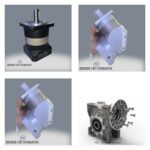
Addressing Z-axis backlash often involves inspecting and replacing worn components like ball screws, nuts, and bearings. Proper lubrication and regular maintenance are key to preventing premature wear. For critical applications, consider using zero-backlash gearboxes or preloaded ball screws. Implementing a robust maintenance schedule and performing regular checks for backlash can significantly extend the life of your industrial CNC router machine and ensure consistent, high-quality output.
If you are experiencing issues with precision or quality on your CNC machinery, it’s essential to diagnose and address Z-axis backlash promptly. Contact us to discuss your specific needs and explore solutions for your CNC operations.
Related product categories: Genel · Kaplin · Makine Takım ve Tutucular