













































































Understanding and Addressing Machine Frame Vibrations

📑 Table of contents (Click to open)
Machine frame vibrations can significantly impact performance and longevity. This article explores common causes such as imbalance, misalignment, loose connections, bearing failures, and resonance. Learn how to diagnose and address these issues to maintain your industrial CNC router machine’s efficiency and reliability.
Practical notes for CNC router, automation and industrial motion systems.
What Causes Machine Frame Vibrations?
Vibrations in an industrial CNC router machine’s frame are more than just a nuisance; they are critical indicators of underlying mechanical, electrical, or structural issues. These vibrations can shorten equipment lifespan, degrade production quality, and lead to costly breakdowns. Understanding the root causes is essential for effective diagnosis and mitigation, ensuring the optimal performance and reliability of your machinery.
Operational Principles and Technical Data of Frame Vibrations
Machine frames serve as the structural backbone, supporting all components. Vibrations typically arise from unbalanced forces or periodic external influences. Key parameters for measuring vibration include frequency (Hz), amplitude, velocity, and acceleration. Common sources of vibration in industrial machines include:
- Imbalance in rotating components: Uneven mass distribution in rotors, fans, or impellers.
- Shaft and coupling misalignment: When rotating shafts are not perfectly aligned, causing stress on bearings and couplings.
- Bearing and journal wear or damage: Degraded bearings introduce play and generate noise and vibration.
- Loose fasteners: Bolts and connections that are not properly torqued can lead to structural looseness and vibration.
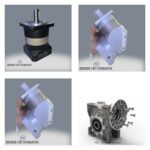
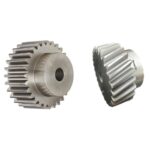
- Gearbox issues: Worn or damaged gears can cause irregular meshing and vibration.
- Hydraulic or pneumatic system fluctuations: Pressure surges can transmit vibrations through the machine structure.
- Electrical motor imbalances: Magnetic imbalances or rotor issues.
- Resonance: Occurs when the machine’s natural frequency aligns with an operating frequency, amplifying vibrations to potentially destructive levels.
Vibration analysis, a powerful predictive maintenance tool, uses techniques like spectral analysis (FFT) to identify specific fault frequencies. For instance, imbalance often shows a peak at the rotational frequency (1X RPM), while misalignment might appear at 2X or 3X RPM. Bearing defects typically generate high-frequency, irregular patterns.
| Parameter | Value/Description |
|---|---|
| Vibration Source | Imbalance, Misalignment, Bearing Defects, Looseness, Resonance, Gearbox Issues, Electrical Problems. |
| Measurement Units | Acceleration (g or m/s²), Velocity (mm/s or in/s), Displacement (µm or mil). |
| Frequency Range | Low frequencies (imbalance, misalignment), mid-frequencies (looseness), high frequencies (bearing defects, gear mesh). |
| Acceptable Limits | Defined by ISO 10816, varying by machine type and power (typically RMS velocity in mm/s). |
| Diagnostic Methods | Spectral analysis (FFT), Time waveform, Phase analysis, RMS value tracking. |
| Preventive Maintenance | Periodic balancing, laser alignment, regular lubrication, bolt torque checks, bearing replacement. |
| Resonance Detection | Impact testing to determine natural frequencies, comparison with operating frequencies. |
Practical Considerations for Vibration Diagnosis
- Visual Inspection and Auditory Checks: Begin by carefully observing the machine for loose bolts, cracks, worn components, or unusual noises like rattling, grinding, or humming. Touching different parts of the machine (safely) can help pinpoint areas of intense vibration. Note any visible oscillations or abnormal movements during operation.
- Vibration Measurement Tools and Sensor Placement: Use accelerometers or velocity sensors for precise measurements. Mount sensors securely on critical points like bearing housings, motor casings, or frame connection points. Incorrect placement or loose mounting can lead to erroneous data. Measuring in three axes (X, Y, Z) provides a comprehensive understanding of vibration direction and magnitude. Ensure consistent measurement points and conditions for reliable trend analysis.
- Balancing and Alignment Verification: Imbalance in rotating parts and shaft misalignment are primary vibration culprits. Dynamic balancing equipment and laser alignment systems are essential for detecting and correcting these issues in components like motors, fans, pumps, and couplings. Regular checks are crucial for preventing vibration.
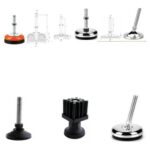
- Mounting and Foundation Integrity: The machine’s foundation and mounting structure play a vital role in vibration damping. A weak, cracked, or improperly designed foundation can amplify vibrations. Loose or undertorqued anchor bolts also contribute to frame vibration. Inspect the condition and effectiveness of any vibration isolators (rubber pads, springs) used under the machine feet. Ensure the foundation is stable, level, and capable of supporting the machine’s weight.
- Investigating Resonance Conditions: Resonance occurs when an operating frequency matches a machine component’s natural frequency, leading to potentially catastrophic vibration amplitudes. Techniques like modal analysis or impact testing help identify natural frequencies. If resonance is detected, design modifications (adding mass, altering stiffness) or adjustments to operating speeds may be necessary.
- Bearing and Roller Condition: Bearings and rollers supporting rotating elements are frequent sources of vibration. Wear, damage, or improper lubrication in bearings can cause significant operational issues. Regular monitoring of bearing condition through vibration analysis is key to early detection of potential failures.
Addressing frame vibrations on your industrial CNC router machine is critical for maintaining precision, extending component life, and ensuring uninterrupted production. By systematically diagnosing the causes and implementing appropriate solutions, you can significantly improve the reliability and efficiency of your CNC operations.
Is your CNC router machine experiencing frame vibrations? Don’t let it impact your production quality. Contact us on WhatsApp today for expert consultation and solutions!
Related product categories: Combination Packages · Linear Guides, Bearings, and Housings · Mechanical Components
