Корзина пуста.
Why Does a Ball Screw Make Noise? Symptoms of Lack of Lubrication and Ball Wear
Содержание
- Introduction and Technical Analysis At the heart of industrial automation, forming the foundation of precise motion control, ball screws are indispensable components in modern manufacturing processes. Used across a wide spectrum, from CNC machines and robotic systems to semiconductor manufacturing equipment and precision measuring devices, these mechanical actuators convert rotary motion into linear motion, offering high efficiency, accuracy, and repeatability. However, one of the most common issues directly affecting the performance and lifespan of these critical components is the unwanted noise that occurs during operation. These noises are often more than a simple nuisance; they signal a potential malfunction or wear in the system. If not addressed in time, they can lead to significant production losses, costly repairs, and even complete system shutdown. This field guide and technical article aims to provide industrial automation professionals with a comprehensive guide to deeply examine, diagnose, and implement effective solutions for noise problems encountered in ball screw systems, particularly focusing on fundamental causes such as lack of lubrication and ball wear. Our objective is not only to understand the symptoms but also the root causes and to optimize system performance by developing proactive maintenance strategies. This approach will enhance operational efficiency, minimize maintenance costs, and extend equipment life. Early diagnosis and correct intervention are key to ensuring the uninterrupted operation of automation systems. Operating Principle and Technical Data
- Field Considerations
- FAQ
Introduction and Technical Analysis
At the heart of industrial automation, forming the foundation of precise motion control, ball screws are indispensable components in modern manufacturing processes. Used across a wide spectrum, from CNC machines and robotic systems to semiconductor manufacturing equipment and precision measuring devices, these mechanical actuators convert rotary motion into linear motion, offering high efficiency, accuracy, and repeatability. However, one of the most common issues directly affecting the performance and lifespan of these critical components is the unwanted noise that occurs during operation. These noises are often more than a simple nuisance; they signal a potential malfunction or wear in the system. If not addressed in time, they can lead to significant production losses, costly repairs, and even complete system shutdown. This field guide and technical article aims to provide industrial automation professionals with a comprehensive guide to deeply examine, diagnose, and implement effective solutions for noise problems encountered in ball screw systems, particularly focusing on fundamental causes such as lack of lubrication and ball wear. Our objective is not only to understand the symptoms but also the root causes and to optimize system performance by developing proactive maintenance strategies. This approach will enhance operational efficiency, minimize maintenance costs, and extend equipment life. Early diagnosis and correct intervention are key to ensuring the uninterrupted operation of automation systems.
Operating Principle and Technical Data
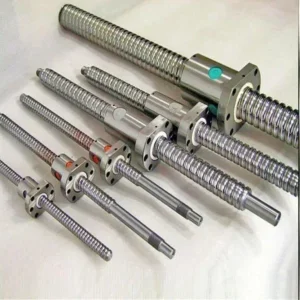
Ball screw systems consist of a screw shaft, a ball nut that moves along this shaft, and steel balls placed between these two components. As the shaft rotates, the balls roll in helical grooves within the nut, causing the nut to move linearly. The balls complete a continuous cycle by passing through a special return path inside the nut. This design converts sliding friction into rolling friction, providing much higher mechanical efficiency (90-95%) and minimal friction loss compared to traditional trapezoidal lead screws. This high efficiency means that larger loads can be moved with smaller motors and less heat is generated. Ball screws are distinguished by their high precision, high rigidity, high-speed capability, and long lifespan. Their precision is typically measured in micrometers and indicated by the accuracy grade (e.g., C0, C1, C3, C5, C7). These grades define the lead error and runout of the screw. Grades like C0 and C1 offer the highest precision, while grades like C7 are sufficient for general industrial applications requiring less precision. Application areas include all types of industrial machinery requiring precise positioning: robotic arms, machine tools (CNC router machines), injection molding machines, linear guides, medical devices, and automation lines are just a few examples. From an engineering perspective, the performance of a ball screw is determined by parameters such as nominal diameter, lead, dynamic load capacity, static load capacity, torsional stiffness, and axial stiffness. Dynamic load capacity refers to the maximum continuous load a ball screw can carry with a specific life expectancy, while static load capacity indicates the maximum load it can withstand in a non-moving state. These parameters must be carefully selected based on the load, speed, precision, and life expectancy required by the application. Incorrect selection can lead to premature wear, performance degradation, and unwanted noise. Additionally, the material of the ball screw (typically high-carbon alloy steel), surface hardness, and manufacturing methods (ground or rolled) are important factors affecting performance and cost.
| Parameter | Value/Description |
|---|---|
| Lead Accuracy Grade | C0, C1, C3, C5, C7 (C0 highest precision, C7 lowest) |
| Maximum Dynamic Load Capacity | Must be checked according to manufacturer datasheet values. (e.g., can vary between 10,000 N — 100,000 N) |
| Maximum Static Load Capacity | Must be checked according to manufacturer datasheet values. (e.g., can vary between 20,000 N — 200,000 N) |
| Operating Temperature Range | -10°C to +80°C (Can extend for special applications; depends on lubricant type) |
| Recommended Lubricant Type | Lithium-based grease (NLGI 1-2) or synthetic oil (ISO VG 32-68), may contain EP additives |
| Relubrication Interval | Must be checked according to manufacturer datasheet values. (e.g., 500-2000 operating hours or 3-6 months) |
| Maximum Operating Speed | Must be checked according to manufacturer datasheet values. (e.g., 3000 rpm — 6000 rpm; critical speed value must not be exceeded) |

Field Considerations
- Proper Lubrication Management: This is the cornerstone of smooth ball screw system operation. The type of lubricant (grease or oil), its viscosity, and EP (extreme pressure) additives must comply with manufacturer recommendations based on operating environment, load, and temperature conditions. Greases generally provide longer-lasting protection, while oils may offer better cooling and particle transport capabilities. The amount of lubrication should be neither too little nor too much; insufficient lubrication increases friction, while excessive lubrication can damage seals, lead to heat buildup, and cause contaminants to adhere more easily.
FAQ
Why does my ball screw make noise?
Ball screws typically make noise due to insufficient lubrication, which increases friction and wear. Other common causes include ball wear, contamination, misalignment, excessive load, or damage to the ball nut or screw shaft.
What are the symptoms of insufficient lubrication in a ball screw?
Symptoms of lack of lubrication include a grinding or squealing noise, increased operating temperature, jerky motion, and premature wear on the ball screw components. Visual inspection may reveal dry or discolored surfaces.
How can I identify ball wear in my ball screw system?
Ball wear can manifest as a rattling or clicking sound, especially during direction changes. It can also lead to increased backlash, reduced positioning accuracy, and decreased overall system rigidity.
What preventive measures can I take to avoid ball screw noise and wear?
Regular and appropriate lubrication is crucial. Always use the lubricant type and quantity recommended by the manufacturer. Ensure proper alignment during installation, avoid overloading the system, and protect the ball screw from contaminants with effective seals and bellows.
What should I do if my ball screw starts making noise?
If you detect unusual noise, first check the lubrication. If lubrication is adequate, inspect for signs of wear, contamination, or damage. For persistent issues, consult the manufacturer's manual or contact a Mermak CNC service technician for a professional diagnosis and repair.