
No products in the cart.
%33 Discount
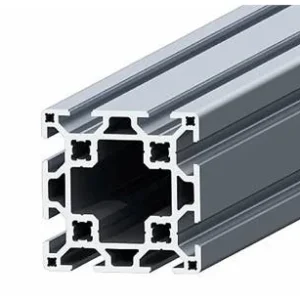
35×35 Sigma Profile 8 Channel
Original price was: 18.89$.12.59$Current price is: 12.59$.
High-strength aluminum profile for industrial automation and machine building.
In stock
🔥 Special for Today Only %33 Discount Opportunity!📦 Category: 35 mm Aluminum Profiles🏷️ Slot Size: 8 Slots🏷️ Dimensions: 35x35🏷️ Profile Size: 35x35
Mermak assuranceFrom factory to end user · importer / main dealer · strong stock
ImporterMain dealer / distributorStrong stockGood priceCorporate invoice
In stock / available to order · 14-day return for standard unused products; conditions may vary for custom size/cut products.
35X35 Sigma Profile 8 Channel
INDUSTRIAL AUTOMATION PARTS | SUPERIOR PERFORMANCE SERIES
Detailed Product Review
The 35×35 Sigma Profile 8 Channel is a high-precision structural component designed for industrial automation, machine manufacturing, and system integration projects. It serves as a structural framework element for modular assembly lines, test stands, and protective barrier systems. This profile features a total of eight integrated T-channels, two on each of its four outer surfaces. These T-channels are compatible with standard M8 nuts and fasteners, allowing for the quick and secure mounting of various sensors, actuators, control units, cable management systems, and other mechanical components. The profile’s geometric design optimizes torsional and bending strength, ensuring the structural integrity of systems under both dynamic and static loads. Manufactured using a precise extrusion process, it guarantees tight dimensional tolerances, offering high compatibility and repeatability even in complex assemblies.
The material composition of the product is a high-strength aluminum alloy conforming to the EN AW-6063 T6 standard. This alloy is renowned for its excellent workability, weldability, and corrosion resistance. The applied T6 heat treatment significantly enhances the material’s yield and tensile strength, enabling the profile to withstand high stresses and loads. This treatment maximizes the profile’s resistance to deformation, particularly under dynamic loads and during prolonged operations. The surface treatment, an anodized (anodization) coating, creates a hard, impermeable layer of aluminum oxide, 10-15 microns thick. This layer provides superior protection against scratches, chemical agents, UV radiation, and atmospheric corrosion, preserving the profile’s aesthetic appearance and structural performance for many years. These characteristics make the 35×35 Sigma Profile 8 Channel an ideal solution for demanding industrial environments, directly contributing to operational efficiency by minimizing system maintenance costs.
Advantages of the 35×35 Sigma Profile 8 Channel
Modular Design and Adaptive Integration Capability: With a total of 8 integrated T-channels on its four surfaces, the 35×35 Sigma Profile 8 Channel offers extensive mounting flexibility. These channels allow for the easy and precise attachment of a wide range of components, including standard T-nuts, corner brackets, hinges, door locks, sensor brackets, pneumatic cylinders, and cable trays, at any point along the profile. This modular structure empowers designers and engineers to rapidly prototype, expand, reconfigure, and optimize systems from the conceptualization stage through to mass production. This adaptability is a critical advantage in R&D projects and flexible manufacturing systems that must cope with the ever-changing requirements of production lines, thereby increasing efficiency in engineering processes in terms of time and cost.
Optimal Strength-to-Weight Ratio and Dynamic Performance: Thanks to its special alloy aluminum structure and the applied T6 heat treatment, the 35×35 Sigma Profile 8 Channel possesses high load-bearing capacity and resistance to bending and torsion, yet has a low weight of approximately 0.987 kg/m. This lightness allows for higher speeds and accelerations in dynamic applications such as linear motion systems, robotic arms, and conveyor belts by reducing the overall inertia of the system. Lower inertia also reduces the load on drive systems, optimizes energy consumption, and extends the system’s lifespan. High strength ensures the profile operates with minimal deformation even under heavy loads, while its lightweight nature simplifies assembly, transportation, and installation, thereby reducing labor costs and logistical burdens.
Advanced Surface Protection and Long-Lasting Durability: The anodized coating applied to the profile’s surface not only provides an aesthetic finish but also significantly enhances its durability in industrial environments. This 10-15 micron thick oxide layer multiplies aluminum’s natural oxidation resistance, providing superior protection against scratches, abrasion, chemical agents (e.g., mild acids, bases, and industrial oils), UV radiation, and atmospheric corrosion. This coating increases the surface hardness of the profile, making it more resistant to mechanical impacts and maintaining surface integrity even during prolonged operations. Consequently, the anodized coating extends the profile’s service life, minimizes maintenance needs, and reduces the total cost of ownership by delivering reliable performance even in harsh operating conditions.
Technical Specifications and Capacity
Specification | Value/Description
Profile Size | 35mm x 35mm (Nominal outer dimension), square cross-section
Profile Type | Sigma Profile, 8 Channel, Light Series
Material | High-Strength Aluminum Alloy (Conforming to EN AW-6063 T6 standard)
Surface Treatment | Anodized Coating (Anodization) – 10-15 micron thickness, provides corrosion and abrasion resistance
Weight per Meter | Average 0.987 kg/m (±3% tolerance), lightweight structural element
Channel Count and Type | 8 T-Channels (2 per surface), fully compatible with standard M8 nuts and fasteners
Heat Treatment | Applied (T6 temper) – Enhances material’s mechanical strength and stress resistance
Cutting Precision | ±0.2 mm (Free custom cutting available for retail sales)
Technical Frequently Asked Questions (FAQ)
How are the maximum load-bearing capacity and deflection values calculated for this profile in a typical beam configuration (e.g., simply supported or cantilever)?
To analyze the behavior of the 35×35 Sigma Profile 8 Channel as a beam, the first step is to determine its cross-sectional area moments of inertia (Ixx, Iyy) and its modulus of elasticity (E). For the EN AW-6063 T6 aluminum alloy, the modulus of elasticity can be taken as approximately 69 GPa (69 x 10^9 N/m²). The moments of inertia, calculated based on the profile’s cross-sectional geometry, are used in the formulas for deflection (δ) and maximum stress (σmax). For instance, for a single concentrated load F at the center of a simply supported beam, the maximum deflection is calculated as δ = (F * L³) / (48 * E * I), and the maximum bending stress is σmax = (Mmax * y) / I, where L is the beam span, Mmax is the maximum bending moment, and y is the distance from the neutral axis to the outermost fiber. The formulas differ for cantilever beams. For safe design, the calculated maximum stress must remain below the material’s yield strength (typically 215 MPa for EN AW-6063 T6), and the deflection must meet application requirements. Additionally, the torsional rigidity (J) should be considered to analyze behavior under torsional loads.
How does the T6 heat treatment specifically affect the mechanical properties of the EN AW-6063 T6 aluminum alloy, and what practical benefits does this offer in structural applications?
The T6 heat treatment is a solution heat treatment and artificial aging process applied to the EN AW-6063 aluminum alloy. This process ensures a homogeneous distribution of precipitation-hardening elements like magnesium and silicon within the alloy’s microstructure, followed by controlled precipitation. As a result, the material’s yield strength and tensile strength significantly increase. For example, compared to the T4 temper (natural aging), the yield strength can increase by over 50% with the T6 temper. This enhancement allows the profile to withstand higher static and dynamic loads without deformation. Practical benefits include the ability to achieve the same strength with less material (weight optimization), increased vibration damping capacity, and extended fatigue life. These properties are critical, especially for machine frames, robotic systems, and industrial equipment operating continuously, which require high precision.
What methods and precautions should be taken to maintain the structural integrity and surface quality during the cutting and machining of this sigma profile?
To preserve the structural integrity and anodized coating quality during the cutting and machining of the 35×35 Sigma Profile 8 Channel, it is essential to use appropriate techniques. For cutting operations, using high-speed saws (e.g., carbide-tipped saws) with adequate coolant is crucial to prevent overheating and deformation of the material. Sharp and accurately geometrized cutting tools should be preferred to minimize or eliminate burrs after cutting. During drilling and tapping operations, low rotational speeds and suitable cutting oils should be used to prevent material jamming or surface cracking. To avoid scratching the anodized coating, protective tape can be applied to the profile surface during machining, or special vise jaws can be used. After machining, any metal dust and oil residues on the cut or machined surfaces must be carefully cleaned with appropriate cleaners to prevent corrosion and maintain aesthetic appearance. These precautions are critical for the profile to maintain its long-term and reliable performance.
What are the limits of the anodized surface coating’s chemical resistance and thermal stability, and what additional measures should be taken for using this profile in aggressive industrial environments?
The anodized coating, with its 10-15 micron thick aluminum oxide layer, enhances the profile’s chemical resistance. This coating performs well in neutral and mildly acidic/alkaline environments with a pH range of 4.0 to 8.5. However, prolonged contact with strong acids (e.g., hydrochloric acid) or strong bases (e.g., sodium hydroxide) outside this range can damage the coating and lead to corrosion of the aluminum matrix. In terms of thermal stability, the anodized aluminum coating generally maintains its structural integrity and protective properties within temperatures ranging from -50°C to +200°C. At higher temperatures, color fading or micro-cracking of the surface may occur, but this typically does not directly affect structural strength. For use in aggressive industrial environments (high humidity, chemical vapors, abrasive particles), additional measures such as regular cleaning of the profile, application of protective barriers, or additional epoxy/polyurethane coatings may be considered. Especially in applications involving continuous chemical splashes, periodic inspection and potential recoating of the surface are recommended.
| Slot Size | 8 Slots |
|---|---|
| Dimensions | 35x35 |
| Profile Size | 35x35 |
You must be logged in to post a review.
Taksit Tablosu
Related Products
 %38 Discount40x80 Sigma Profile 8 Slot Light DutyOriginal price was: 34.46$.21.25$Current price is: 21.25$.View
 %25 Discount60x60 Sigma Profile 8 ChannelOriginal price was: 44.30$.33.32$Current price is: 33.32$.View
 %38 Discount80x80 Sigma Profile | 8 Channel | Heavy DutyOriginal price was: 88.50$.54.58$Current price is: 54.58$.View

Reviews
There are no reviews yet.