





































































Welded vs. Modular Chassis: Which Offers Longer Lifespan for Industrial Automation?
📑 Table of contents (Click to open)
In industrial automation, chassis longevity is key. Discover whether welded or modular chassis systems offer a longer functional life for your applications. Learn about their technical differences and benefits.
Practical notes for CNC router, automation and industrial motion systems.
In the realm of industrial automation, the lifespan of a chassis is a critical factor, directly influenced by the dynamics of the application. While welded chassis offer initial rigidity, modular chassis systems often provide a longer functional life due to their inherent flexibility, ease of modification, and repair capabilities. This adaptability allows them to better meet evolving needs and component upgrades over time, making them a compelling choice for many industrial CNC router applications.
Chassis selection is a fundamental engineering decision in industrial automation. The chassis serves as the backbone for equipment and machinery, significantly impacting overall performance, reliability, and operational longevity. Two primary chassis types dominate the market: welded chassis and modular chassis. Each presents distinct advantages and disadvantages. The concept of “longer lifespan” extends beyond mere physical durability to encompass operational life, ease of maintenance, future expandability, and adaptability.
A welded chassis is a monolithic structure formed by permanently joining metal profiles or plates through welding. These chassis are known for their high strength, rigidity, and vibration resistance, often custom-designed for specific applications. Once fabricated, structural modifications or reconfigurations are challenging due to their integrated nature.
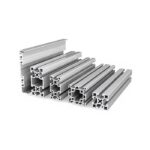
Conversely, a modular chassis is assembled using standardized profiles, connectors, and accessories, typically aluminum or steel extrusions. These components are joined using mechanical fasteners like bolts and nuts. This construction allows for easy assembly, disassembly, expansion, and reconfiguration, making modular chassis highly adaptable to the dynamic demands of industrial automation.
Evaluating longevity involves not just material wear resistance but also how well a system can respond to changing operational requirements throughout its service life. A chassis might remain physically intact but become functionally obsolete if it can no longer meet system demands or if modifications are prohibitively expensive.
Operational Principles and Technical Specifications
The choice of chassis profoundly affects the performance and sustainability of automation systems. Both welded and modular chassis offer different operational principles and technical characteristics, providing advantages in specific scenarios.
Welded Chassis: Operational Principle and Technical Structure
Welded chassis rely on the principle of fusing metal components, such as steel or stainless steel, to create a continuous, high-strength bond. This results in a monolithic structure offering superior rigidity and resistance to external forces. They are often preferred for heavy-duty applications requiring high load-bearing capacity, significant vibration damping (e.g., heavy machinery, presses, robotic welding cells), or extremely precise alignment. Stress concentration points can occur in welded structures, making stress analysis (FEA – Finite Element Analysis) crucial during the design phase. Material fatigue and corrosion are primary factors affecting the lifespan of welded chassis. The quality of welds and post-weld stress relief treatments are vital for long-term durability. Repairing damage to a welded chassis is typically complex and costly, as restoring original structural integrity can be difficult. Modifications often involve cutting, adding new parts, and re-welding, which is both time-consuming and expensive.
Modular Chassis: Operational Principle and Technical Structure
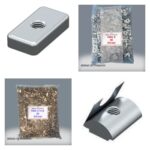
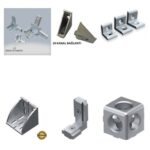
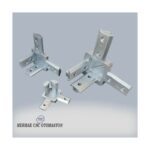
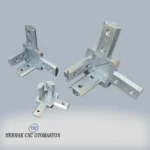
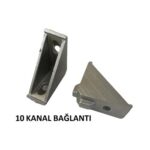
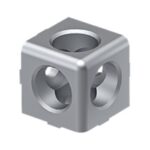
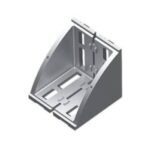
Modular chassis are constructed by assembling extruded aluminum or steel profiles using specialized connectors (e.g., T-nuts, corner brackets, bolts). The core principle is the flexible combination of standard components to create the desired structure. Aluminum profiles offer lightweight construction and ease of handling, while steel modular profiles provide higher load capacities. The primary advantage of modular chassis is their flexibility and adaptability. When system requirements change, modules can be easily added, removed, or rearranged. This is ideal for reconfiguring automation lines, integrating new equipment, or performing system upgrades. Maintenance and repair are also simplified; a damaged profile or connector can be quickly replaced. However, the rigidity at connection points may not match that of welded joints, requiring careful design for applications with heavy vibration or extremely high precision demands. Regular inspection and tightening of fasteners are essential for the long-term safety and reliability of modular chassis. The number and type of connection points determine the overall load-bearing capacity and vibration resistance.
In terms of longevity, while a welded chassis offers superior initial structural integrity, a modular chassis extends its functional lifespan by adapting to evolving industrial environments. A welded chassis might physically last 20 years but become functionally obsolete in 5 if system requirements change. A modular chassis, however, can undergo multiple revisions and upgrades within that same 20-year period, ensuring the system remains current and operational.
| Parameter | Welded Chassis | Modular Chassis |
|---|---|---|
| Structural Integrity | Monolithic, high rigidity and strength. Permanent joints. | Composed of components joined by fasteners. Flexibility is prioritized. |
| Flexibility & Modification | Very low. Requires cutting, welding; costly and time-consuming. | High. Easily disassembled, expanded, reconfigured. |
| Repair & Maintenance | Difficult and costly. Repairing damaged areas can affect structural integrity. | Easy. Damaged profiles or fasteners can be quickly replaced. |
| Upgradeability | Very limited. Equipment changes or capacity increases are difficult. | High. New modules and equipment can be easily integrated. |
| Vibration Resistance | Generally very high. Monolithic structure effectively dampens vibration. | Depends on fastener quality. May require special reinforcement for high vibration. |
| Installation Time | Pre-fabricated in a factory; on-site assembly can be quicker. | Components arrive separately; on-site assembly may take longer but offers flexibility. |
| Lifespan Potential (Functional) | While physically durable, difficulty in adaptation can shorten functional life. | Can also be physically durable; adaptability extends functional life by meeting changing needs. |
| Initial Cost | Can be higher due to complex design and fabrication processes. | May be more cost-effective initially due to standardized components. |
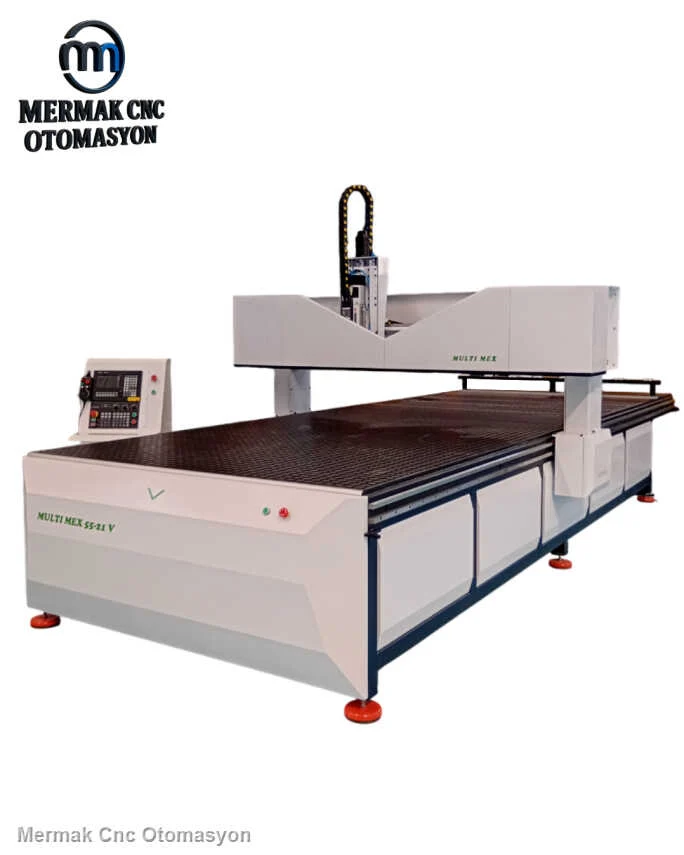
For industrial applications, especially those involving CNC router machines, the decision between welded and modular chassis hinges on the project’s specific requirements for rigidity, adaptability, and long-term evolution. While welded chassis excel in static, high-rigidity environments, modular systems offer a more sustainable and adaptable solution for dynamic industrial automation, ensuring a longer, more versatile functional life.
Considering a new industrial CNC router or upgrading your existing automation system? Understanding the structural foundation is key to long-term success. Explore our range of CNC routers and mechanical components, including robust sigma profiles, to build a reliable and future-proof solution.