












































































How to Adjust Spindle Perpendicularity for Precision CNC Machining

📑 Table of contents (Click to open)
Spindle perpendicularity is crucial for precision CNC machining. This guide explains how to adjust it using mechanical methods and precision measurement tools to ensure optimal part quality and tool longevity.
Practical notes for CNC router, automation and industrial motion systems.
Understanding Spindle Perpendicularity in CNC Machining
In industrial automation and precision manufacturing, particularly with CNC machining centers, milling machines, and lathes, spindle perpendicularity is paramount for achieving high-quality results and efficient production. Spindle perpendicularity refers to the precise alignment of the spindle’s axis of rotation (typically the Z-axis) to be exactly 90 degrees perpendicular to the machine’s worktable or the workpiece surface. Any deviation from this perfect 90-degree angle can negatively impact the geometric accuracy of the machined part, its surface finish, and even the lifespan of cutting tools. For instance, on a milling machine, an improperly aligned spindle can lead to conical holes, uneven surfaces, or burr formation along edges. Therefore, ensuring correct spindle perpendicularity during machine setup and routine maintenance is fundamental for high-precision manufacturing.
Principle of Operation and Technical Data
The adjustment of spindle perpendicularity operates on a fundamental principle of measurement and correction cycles. This process involves identifying minor mechanical deviations within the machine and rectifying them through appropriate adjustments. The core principles and technical data are as follows:
Measurement Methods and Instruments
- Dial Indicator (Komparatör Saati): This is the most common and fundamental measurement tool. It’s securely mounted on the worktable using a magnetic base or a specialized holder. A test bar or gauge inserted into the spindle allows the dial indicator’s probe to measure surface deviations as the spindle rotates or moves to different positions, providing readings with micron-level accuracy. Models capable of measuring to 0.001 mm (1 micron) are typically preferred.
- Precision Spirit Levels and Electronic Levels: Used to verify the overall levelness of the machine table or main frame. While not directly measuring spindle perpendicularity, ensuring the machine base is correctly leveled is foundational for accurate spindle alignment. Electronic levels offer faster and more precise readings via digital displays.
- Laser Interferometer Systems: An advanced method used in high-precision and modern machinery. These systems employ laser beams to measure the geometric accuracy, linearity, perpendicularity, and positioning accuracy of machine axes with sub-micron precision. They are ideal for comprehensive analysis, especially on large, multi-axis machines.
- Ballbar Test Systems: Utilized to detect both dynamic and static geometric errors in a machine. A measurement probe attached to the spindle connects to a sphere mounted on the worktable, enabling the machine to perform circular movements. Deviations during these movements are analyzed to identify various error parameters, including spindle perpendicularity.
Adjustment Mechanisms
Spindle perpendicularity is typically adjusted using mechanisms that vary based on the machine’s design:
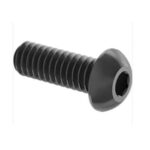
- Adjustment Bolts: These are specialized bolts located where the spindle head connects to the machine’s main body. Loosening and tightening these bolts allows for minute adjustments to the angle or position of the spindle head, often in fractions of a millimeter.
- Shims: Thin metal plates (stainless steel or brass) are inserted or removed between the spindle mounting surfaces. By adding or removing shims of appropriate thickness, perpendicularity deviations can be corrected. Shims are available in thicknesses ranging from 0.01 mm (10 microns) to several millimeters.
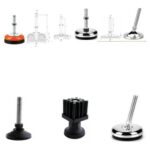
- Hydraulic or Mechanical Leveling Feet: Particularly on large and heavy machines, these are used to adjust the level of the machine base or main frame, influencing the overall machine level and, consequently, spindle perpendicularity.
- Software Compensation: Advanced CNC control units can record minor measured geometric errors (like tilt or perpendicularity deviations) and compensate by micro-adjusting tool paths during machining. While useful, this does not replace the need for accurate mechanical alignment.
Technical Tolerances and Frequency
Acceptable tolerances for spindle perpendicularity vary depending on the machine type, the precision requirements of the workpiece, and the material being machined. For high-precision machining centers, tolerances are often within ±5 microns (0.005 mm) per 100 mm. Less critical applications might allow for ±10-20 microns per 100 mm. The frequency of adjustment depends on machine usage intensity, material types, machine age, and maintenance history. For heavily used machines, annual or semi-annual checks are recommended, while less frequently used machines may require less frequent checks. Crucially, a perpendicularity check should always be performed after significant maintenance or a machine collision.
| Parameter | Value/Description |
|---|---|
| Adjustment Methods | Mechanical shims, adjustment bolts, hydraulic/mechanical leveling feet, software compensation |
| Typical Measurement Instruments | Dial indicator (0.001 mm), precision spirit level, laser interferometer, Ballbar test system |
| Precision Tolerance | ±5 microns (0.005 mm) per 100 mm for high-precision applications |
| Adjustment Frequency | Annual or semi-annual checks; mandatory after collisions or major maintenance |
| Affected Performance | Machining accuracy, surface finish, tool life, part geometry (conicity, flatness) |
| Required Expertise | Experienced machine technician or engineer, knowledge of precision measurement techniques |
| Operating Environment | Stable temperature, vibration-free floor, clean workspace |
Field Considerations
- Machine Cleanliness and Maintenance: Before starting adjustments, ensure the worktable, spindle taper, and measurement surfaces are absolutely clean and free of oil or debris. Even minor contaminants can lead to measurement errors. Regular maintenance ensures adjustment mechanisms operate freely.
- Environmental Conditions and Thermal Stability: The ambient temperature where the machine operates should be stable. Temperature fluctuations can cause thermal expansion or contraction of metal parts, affecting measurement results and adjustment accuracy. Ideally, adjustments should be made after the machine has reached its normal operating temperature following a warm-up period.
- Correct Measurement Tools and Calibration: All measurement instruments, including dial indicators and laser interferometers, must be accurately calibrated and certified. Using faulty equipment can lead to incorrect adjustments and significant production issues. Regular checks and calibration of tools are essential.
- Proper Tooling and Setup: Ensure the correct test bars, gauges, and mounting fixtures are used for measurement. The setup must be rigid and free from play to obtain reliable readings.
- Gradual Adjustments: Make adjustments incrementally. Small, controlled changes are easier to manage and verify than large, sweeping modifications. After each adjustment, re-measure and check for the desired outcome.
Conclusion
Maintaining precise spindle perpendicularity is a critical aspect of CNC machining that directly influences the quality and accuracy of manufactured parts. By understanding the principles, utilizing appropriate measurement tools, and employing the correct adjustment mechanisms, manufacturers can ensure their CNC routers and machining centers operate at peak performance. Regular checks and meticulous adjustments are key to achieving superior surface finishes, extending tool life, and meeting the stringent demands of industrial production. For expert advice or assistance with your CNC machinery, including spindle alignment and other critical components, do not hesitate to reach out.
Ready to optimize your CNC operations? Request a quote on WhatsApp today!
Related product categories: Genel · Allen (Alyan) Başlı İmbus Civata · Havşa Başlı İmbus Civata
